THE ADVENTURE COLLECTIVE® · Independent discovery and booking for outdoor travel

Explore the oldest volcanic arm of Rapa Nui on a private full-day hike across Poike Peninsula. Visit remote ahu, unique petroglyphs, and coastal moai while learning the island’s geology and oral history from a local guide.
Explore the oldest volcanic arm of Rapa Nui on a private full-day hike across Poike Peninsula. Visit remote ahu, unique petroglyphs, and coastal moai while learning the island’s geology and oral history from a local guide.
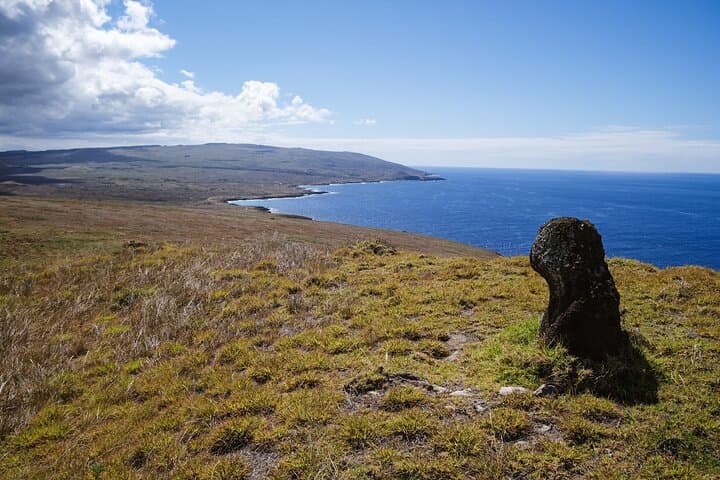
A raw wind pushes across the eastern lip of Rapa Nui as the day opens, salt and volcanic dust carrying the island’s stories. On the Poike Peninsula, walkers leave the palm-lined lowlands and move onto jagged lava, exposed ridgelines, and broad coastal cliffs where Moai faces stare into the Pacific.
Verified experiences and guided adventures in the surrounding area.
Operated by Aroha · Hanga Roa, Valparaíso Region
A raw wind pushes across the eastern lip of Rapa Nui as the day opens, salt and volcanic dust carrying the island’s stories. On the Poike Peninsula, walkers leave the palm-lined lowlands and move onto jagged lava, exposed ridgelines, and broad coastal cliffs where Moai faces stare into the Pacific.
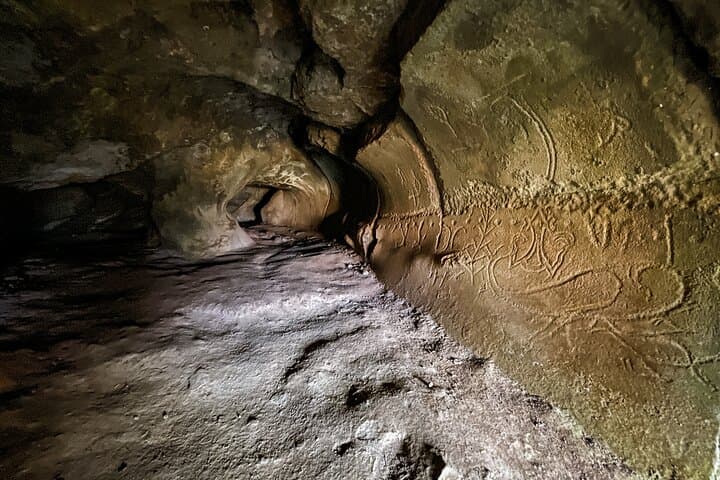
Poike is the island’s oldest volcanic massif — an eroded shield of basalt and trachyte whose scoria hills predate the younger Terevaka. Archaeological remains here read like chapters: Ahu platforms for funerary rites, petroglyph panels that mark celestial knowledge, and isolated moai showing long-abandoned quarrying and re-erection practices. Local guides weave Rapa Nui oral tradition and archaeological findings into the route, explaining names like Maunga Parehe and the stargazing slab Papa u'i hetu'u.
Geology governs the route: sharp lapilli, compacted tuff, and coastal benches formed by long-ago lava flows. Culturally the peninsula feels purposeful — sites such as Ana o Keke carry motifs unique to Rapa Nui rock art, while Ahu Kiri Reva reveals multi-stage construction techniques uncovered in recent excavations.
Practical beat: expect 12 km of mixed terrain over 6–8 hours, with exposed sections and uneven rock underfoot. Start early for cooler light and gentler winds; bring at least 2–3 liters of water, sun protection, sturdy hiking shoes with good ankle support, and layered clothing for wind. Respect fragile petroglyphs and stay on paths where marked — erosion and foot traffic threaten the island’s thin soils. A private guide makes the difference here: they manage logistics, point out subtle motifs, and locate the best vantage points for panoramic coastal views.
challenging.
6–8 hours.
Requires high aerobic fitness and comfort with uneven terrain and sustained walking.
The route covers about 12 km over mixed, uneven volcanic terrain and coastal cliffs; plan for 6–8 hours and consider it challenging due to exposure and footing.
Easter Island has protected archaeological sites; visitors should follow site regulations and pay any national park fees collected at island entry points or local offices.
The tour recommends a high level of fitness; while guided and private, uneven ground and long distance make it unsuitable for very young children or those with limited mobility.
Expect seabirds such as sooty terns and red-tailed tropicbirds along cliffs, and small introduced mammals in lower vegetation; marine life can be visible offshore on clear days.
Poike is Rapa Nui’s oldest volcanic area and preserves early settlement and ritual sites that predate much of the island’s later coastal construction.
Foot traffic and erosion threaten thin soils and rock art; stick to designated paths, avoid touching petroglyphs, and support local conservation initiatives when possible.
Aroha operates guided outdoor trips and adventures with an emphasis on safety, stewardship, and memorable experiences.


A raw wind pushes across the eastern lip of Rapa Nui as the day opens, salt and volcanic dust carrying the island’s stories. On the Poike Peninsula, walkers leave the palm-lined lowlands and move onto jagged lava, exposed ridgelines, and broad coastal cliffs where Moai faces stare into the Pacific.
A raw wind pushes across the eastern lip of Rapa Nui as the day opens, salt and volcanic dust carrying the island’s stories. On the Poike Peninsula, walkers leave the palm-lined lowlands and move onto jagged lava, exposed ridgelines, and broad coastal cliffs where Moai faces stare into the Pacific.
Poike is the island’s oldest volcanic massif — an eroded shield of basalt and trachyte whose scoria hills predate the younger Terevaka. Archaeological remains here read like chapters: Ahu platforms for funerary rites, petroglyph panels that mark celestial knowledge, and isolated moai showing long-abandoned quarrying and re-erection practices. Local guides weave Rapa Nui oral tradition and archaeological findings into the route, explaining names like Maunga Parehe and the stargazing slab Papa u'i hetu'u.
Geology governs the route: sharp lapilli, compacted tuff, and coastal benches formed by long-ago lava flows. Culturally the peninsula feels purposeful — sites such as Ana o Keke carry motifs unique to Rapa Nui rock art, while Ahu Kiri Reva reveals multi-stage construction techniques uncovered in recent excavations.
Practical beat: expect 12 km of mixed terrain over 6–8 hours, with exposed sections and uneven rock underfoot. Start early for cooler light and gentler winds; bring at least 2–3 liters of water, sun protection, sturdy hiking shoes with good ankle support, and layered clothing for wind. Respect fragile petroglyphs and stay on paths where marked — erosion and foot traffic threaten the island’s thin soils. A private guide makes the difference here: they manage logistics, point out subtle motifs, and locate the best vantage points for panoramic coastal views.