THE ADVENTURE COLLECTIVE® · Independent discovery and booking for outdoor travel

Walk the Siq into Petra’s rose‑red amphitheater on a private full‑day tour from Amman. This guided visit covers the Treasury, Roman theater, royal tombs and includes a buffet lunch and round‑trip transport.
Walk the Siq into Petra’s rose‑red amphitheater on a private full‑day tour from Amman. This guided visit covers the Treasury, Roman theater, royal tombs and includes a buffet lunch and round‑trip transport.
You step from the air‑conditioned car into a thin, bright canyon; the Siq narrows and the rock presses close, colors shifting from ochre to deep rose as light slices between cliffs. The Treasury appears like a carved memory at the end of that gorge—sudden, monumental, and surprisingly tactile beneath your fingertips.
Verified experiences and guided adventures in the surrounding area.
Operated by Red Rock Tours · Wadi Musa, Ma'an Governorate
You step from the air‑conditioned car into a thin, bright canyon; the Siq narrows and the rock presses close, colors shifting from ochre to deep rose as light slices between cliffs. The Treasury appears like a carved memory at the end of that gorge—sudden, monumental, and surprisingly tactile beneath your fingertips.
Petra is the Nabataean capital hewn from sandstone over two millennia ago, layered by tectonic uplift and wind-sculpted erosion that left vertical facades and cave tombs. Roman-era streets, a theater carved into the slope, and royal tombs sit alongside Nabataean water channels and cisterns that reveal ancient engineering adapted to arid highland winters and flash floods.
Local culture centers on Wadi Musa, the nearby town where Bedouin histories and modern tourism intersect; guides often share oral stories that bring inscriptions and façades to life. Conservation is active: sandstone is fragile and foot traffic accelerates erosion, so recent management focuses on route control and visitor education.
Practically, expect a full day road transfer from Amman, about a three‑hour drive each way depending on traffic, with roughly two hours of a guided walking tour inside the main archaeological zone. The Siq and city require steady walking on uneven surfaces and some steps; shade is limited.
Bring sun protection, sturdy footwear, and at least 2 liters of water; time your visit to avoid the hottest midday sun, and allow extra minutes for photography and the approach to lesser ruins. A buffet lunch is typically included before the return drive to Amman.
moderate.
10 hours.
Moderate fitness for several hours of walking on uneven ground and stairs; ability to walk 3–5 miles at a steady pace.
Entrance fees are not always included in tour prices; check booking details—many visitors use the Jordan Pass which bundles visa and Petra entry for eligible stays.
Expect several hours of walking across uneven terrain, including a 1.2 km walk through the Siq to the Treasury and additional distances between main monuments.
Donkey or carriage services exist for parts of the route, but availability and animal welfare vary—discuss alternatives with your guide before using them.
A licensed guide is required for detailed interpretation and is included for the two‑hour guided portion; independent exploration before/after the guided tour is common.
Petra was the Nabataean capital from around the 4th century BCE and a major caravan hub; its façades were carved directly into sandstone cliffs and modified under Roman occupation.
Sandstone is vulnerable to erosion and salt crystallization; visitors are asked to stay on paths and avoid touching carvings while local initiatives limit traffic and restore water channels.
Red Rock Tours operates guided outdoor trips and adventures with an emphasis on safety, stewardship, and memorable experiences.
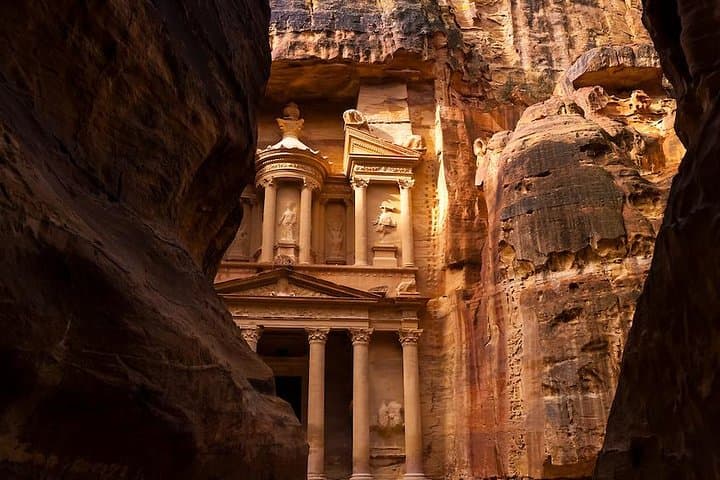
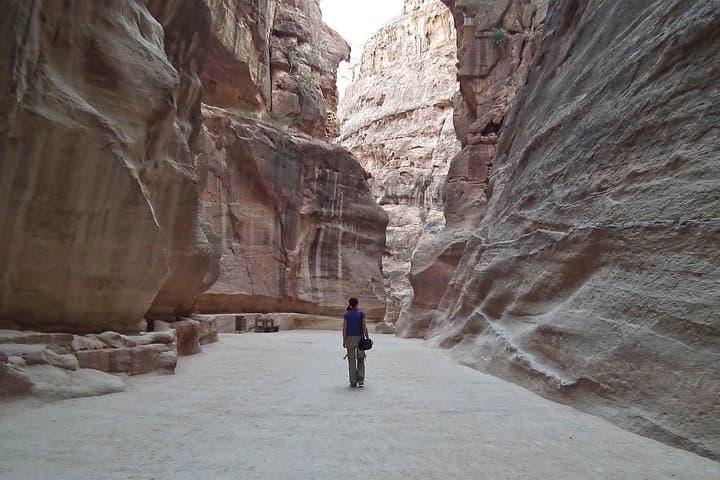
You step from the air‑conditioned car into a thin, bright canyon; the Siq narrows and the rock presses close, colors shifting from ochre to deep rose as light slices between cliffs. The Treasury appears like a carved memory at the end of that gorge—sudden, monumental, and surprisingly tactile beneath your fingertips.
You step from the air‑conditioned car into a thin, bright canyon; the Siq narrows and the rock presses close, colors shifting from ochre to deep rose as light slices between cliffs. The Treasury appears like a carved memory at the end of that gorge—sudden, monumental, and surprisingly tactile beneath your fingertips.
Petra is the Nabataean capital hewn from sandstone over two millennia ago, layered by tectonic uplift and wind-sculpted erosion that left vertical facades and cave tombs. Roman-era streets, a theater carved into the slope, and royal tombs sit alongside Nabataean water channels and cisterns that reveal ancient engineering adapted to arid highland winters and flash floods.
Local culture centers on Wadi Musa, the nearby town where Bedouin histories and modern tourism intersect; guides often share oral stories that bring inscriptions and façades to life. Conservation is active: sandstone is fragile and foot traffic accelerates erosion, so recent management focuses on route control and visitor education.
Practically, expect a full day road transfer from Amman, about a three‑hour drive each way depending on traffic, with roughly two hours of a guided walking tour inside the main archaeological zone. The Siq and city require steady walking on uneven surfaces and some steps; shade is limited.
Bring sun protection, sturdy footwear, and at least 2 liters of water; time your visit to avoid the hottest midday sun, and allow extra minutes for photography and the approach to lesser ruins. A buffet lunch is typically included before the return drive to Amman.