THE ADVENTURE COLLECTIVE® · Independent discovery and booking for outdoor travel

Travel Napa Valley without the driving stress: a private full-day charter lets you map tastings across vineyards, focus on terroir, and enjoy luxury door-to-door service. Ideal for groups who value time, flexibility, and responsible tasting.
Travel Napa Valley without the driving stress: a private full-day charter lets you map tastings across vineyards, focus on terroir, and enjoy luxury door-to-door service. Ideal for groups who value time, flexibility, and responsible tasting.
You step into a climate-controlled sedan and the valley unfurls through tinted glass: low, sun-baked ridges rimmed with rows of vines, creeks cutting bright ribbons between oak-dotted slopes. The driver navigates narrow country roads while you plan your tasting sequence—small-production pinot at a hillside estate, a bold cabernet at a deep-terraced winery, a picnic stop under a lone valley oak.
Verified experiences and guided adventures in the surrounding area.
You step into a climate-controlled sedan and the valley unfurls through tinted glass: low, sun-baked ridges rimmed with rows of vines, creeks cutting bright ribbons between oak-dotted slopes. The driver navigates narrow country roads while you plan your tasting sequence—small-production pinot at a hillside estate, a bold cabernet at a deep-terraced winery, a picnic stop under a lone valley oak.
Napa Valley’s viticultural story began in the 19th century with Spanish missionaries and European vine cuttings; by the 20th century it had become a laboratory for varietals and winemaking technique. Geologically, the valley is a graben framed by the Mayacamas and Vaca ranges, soils ranging from volcanic gravel to alluvial loam—details that shape each producer’s style.
Culturally, tasting here mixes agricultural labor, family-run operations, and Michelin-level hospitality. Local roads wind past working farms; small towns like Yountville and St. Helena offer restaurants and artisan shops between appointments.
Practical guide: a private charter gives flexibility—expect a standard full-day service around six hours, with door-to-door pickup in Napa, Sonoma, or nearby towns. Bring reservations for wineries (many require advance booking), a light jacket for morning fog, and a plan for hydration and snacks between tastings. For a smooth day, prioritize two to four tasting stops to avoid palate fatigue and respect host policies on duration and group size.
A private vehicle removes parking stress and lets the landscape take the wheel: vineyards seem to lean toward the sun, and the valley keeps time by the clink of glasses and the slow arc of harvest activity.
easy.
6 hours.
Minimal physical exertion required; be prepared for short walks at each winery and standing during tastings.
Typically around six hours (360 minutes), but many operators can customize start/end times to fit your itinerary.
Drivers usually provide logistical support and local recommendations but may not conduct formal winery tours or tastings unless licensed to do so.
Many wineries—especially small producers—require advance reservations or limit walk-ins; confirm before scheduling stops.
Policies vary by winery; some allow picnics on grounds while others restrict outside food—ask wineries when booking your stops.
Napa’s wine industry expanded in the 19th and 20th centuries from mission-era vines to modern viticulture; the 1976 Judgment of Paris put Napa on the global wine map.
Many Napa producers practice sustainable viticulture and water-conservation measures; visitors can support by following Leave No Trace principles and respecting private property.
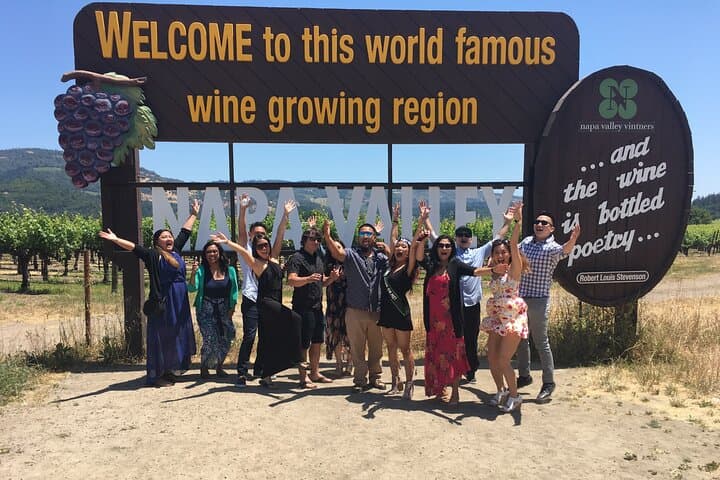
You step into a climate-controlled sedan and the valley unfurls through tinted glass: low, sun-baked ridges rimmed with rows of vines, creeks cutting bright ribbons between oak-dotted slopes. The driver navigates narrow country roads while you plan your tasting sequence—small-production pinot at a hillside estate, a bold cabernet at a deep-terraced winery, a picnic stop under a lone valley oak.
You step into a climate-controlled sedan and the valley unfurls through tinted glass: low, sun-baked ridges rimmed with rows of vines, creeks cutting bright ribbons between oak-dotted slopes. The driver navigates narrow country roads while you plan your tasting sequence—small-production pinot at a hillside estate, a bold cabernet at a deep-terraced winery, a picnic stop under a lone valley oak.
Napa Valley’s viticultural story began in the 19th century with Spanish missionaries and European vine cuttings; by the 20th century it had become a laboratory for varietals and winemaking technique. Geologically, the valley is a graben framed by the Mayacamas and Vaca ranges, soils ranging from volcanic gravel to alluvial loam—details that shape each producer’s style.
Culturally, tasting here mixes agricultural labor, family-run operations, and Michelin-level hospitality. Local roads wind past working farms; small towns like Yountville and St. Helena offer restaurants and artisan shops between appointments.
Practical guide: a private charter gives flexibility—expect a standard full-day service around six hours, with door-to-door pickup in Napa, Sonoma, or nearby towns. Bring reservations for wineries (many require advance booking), a light jacket for morning fog, and a plan for hydration and snacks between tastings. For a smooth day, prioritize two to four tasting stops to avoid palate fatigue and respect host policies on duration and group size.
A private vehicle removes parking stress and lets the landscape take the wheel: vineyards seem to lean toward the sun, and the valley keeps time by the clink of glasses and the slow arc of harvest activity.