THE ADVENTURE COLLECTIVE® · Independent discovery and booking for outdoor travel

Walk among pharaonic giants on a private full-day tour from Cairo that pairs the Great Pyramids and the Sphinx with Djoser’s Step Pyramid at Saqqara. Early pickup, a 30-minute camel ride, and an expert Egyptologist guide make this a concise, immersive survey of the Old Kingdom.
Walk among pharaonic giants on a private full-day tour from Cairo that pairs the Great Pyramids and the Sphinx with Djoser’s Step Pyramid at Saqqara. Early pickup, a 30-minute camel ride, and an expert Egyptologist guide make this a concise, immersive survey of the Old Kingdom.
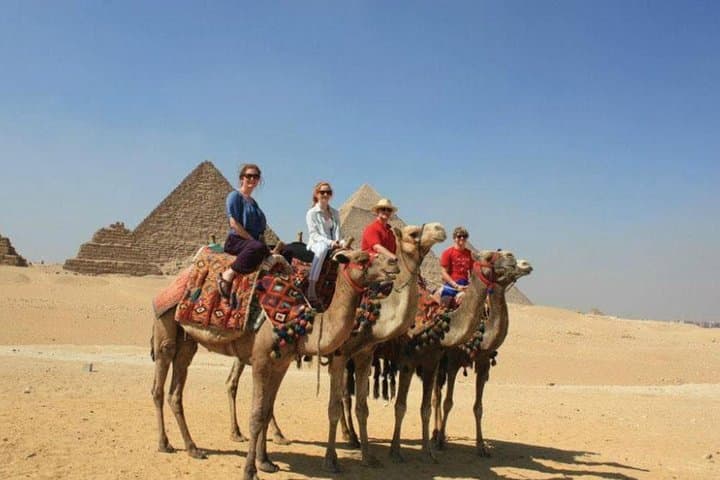
You step from the car onto an expanse of heat and stone: the Giza Plateau opens around you, ancient angles cutting the sky as the desert wind nudges sand across the causeways. Camels shift nearby, their handlers arranging saddles while the distant silhouette of the Step Pyramid at Sakkara waits across the plain.
Verified experiences and guided adventures in the surrounding area.
Operated by Grand Egypt Tours · Giza, Cairo Governorate
You step from the car onto an expanse of heat and stone: the Giza Plateau opens around you, ancient angles cutting the sky as the desert wind nudges sand across the causeways. Camels shift nearby, their handlers arranging saddles while the distant silhouette of the Step Pyramid at Sakkara waits across the plain.
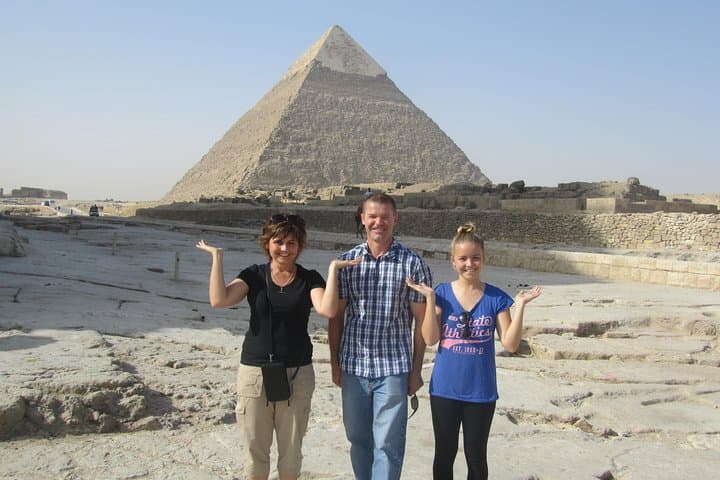
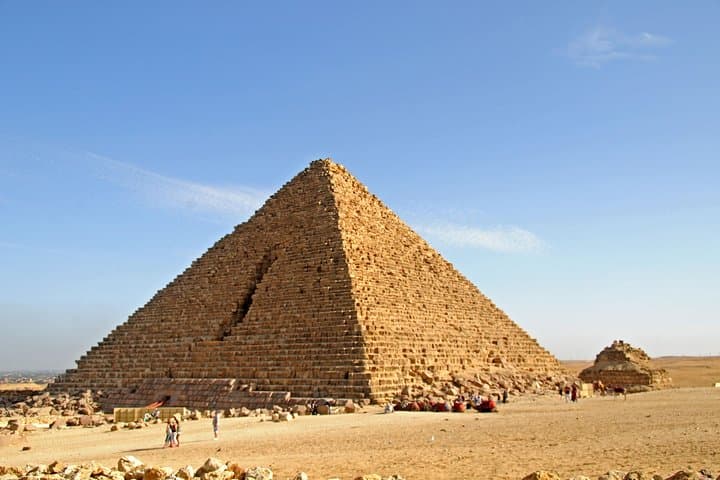
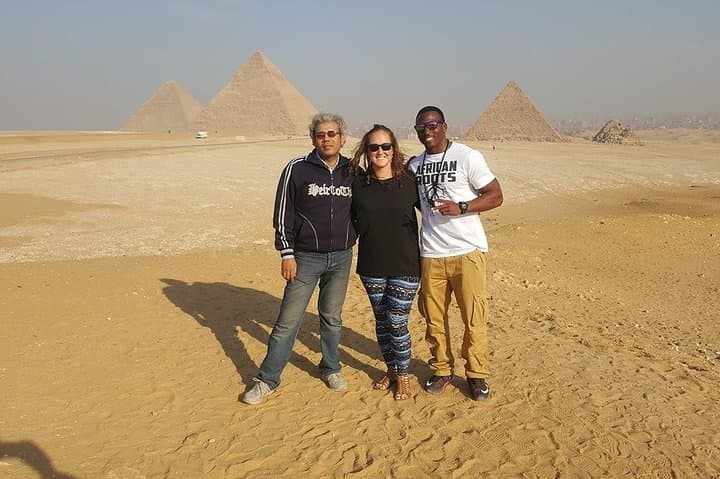
This full-day private routing threads three chapters of the Old Kingdom. On Giza you encounter Khufu’s Great Pyramid, Khafre’s slightly higher silhouette, and the compact form of Menkaure—massive limestone and granite monuments set on quarried bedrock. The Sphinx and its Valley Temple sit in carved limestone, face eroded but stubbornly present. At Saqqara, Djoser’s Step Pyramid (3rd Dynasty, c. 2630 BC) shows the birth of large-scale stone architecture and nearby mastabas reveal detailed funerary reliefs.
Geology here is simple and blunt: layers of Tura and Mokattam limestone, buried quarries and desert sand that both preserve and abrade the stones. Culturally, licensed Egyptologists narrate belief systems and funerary economics while local guides mediate camels and cafés.
Practicalities: plan for an 8-hour private tour that typically begins early (8:00), includes hotel pickup/drop-off, bottled water, and a 30-minute camel ride. Expect 2–4 km of walking over uneven sand and limestone with minimal elevation gain; wear sturdy closed-toe shoes, sun protection, and bring cash for optional site entrances or tips. Respect onsite rules: do not climb monuments, cover shoulders and knees in respectful sites, and follow your Egyptologist’s route to avoid fragile areas. Early morning or late afternoon visits keep temperatures manageable and light dramatic for photography.
moderate.
8 hours.
Suitable for travelers who can walk several kilometers over uneven ground in warm weather; basic stamina required for a full day out.
Confirm with your booking; private tours often include transport and guide but archaeological site entrance fees are commonly separate.
Access to the interior is limited, controlled by site authorities, and sometimes sold as a separate ticket—check ahead and be prepared for confined spaces.
Short, guided camel rides are generally safe; follow handlers’ instructions and wear secure shoes—avoid sudden movements when mounting or dismounting.
Parts of the sites are uneven; the operator lists wheelchair accessibility but expect limited access on rough paths—ask the provider about vehicle and route accommodations.
The Step Pyramid at Saqqara predates the Giza necropolis and marks the transition to monumental stone construction (Djoser, 3rd Dynasty, c. 2630 BC). Giza’s principal pyramids were built in the 4th Dynasty for Khufu, Khafre and Menkaure.
Ongoing conservation and excavation work aim to stabilize weathered stone and manage tourist impact—stay on designated paths and avoid touching fragile masonry.
Grand Egypt Tours operates guided outdoor trips and adventures with an emphasis on safety, stewardship, and memorable experiences.
You step from the car onto an expanse of heat and stone: the Giza Plateau opens around you, ancient angles cutting the sky as the desert wind nudges sand across the causeways. Camels shift nearby, their handlers arranging saddles while the distant silhouette of the Step Pyramid at Sakkara waits across the plain.
You step from the car onto an expanse of heat and stone: the Giza Plateau opens around you, ancient angles cutting the sky as the desert wind nudges sand across the causeways. Camels shift nearby, their handlers arranging saddles while the distant silhouette of the Step Pyramid at Sakkara waits across the plain.
This full-day private routing threads three chapters of the Old Kingdom. On Giza you encounter Khufu’s Great Pyramid, Khafre’s slightly higher silhouette, and the compact form of Menkaure—massive limestone and granite monuments set on quarried bedrock. The Sphinx and its Valley Temple sit in carved limestone, face eroded but stubbornly present. At Saqqara, Djoser’s Step Pyramid (3rd Dynasty, c. 2630 BC) shows the birth of large-scale stone architecture and nearby mastabas reveal detailed funerary reliefs.
Geology here is simple and blunt: layers of Tura and Mokattam limestone, buried quarries and desert sand that both preserve and abrade the stones. Culturally, licensed Egyptologists narrate belief systems and funerary economics while local guides mediate camels and cafés.
Practicalities: plan for an 8-hour private tour that typically begins early (8:00), includes hotel pickup/drop-off, bottled water, and a 30-minute camel ride. Expect 2–4 km of walking over uneven sand and limestone with minimal elevation gain; wear sturdy closed-toe shoes, sun protection, and bring cash for optional site entrances or tips. Respect onsite rules: do not climb monuments, cover shoulders and knees in respectful sites, and follow your Egyptologist’s route to avoid fragile areas. Early morning or late afternoon visits keep temperatures manageable and light dramatic for photography.