THE ADVENTURE COLLECTIVE® · Independent discovery and booking for outdoor travel

Spend a tailored day between the Giza Plateau’s monumental pyramids and the Egyptian Museum’s unparalleled pharaonic collection. This private tour blends ancient engineering, close‑up archaeology and practical logistics for a full‑day cultural immersion.
Spend a tailored day between the Giza Plateau’s monumental pyramids and the Egyptian Museum’s unparalleled pharaonic collection. This private tour blends ancient engineering, close‑up archaeology and practical logistics for a full‑day cultural immersion.
You step from the air‑conditioned car into a spread of sunbaked limestone — the Great Pyramid rising like an engineered cliff against the flat horizon, wind sharpening the sand’s edge. Guides gesture toward the three major pyramids while the Sphinx watches, masonry wearing the weather of millennia.
Verified experiences and guided adventures in the surrounding area.
Operated by EBI Travel · Giza, Cairo Governorate
You step from the air‑conditioned car into a spread of sunbaked limestone — the Great Pyramid rising like an engineered cliff against the flat horizon, wind sharpening the sand’s edge. Guides gesture toward the three major pyramids while the Sphinx watches, masonry wearing the weather of millennia.
The Giza Plateau is both an archaeological archive and a geographic act: stacked limestone blocks quarried from nearby beds, mortarless joins that have held for 4,500 years. Later, the Egyptian Museum in central Cairo collects the afterlife of those monuments — coffins, statues and Tutankhamun’s gold that reveal funerary craft, royal ideology and the city’s role as a political center from pharaonic times through the Ottoman era.
Culturally the day bends between the desert and the metropolis: Bedouin and local vendors at Giza, tea shops and frenetic markets closer to Tahrir. Expect a mix of uneven stone paths beneath your feet at Giza and climate‑controlled galleries at the museum; the transfer is roughly 30 minutes each way.
Practically, the private tour includes hotel pick‑up, entrance fees, bottled water and a certified Egyptologist guide. Start early to avoid peak heat, bring sun protection, sturdy closed‑toe shoes for the plateau’s stones, and plan an afternoon for the museum’s highlights — the Tutankhamun rooms and royal mummies. Photograph freely where allowed, but respect no‑access signs and don’t attempt to climb the pyramids. With a private guide you can pace the day to match your interest in architecture, hieroglyphs and the stories that built modern Cairo from its ancient stones.
easy.
7–8 hours.
Light walking on uneven ground for several hours; able to climb short flights of steps and stand during museum visits.
Yes — the tour includes entrance fees to the Giza Plateau and the Egyptian Museum as described in the itinerary.
Interior access is limited, often requires separate tickets and is sometimes restricted for conservation; ask your guide to arrange this in advance if available.
Children are welcome; the plateau has uneven terrain and limited accessibility, so guests with mobility issues may find parts challenging — discuss needs when booking.
Expect about a 30‑minute transfer each way in normal traffic; private transport is included in the tour.
The pyramids on the Giza Plateau date to the Fourth Dynasty (around 2600–2500 BCE), built as monumental tombs for pharaohs and surrounded by temples and worker cemeteries.
Visitor pressure and weathering threaten surface stones and painted reliefs; follow signage, avoid touching ancient masonry and support licensed guides to concentrate tourism impact.
EBI Travel operates guided outdoor trips and adventures with an emphasis on safety, stewardship, and memorable experiences.

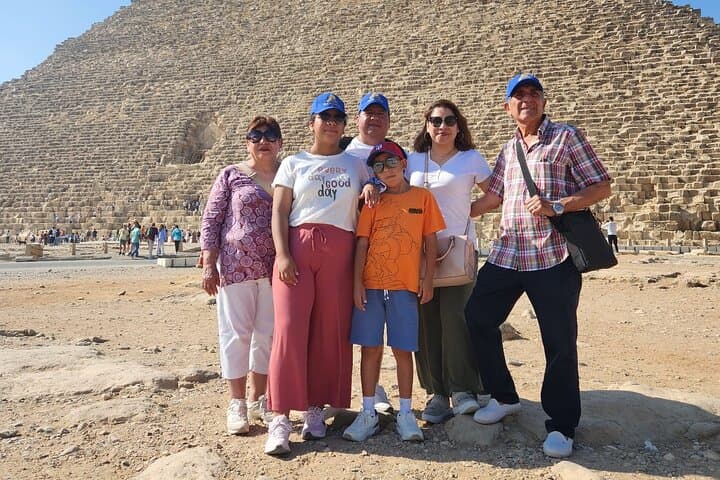
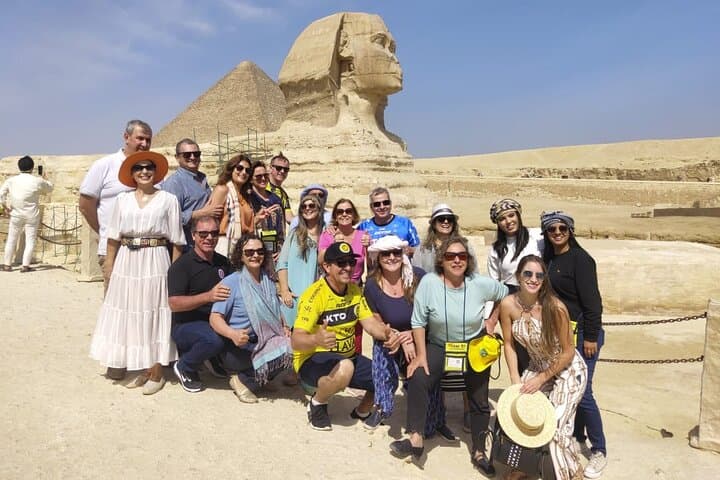

You step from the air‑conditioned car into a spread of sunbaked limestone — the Great Pyramid rising like an engineered cliff against the flat horizon, wind sharpening the sand’s edge. Guides gesture toward the three major pyramids while the Sphinx watches, masonry wearing the weather of millennia.
You step from the air‑conditioned car into a spread of sunbaked limestone — the Great Pyramid rising like an engineered cliff against the flat horizon, wind sharpening the sand’s edge. Guides gesture toward the three major pyramids while the Sphinx watches, masonry wearing the weather of millennia.
The Giza Plateau is both an archaeological archive and a geographic act: stacked limestone blocks quarried from nearby beds, mortarless joins that have held for 4,500 years. Later, the Egyptian Museum in central Cairo collects the afterlife of those monuments — coffins, statues and Tutankhamun’s gold that reveal funerary craft, royal ideology and the city’s role as a political center from pharaonic times through the Ottoman era.
Culturally the day bends between the desert and the metropolis: Bedouin and local vendors at Giza, tea shops and frenetic markets closer to Tahrir. Expect a mix of uneven stone paths beneath your feet at Giza and climate‑controlled galleries at the museum; the transfer is roughly 30 minutes each way.
Practically, the private tour includes hotel pick‑up, entrance fees, bottled water and a certified Egyptologist guide. Start early to avoid peak heat, bring sun protection, sturdy closed‑toe shoes for the plateau’s stones, and plan an afternoon for the museum’s highlights — the Tutankhamun rooms and royal mummies. Photograph freely where allowed, but respect no‑access signs and don’t attempt to climb the pyramids. With a private guide you can pace the day to match your interest in architecture, hieroglyphs and the stories that built modern Cairo from its ancient stones.