THE ADVENTURE COLLECTIVE® · Independent discovery and booking for outdoor travel

Experience Cairo’s must-sees in a single, well-paced day: Giza’s pyramids and Sphinx, a camel ride, a curated visit to the Egyptian Museum, and the hilltop Citadel with lunch overlooking the Nile. This private tour pairs logistical ease with expert interpretation.
Experience Cairo’s must-sees in a single, well-paced day: Giza’s pyramids and Sphinx, a camel ride, a curated visit to the Egyptian Museum, and the hilltop Citadel with lunch overlooking the Nile. This private tour pairs logistical ease with expert interpretation.
You arrive on the Giza Plateau with sunlight flattening the desert and heat already starting to press against your shirt. The three great pyramids rise like patient machines of stone; camels sway and the Sphinx watches with an endurance that outlasts empires. A private guide leads you from broad, pumiced pathways past quarried blocks and the small, precise ruins of valley temples.
Verified experiences and guided adventures in the surrounding area.
Operated by Egypt Tours Excursions · Cairo, Cairo Governorate
You arrive on the Giza Plateau with sunlight flattening the desert and heat already starting to press against your shirt. The three great pyramids rise like patient machines of stone; camels sway and the Sphinx watches with an endurance that outlasts empires. A private guide leads you from broad, pumiced pathways past quarried blocks and the small, precise ruins of valley temples.
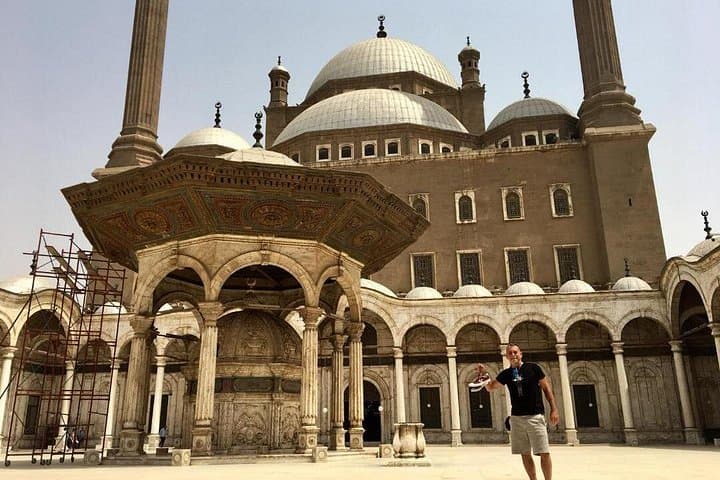
The route stitches together 4,500 years of Egyptian history: Old Kingdom funerary complexes at Giza, the funerary boat and tombs dug into limestone, then to the Egyptian Museum in central Cairo with its catalogue of pharaonic material including Tutankhamun’s hoard. Later the Citadel—built by Saladin in 1183 AD—crowns Mokattam Hill; Mohamed Ali’s mosque inside the fortress recalls Ottoman-era Cairo.
Geology is simple and stark here: a limestone plateau that held massive stone and then the Nile, which still shapes daily life and provides the verdant corridor that made civilization possible.
Practical guidance: this is a long, mostly low-impact day—expect walking on uneven stone, sun exposure, and crowds. Camel rides are typically short but memorable; follow your guide’s safety briefing. Carry sunscreen, a reusable water bottle, and wear closed-toe shoes for walking near ruins. Eat lightly before museum visits and budget time for security and ticket queues. Morning starts avoid the worst heat; private transfers and an English-speaking Egyptologist are included, which keeps logistics simple. The tour balances spectacle with structure: deep antiquity without the guesswork of public transit.
easy.
10 hours.
Suitable for most fitness levels; expect several hours on your feet and short walks over uneven stone and sand
Yes—entrance fees to the Giza Plateau sites, the Egyptian Museum and the Citadel are included in the tour price.
The camel ride listed is approximately one hour and is supervised by local handlers; follow their instructions and your guide for a safe experience.
Yes—private pick-up and return by air-conditioned vehicle from hotels in Cairo are included.
Yes—visitors may enter; modest dress is required (shoulders and knees covered), and women should have a scarf available.
The Giza pyramids date to Egypt’s Fourth Dynasty (c. 2600–2500 BCE); the Citadel was built by Saladin in the 12th century as a military stronghold.
Respect roped areas and avoid touching carved stone; stick to marked paths and support licensed local guides to reduce wear on fragile sites.
Egypt Tours Excursions operates guided outdoor trips and adventures with an emphasis on safety, stewardship, and memorable experiences.
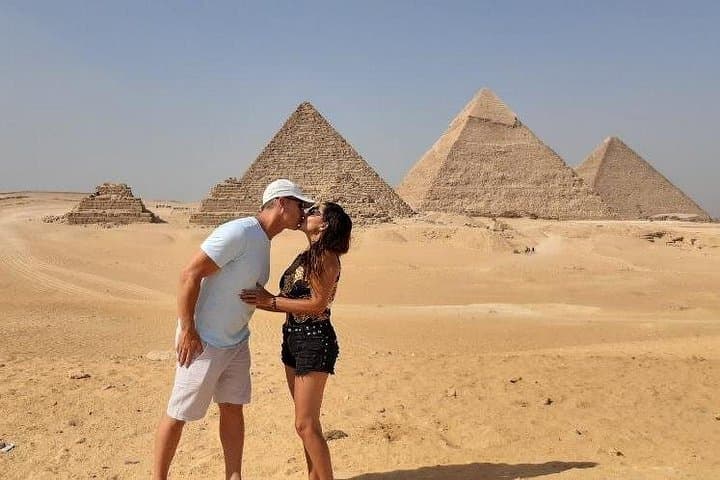
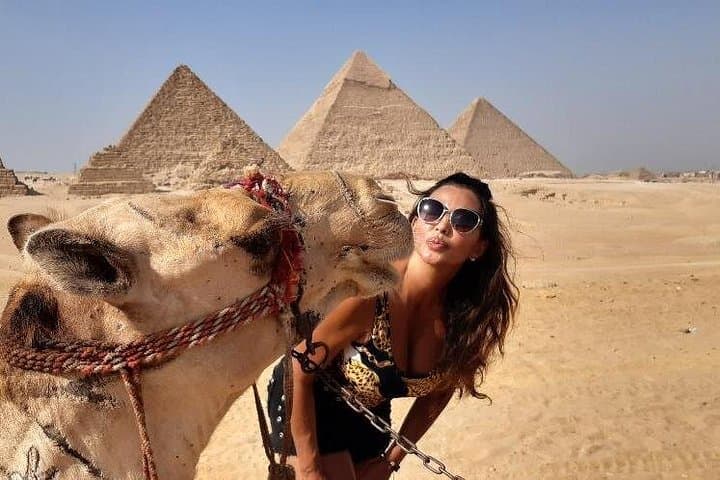
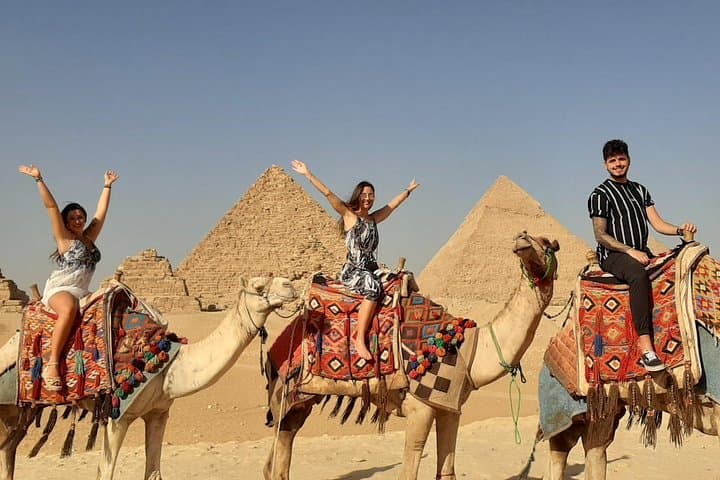
You arrive on the Giza Plateau with sunlight flattening the desert and heat already starting to press against your shirt. The three great pyramids rise like patient machines of stone; camels sway and the Sphinx watches with an endurance that outlasts empires. A private guide leads you from broad, pumiced pathways past quarried blocks and the small, precise ruins of valley temples.
You arrive on the Giza Plateau with sunlight flattening the desert and heat already starting to press against your shirt. The three great pyramids rise like patient machines of stone; camels sway and the Sphinx watches with an endurance that outlasts empires. A private guide leads you from broad, pumiced pathways past quarried blocks and the small, precise ruins of valley temples.
The route stitches together 4,500 years of Egyptian history: Old Kingdom funerary complexes at Giza, the funerary boat and tombs dug into limestone, then to the Egyptian Museum in central Cairo with its catalogue of pharaonic material including Tutankhamun’s hoard. Later the Citadel—built by Saladin in 1183 AD—crowns Mokattam Hill; Mohamed Ali’s mosque inside the fortress recalls Ottoman-era Cairo.
Geology is simple and stark here: a limestone plateau that held massive stone and then the Nile, which still shapes daily life and provides the verdant corridor that made civilization possible.
Practical guidance: this is a long, mostly low-impact day—expect walking on uneven stone, sun exposure, and crowds. Camel rides are typically short but memorable; follow your guide’s safety briefing. Carry sunscreen, a reusable water bottle, and wear closed-toe shoes for walking near ruins. Eat lightly before museum visits and budget time for security and ticket queues. Morning starts avoid the worst heat; private transfers and an English-speaking Egyptologist are included, which keeps logistics simple. The tour balances spectacle with structure: deep antiquity without the guesswork of public transit.