THE ADVENTURE COLLECTIVE® · Independent discovery and booking for outdoor travel

Skip the crowds and experience Abu Simbel with an Egyptologist on a private full-day drive from Aswan. Expect towering statues, intricate interiors, and a well-paced visit that blends history with practical comforts.
Skip the crowds and experience Abu Simbel with an Egyptologist on a private full-day drive from Aswan. Expect towering statues, intricate interiors, and a well-paced visit that blends history with practical comforts.
The road south from Aswan unfurls in a long ribbon of ochre and sky; Lake Nasser glints like a flat, daring companion as your private vehicle eats the kilometers toward Abu Simbel. When the sandstone face appears, four colossal pharaohs rise from the cliff, frozen in stone yet oddly alive—shadows sliding down their chests as the sun moves across a desert stage.
Verified experiences and guided adventures in the surrounding area.
Operated by Egypt Holiday Makers Travel · Abu Simbel, Aswan Governorate
The road south from Aswan unfurls in a long ribbon of ochre and sky; Lake Nasser glints like a flat, daring companion as your private vehicle eats the kilometers toward Abu Simbel. When the sandstone face appears, four colossal pharaohs rise from the cliff, frozen in stone yet oddly alive—shadows sliding down their chests as the sun moves across a desert stage.
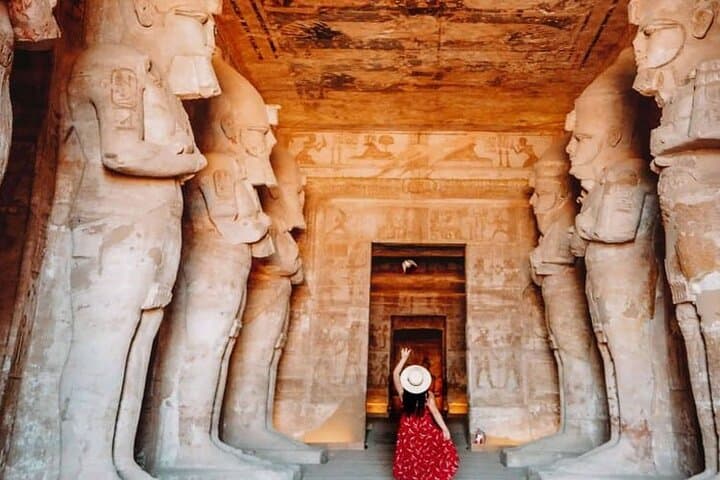
Carved under Ramses II more than 3,000 years ago, Abu Simbel was created to impress and intimidate: colossal seated figures guard the entrance while richly incised reliefs inside record battles, deities and royal rituals. In the 1960s an international engineering effort lifted and reassembled the temples on higher ground to save them from the rising waters of the Aswan High Dam—a modern chapter as dramatic as the original construction.
Expect a historian’s narrative from your Egyptologist guide, explanation of the famed solar alignment that selectively lights the inner sanctuary on specific days, and a measured pace that leaves time for photos and quiet observation.
Practicalities matter: this is a long day—plan for 6–8 hours including round-trip driving—so carry water, sun protection and comfortable shoes. Respect site rules: no touching reliefs, follow paths, and keep voices low inside chambers. Many operators include air-conditioned pick-up and bottled water; check if entry fees and lunch are included when you book.
A visit to Abu Simbel is equal parts archaeology, engineering and relentless landscape—an excursion that rewards curiosity and simple, steady preparation.
easy.
6–8 hours.
Basic fitness for a long travel day; able to walk short distances on uneven stone floors and stand during the tour.
The road trip is about 3 hours each way by private vehicle, making the full excursion roughly 6–8 hours including time at the site.
Some tour options include entry fees and lunch—confirm the package at booking; otherwise fees are payable as indicated by the operator.
Photography is generally allowed, but obey signage and guide instructions—flash may be restricted inside the inner sanctuary to protect pigments and carvings.
The site has been adapted with access features in several areas, but interior chambers have steps; check with the operator for specific accessibility arrangements and vehicle access.
The twin temples were carved for Ramses II (13th century BCE) and moved in the 1960s in a UNESCO-backed project to escape flooding from the Aswan High Dam.
Visitors should stay on designated paths and avoid touching reliefs; the site's conservation relies on controlled visitor access and international preservation efforts.
Egypt Holiday Makers Travel operates guided outdoor trips and adventures with an emphasis on safety, stewardship, and memorable experiences.
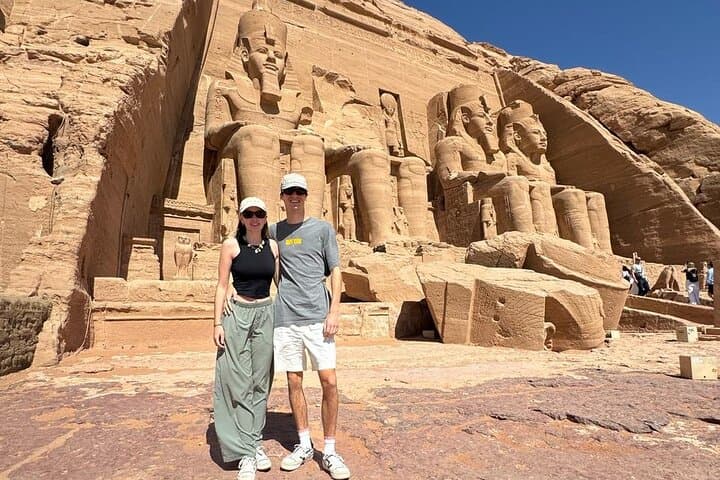
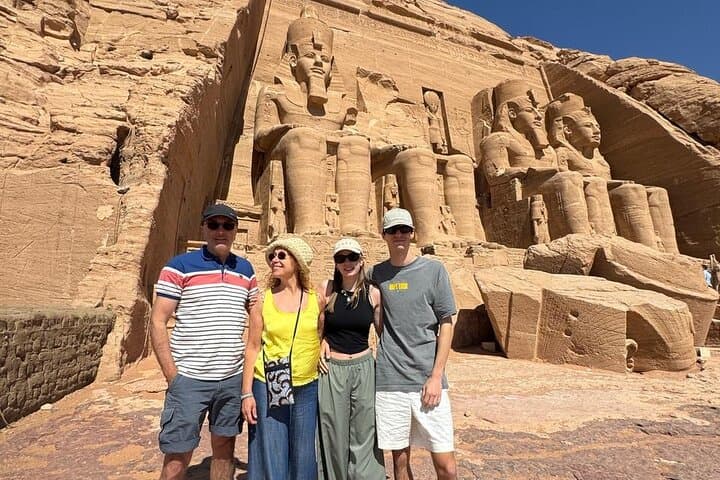
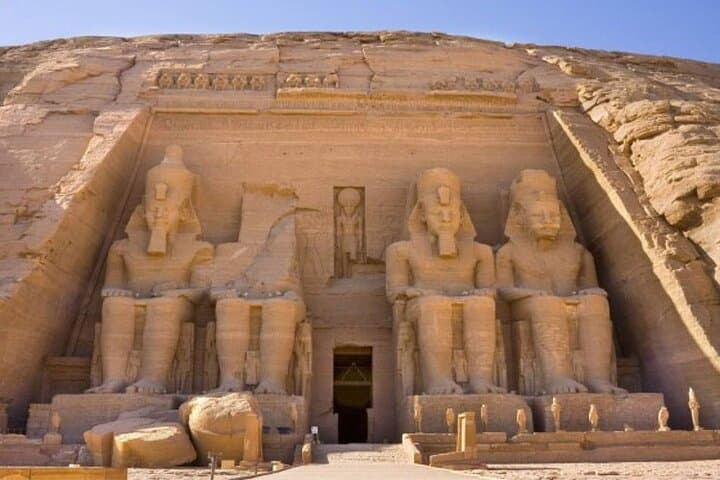
The road south from Aswan unfurls in a long ribbon of ochre and sky; Lake Nasser glints like a flat, daring companion as your private vehicle eats the kilometers toward Abu Simbel. When the sandstone face appears, four colossal pharaohs rise from the cliff, frozen in stone yet oddly alive—shadows sliding down their chests as the sun moves across a desert stage.
The road south from Aswan unfurls in a long ribbon of ochre and sky; Lake Nasser glints like a flat, daring companion as your private vehicle eats the kilometers toward Abu Simbel. When the sandstone face appears, four colossal pharaohs rise from the cliff, frozen in stone yet oddly alive—shadows sliding down their chests as the sun moves across a desert stage.
Carved under Ramses II more than 3,000 years ago, Abu Simbel was created to impress and intimidate: colossal seated figures guard the entrance while richly incised reliefs inside record battles, deities and royal rituals. In the 1960s an international engineering effort lifted and reassembled the temples on higher ground to save them from the rising waters of the Aswan High Dam—a modern chapter as dramatic as the original construction.
Expect a historian’s narrative from your Egyptologist guide, explanation of the famed solar alignment that selectively lights the inner sanctuary on specific days, and a measured pace that leaves time for photos and quiet observation.
Practicalities matter: this is a long day—plan for 6–8 hours including round-trip driving—so carry water, sun protection and comfortable shoes. Respect site rules: no touching reliefs, follow paths, and keep voices low inside chambers. Many operators include air-conditioned pick-up and bottled water; check if entry fees and lunch are included when you book.
A visit to Abu Simbel is equal parts archaeology, engineering and relentless landscape—an excursion that rewards curiosity and simple, steady preparation.