THE ADVENTURE COLLECTIVE® · Independent discovery and booking for outdoor travel

A private, small-group drive from Edinburgh to four of central Scotland’s most dramatic castles—Stirling, Doune, Drummond Gardens and Blackness—blends royal history with cinematic locations. This 5–6 hour tour is ideal for history fans and film buffs who want focused time at each site.
A private, small-group drive from Edinburgh to four of central Scotland’s most dramatic castles—Stirling, Doune, Drummond Gardens and Blackness—blends royal history with cinematic locations. This 5–6 hour tour is ideal for history fans and film buffs who want focused time at each site.
The day starts on a cool Edinburgh morning, the city’s stone facades shrinking in the rear-view as the road opens to low hills and the wide sweep of the Forth Valley. In quick succession a line of fortresses appears—each one a different claim on Scotland’s past: Stirling’s commanding hilltop keep, Doune’s medieval courtyards, the formal terraces of Drummond, and Blackness’s gun-lined promontory looking out over the Firth of Forth.
Verified experiences and guided adventures in the surrounding area.
Operated by Private tours Edinburgh · Edinburgh, Scotland
The day starts on a cool Edinburgh morning, the city’s stone facades shrinking in the rear-view as the road opens to low hills and the wide sweep of the Forth Valley. In quick succession a line of fortresses appears—each one a different claim on Scotland’s past: Stirling’s commanding hilltop keep, Doune’s medieval courtyards, the formal terraces of Drummond, and Blackness’s gun-lined promontory looking out over the Firth of Forth.
These sites trace centuries of politics, warfare and later screencraft. Stirling Castle, sited on Castle Hill, was a royal stronghold where Stewart kings built Renaissance halls and where Mary, Queen of Scots, was crowned as an infant. Doune wears its film credits—Game of Thrones and Outlander—across a largely intact medieval plan. Drummond’s gardens are an ordered, geometric contrast to the ramparts; their clipped parterres and avenues echo formal European design. Blackness Castle, built as a sandstone fortress, presents its formidable profile to the estuary and has doubled as a cinematic anchor for historical drama.
Geology and weather shape the visit: compact hills, exposed battlements and coastal winds at Blackness demand sturdy footwear and a windproof layer. Expect short walks at each stop—cobbled yards, stair climbs to battlements, and planted paths at Drummond.
Practicalities: this private tour runs about 5–6 hours from Edinburgh, is limited to four people, and typically does not include individual castle admissions. Book a morning slot to avoid peak coach crowds, bring contactless payment or cash for entry and refreshments, and dress in layers with grippy shoes—the terrain and Scottish weather will decide the pace.
easy.
5–6 hours.
Suitable for light activity: able to walk short distances, climb uneven steps and stand for guided commentary.
No, admissions are typically not included; the tour provides transport and guiding but entry fees are payable separately at each site.
The tour normally departs from central Edinburgh with a return to the city; private pickup can be arranged depending on the operator’s options.
The tour is family-friendly, but many castle areas have steep steps and uneven surfaces—access may be limited for wheelchairs; check with the operator for site-specific access details.
This private option is limited to a maximum of four people, so you’ll have more time at each site and personalized commentary.
These castles reflect different roles—royal coronation and administration at Stirling, cinematic reuse at Doune, landscaped aristocratic leisure at Drummond, and coastal defense at Blackness—spanning medieval to early modern Scotland.
Sites are managed to balance public access with preservation—stick to paths in Drummond’s gardens and observe site guidelines to protect delicate plantings and historic fabric.
Private tours Edinburgh operates guided outdoor trips and adventures with an emphasis on safety, stewardship, and memorable experiences.
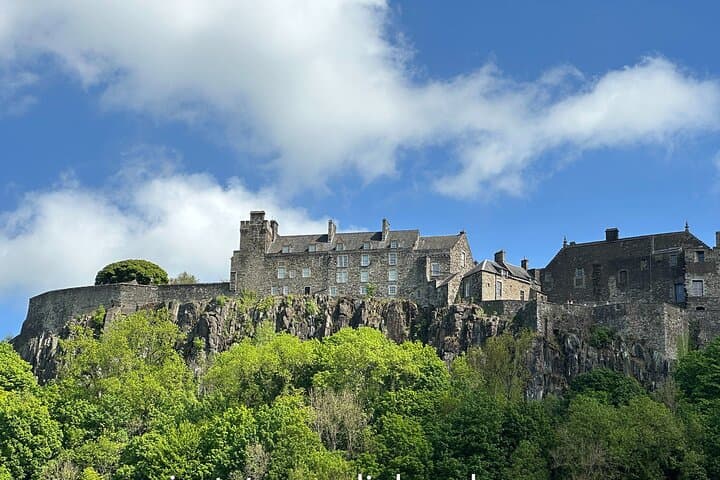


The day starts on a cool Edinburgh morning, the city’s stone facades shrinking in the rear-view as the road opens to low hills and the wide sweep of the Forth Valley. In quick succession a line of fortresses appears—each one a different claim on Scotland’s past: Stirling’s commanding hilltop keep, Doune’s medieval courtyards, the formal terraces of Drummond, and Blackness’s gun-lined promontory looking out over the Firth of Forth.
The day starts on a cool Edinburgh morning, the city’s stone facades shrinking in the rear-view as the road opens to low hills and the wide sweep of the Forth Valley. In quick succession a line of fortresses appears—each one a different claim on Scotland’s past: Stirling’s commanding hilltop keep, Doune’s medieval courtyards, the formal terraces of Drummond, and Blackness’s gun-lined promontory looking out over the Firth of Forth.
These sites trace centuries of politics, warfare and later screencraft. Stirling Castle, sited on Castle Hill, was a royal stronghold where Stewart kings built Renaissance halls and where Mary, Queen of Scots, was crowned as an infant. Doune wears its film credits—Game of Thrones and Outlander—across a largely intact medieval plan. Drummond’s gardens are an ordered, geometric contrast to the ramparts; their clipped parterres and avenues echo formal European design. Blackness Castle, built as a sandstone fortress, presents its formidable profile to the estuary and has doubled as a cinematic anchor for historical drama.
Geology and weather shape the visit: compact hills, exposed battlements and coastal winds at Blackness demand sturdy footwear and a windproof layer. Expect short walks at each stop—cobbled yards, stair climbs to battlements, and planted paths at Drummond.
Practicalities: this private tour runs about 5–6 hours from Edinburgh, is limited to four people, and typically does not include individual castle admissions. Book a morning slot to avoid peak coach crowds, bring contactless payment or cash for entry and refreshments, and dress in layers with grippy shoes—the terrain and Scottish weather will decide the pace.