THE ADVENTURE COLLECTIVE® · Independent discovery and booking for outdoor travel

Walk the streets where the Declaration was debated and signed on a private, two-hour guided tour of Old City Philadelphia. Expect intimate storytelling, outside visits to Independence Hall and Elfreth's Alley, and practical local tips to navigate cobbles and crowds.
Walk the streets where the Declaration was debated and signed on a private, two-hour guided tour of Old City Philadelphia. Expect intimate storytelling, outside visits to Independence Hall and Elfreth's Alley, and practical local tips to navigate cobbles and crowds.
The guide waits under the Singer Building awning as the city's morning light strikes the cobbles—tourists, school groups and delivery vans moving around a living history set. For two hours you move through a compact corridor of national memory: Independence Hall, Independence Mall, the site where the Declaration was signed, and the narrow brick lane of Elfreth's Alley where 18th‑century residents still seem to linger.
Verified experiences and guided adventures in the surrounding area.
Operated by Opatrip.com USA · Philadelphia, Pennsylvania
The guide waits under the Singer Building awning as the city's morning light strikes the cobbles—tourists, school groups and delivery vans moving around a living history set. For two hours you move through a compact corridor of national memory: Independence Hall, Independence Mall, the site where the Declaration was signed, and the narrow brick lane of Elfreth's Alley where 18th‑century residents still seem to linger.
This walk threads political history with urban geology and culture. Philadelphia sits on the tidal plain of the Delaware River; its streets follow colonial plots and old shipping lanes. Quaker planning and early commerce shaped rowhouse grids and public squares that became stages for the Revolution. Guides narrate debates about liberty, the practical business of drafting a nation, and the local craftspeople—like the flagmakers and printers—who kept a young republic running.
Expect close-up stories rather than long museum lectures: stops last from 5 to 30 minutes, with outside visits to key facades and plaques. The private format allows questions about lesser-known figures and the city’s evolving neighborhoods.
Practical notes: the route is paved and accessible to most walkers but includes cobblestones and occasional curbs; plan for two hours, light walking shoes, and weather-appropriate layers. Morning departures avoid tour-bus crowds and summer heat. Public transit and taxis are readily available to and from the start at The Singer; the tour finishes on Elfreth's Alley, convenient for exploring Old City cafes and museums afterward.
For visitors who want depth without museum queues, this private walking tour condenses Philadelphia’s founding era into a clear, human‑scaled experience.
easy.
2 hours.
Suitable for most fitness levels; requires standing and walking for two hours with brief breaks
Meet at The Singer; the tour concludes at Elfreth's Alley, both within Philadelphia's Old City neighborhood and close to public transit.
Most of the route is on paved streets and curbs but includes historic cobblestones; contact the operator for specific accessibility needs prior to booking.
This listing is a private tour reserved per booking, allowing personalized pacing and questions tailored to your group's interests.
Full refunds are available if you cancel at least 24 hours before the scheduled departure; last-minute cancellations are nonrefundable.
Old City was a colonial port and the political heart of the American Revolution; the area’s streets preserve parcel lines and public spaces from that era.
Visitors should stick to sidewalks and marked paths, avoid touching fragile historic facades, and respect local preservation rules to protect these century-old structures.
Opatrip.com USA operates guided outdoor trips and adventures with an emphasis on safety, stewardship, and memorable experiences.
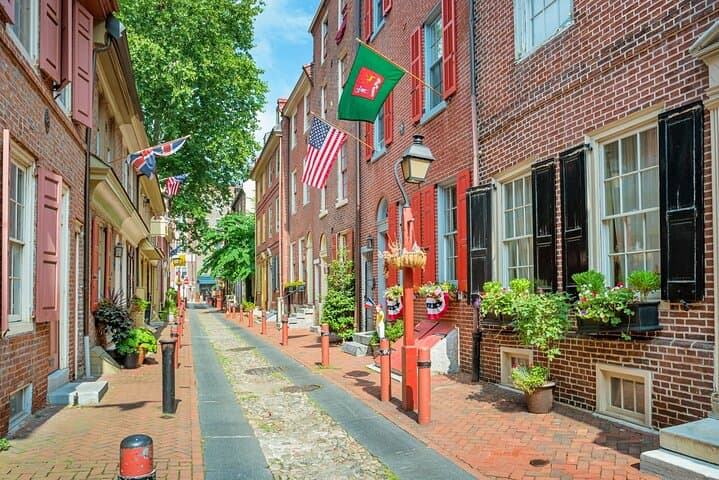
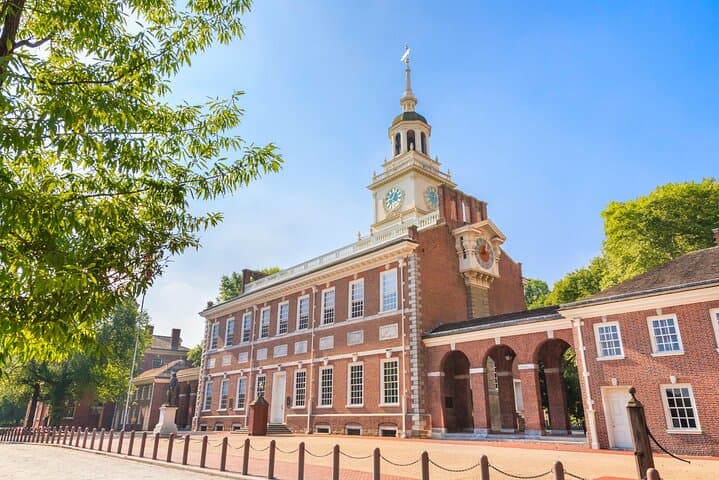
The guide waits under the Singer Building awning as the city's morning light strikes the cobbles—tourists, school groups and delivery vans moving around a living history set. For two hours you move through a compact corridor of national memory: Independence Hall, Independence Mall, the site where the Declaration was signed, and the narrow brick lane of Elfreth's Alley where 18th‑century residents still seem to linger.
The guide waits under the Singer Building awning as the city's morning light strikes the cobbles—tourists, school groups and delivery vans moving around a living history set. For two hours you move through a compact corridor of national memory: Independence Hall, Independence Mall, the site where the Declaration was signed, and the narrow brick lane of Elfreth's Alley where 18th‑century residents still seem to linger.
This walk threads political history with urban geology and culture. Philadelphia sits on the tidal plain of the Delaware River; its streets follow colonial plots and old shipping lanes. Quaker planning and early commerce shaped rowhouse grids and public squares that became stages for the Revolution. Guides narrate debates about liberty, the practical business of drafting a nation, and the local craftspeople—like the flagmakers and printers—who kept a young republic running.
Expect close-up stories rather than long museum lectures: stops last from 5 to 30 minutes, with outside visits to key facades and plaques. The private format allows questions about lesser-known figures and the city’s evolving neighborhoods.
Practical notes: the route is paved and accessible to most walkers but includes cobblestones and occasional curbs; plan for two hours, light walking shoes, and weather-appropriate layers. Morning departures avoid tour-bus crowds and summer heat. Public transit and taxis are readily available to and from the start at The Singer; the tour finishes on Elfreth's Alley, convenient for exploring Old City cafes and museums afterward.
For visitors who want depth without museum queues, this private walking tour condenses Philadelphia’s founding era into a clear, human‑scaled experience.