THE ADVENTURE COLLECTIVE® · Independent discovery and booking for outdoor travel

A private helicopter flight that lands at Kala Patthar and Gokyo Lake to deliver one of the most immediate Everest panoramas available. Early-morning rotors, alpine landings, and a short breakfast stop at Everest View Hotel condense high-mountain drama into a single morning.
A private helicopter flight that lands at Kala Patthar and Gokyo Lake to deliver one of the most immediate Everest panoramas available. Early-morning rotors, alpine landings, and a short breakfast stop at Everest View Hotel condense high-mountain drama into a single morning.
Before the rotor wash settles you are already looking up—Himalayan summits stitch the horizon into a hard, white ridge, and the chopper banks to present Everest like a king inspecting its domain.
Verified experiences and guided adventures in the surrounding area.
Operated by Himalaya Holiday service Pvt. Ltd.(HHS) · Kathmandu, Bagmati Province
Before the rotor wash settles you are already looking up—Himalayan summits stitch the horizon into a hard, white ridge, and the chopper banks to present Everest like a king inspecting its domain.
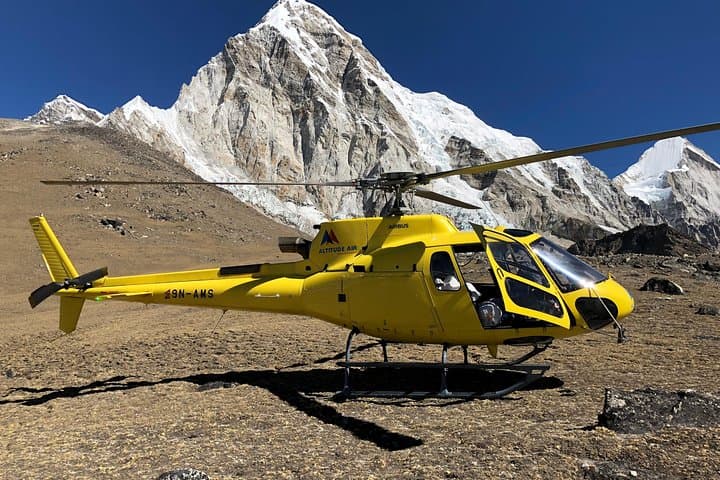
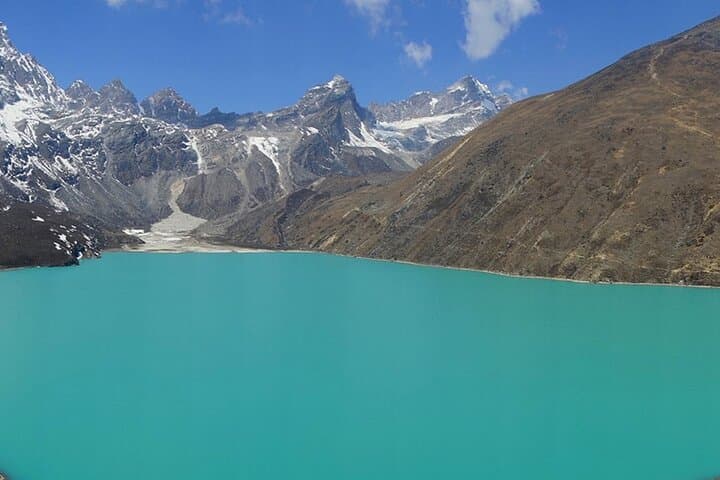
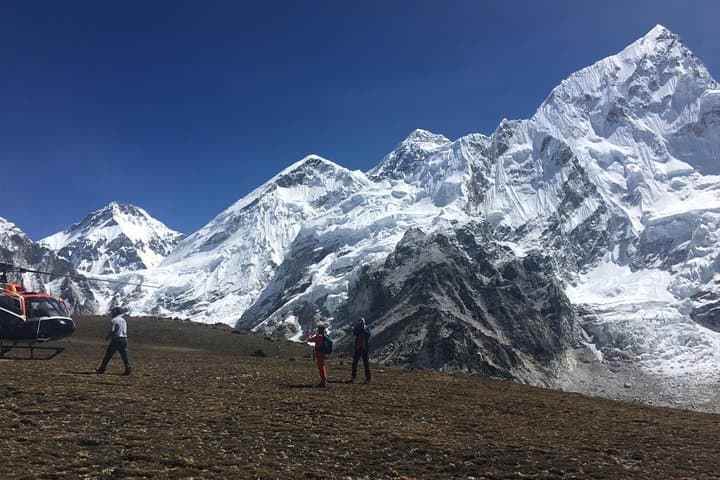
This private flight begins in the thin air above Kathmandu and climbs past Lukla, skirting the crevassed shoulders of the Khumbu Glacier before dropping off at Kala Patthar and the glassy Gokyo basin. Kala Patthar (≈5,545 m) gives the clearest panoramic view of Everest and neighboring giants; Gokyo sits on moraines carved by the Ngozumpa Glacier, its small lakes reflecting blue from ice-fed waters.
The region sits inside Sagarmatha National Park, where Sherpa communities have guided mountaineers since Himalayan exploration intensified in the early 20th century—Tenzing Norgay and Edmund Hillary’s 1953 ascent reshaped global mountaineering and local livelihoods.
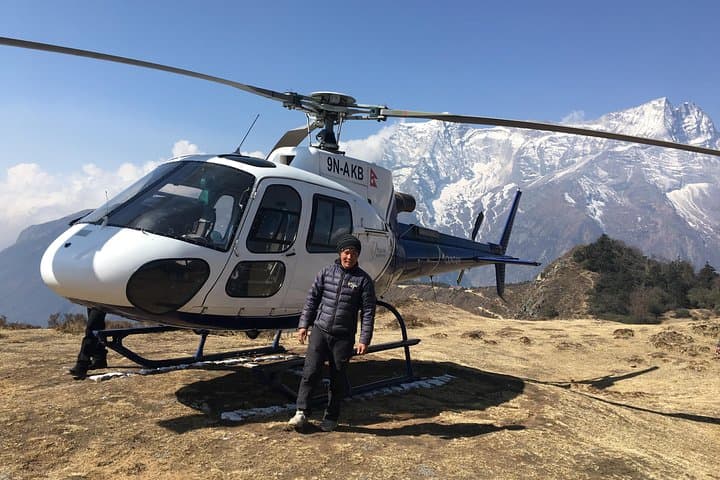
Expect rocky, windswept landings, cold air that bites through layers, and a landscape of scree, ice and stunted rhododendron. Culture is close: you'll see prayer flags marking passes and the low stone monasteries that anchor Sherpa life.
Practical edge: flights typically run at first light to avoid afternoon winds; total door-to-door time is about 3–4 hours. Bring layered insulation, high-SPF sunscreen, and water—altitude and UV are the real challenges, not fitness. Passports and weight info are required; travelers with heart or respiratory issues should consult a physician. Photography windows are brief—arrive with batteries charged and lenses ready. Above all, listen to crew briefings: weather and safety determine whether you land or only overfly these high places.
easy.
3–4 hours.
No sustained fitness required, but you should tolerate short exposure to high altitude and be able to step on/off the helicopter
Landings depend on weather and visibility; in unstable conditions the pilot may do a safe flyover instead of landing.
Yes—your passport is required for check-in and identification on the day of the flight.
Not recommended—rapid altitude exposure and the stress of flight can affect cardiovascular and respiratory conditions; consult your doctor.
Typical stop times range from 10–60 minutes depending on the itinerary and weather, with about an hour allocated for breakfast at Everest View Hotel.
The Khumbu valley is the heart of Sherpa culture; modern mountaineering surged after the successful 1953 Everest ascent and the valley became a gateway for climbers.
Sagarmatha National Park enforces permits and waste rules; helicopter traffic increases noise and fuel use—stick to authorized operators and pack out any trash.
Himalaya Holiday service Pvt. Ltd.(HHS) operates guided outdoor trips and adventures with an emphasis on safety, stewardship, and memorable experiences.
Before the rotor wash settles you are already looking up—Himalayan summits stitch the horizon into a hard, white ridge, and the chopper banks to present Everest like a king inspecting its domain.
Before the rotor wash settles you are already looking up—Himalayan summits stitch the horizon into a hard, white ridge, and the chopper banks to present Everest like a king inspecting its domain.
This private flight begins in the thin air above Kathmandu and climbs past Lukla, skirting the crevassed shoulders of the Khumbu Glacier before dropping off at Kala Patthar and the glassy Gokyo basin. Kala Patthar (≈5,545 m) gives the clearest panoramic view of Everest and neighboring giants; Gokyo sits on moraines carved by the Ngozumpa Glacier, its small lakes reflecting blue from ice-fed waters.
The region sits inside Sagarmatha National Park, where Sherpa communities have guided mountaineers since Himalayan exploration intensified in the early 20th century—Tenzing Norgay and Edmund Hillary’s 1953 ascent reshaped global mountaineering and local livelihoods.
Expect rocky, windswept landings, cold air that bites through layers, and a landscape of scree, ice and stunted rhododendron. Culture is close: you'll see prayer flags marking passes and the low stone monasteries that anchor Sherpa life.
Practical edge: flights typically run at first light to avoid afternoon winds; total door-to-door time is about 3–4 hours. Bring layered insulation, high-SPF sunscreen, and water—altitude and UV are the real challenges, not fitness. Passports and weight info are required; travelers with heart or respiratory issues should consult a physician. Photography windows are brief—arrive with batteries charged and lenses ready. Above all, listen to crew briefings: weather and safety determine whether you land or only overfly these high places.