THE ADVENTURE COLLECTIVE® · Independent discovery and booking for outdoor travel

Spend a full day leaving Bangkok for Kanchanaburi’s powerful contrasts: the WWII sites tied to the Death Railway, a tranquil bamboo raft on the Khwae, and a jungle trek to Erawan’s seven emerald tiers. A practical, history‑meets‑nature day trip with swimming and light hiking.
Spend a full day leaving Bangkok for Kanchanaburi’s powerful contrasts: the WWII sites tied to the Death Railway, a tranquil bamboo raft on the Khwae, and a jungle trek to Erawan’s seven emerald tiers. A practical, history‑meets‑nature day trip with swimming and light hiking.
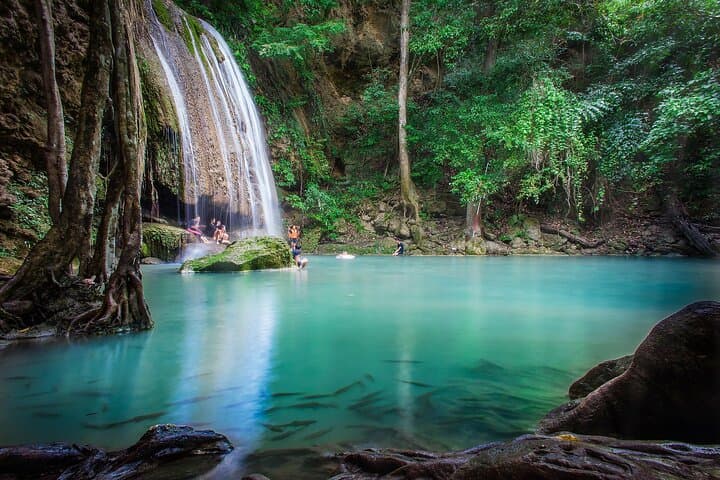
You step out of the air‑conditioned car and the countryside opens: rice paddies flatten into river plains, and the Khwae river moves with a deliberate current that seems to dare you to slow down. By midday the jungle around Erawan hums — birds call, insects thrum, and water over limestone tiers pours in clear, green pools.
Verified experiences and guided adventures in the surrounding area.
Operated by Mam Holidays Thailand Co Ltd · Kanchanaburi, Kanchanaburi Province
You step out of the air‑conditioned car and the countryside opens: rice paddies flatten into river plains, and the Khwae river moves with a deliberate current that seems to dare you to slow down. By midday the jungle around Erawan hums — birds call, insects thrum, and water over limestone tiers pours in clear, green pools.
The day pairs two different faces of Kanchanaburi. One is history: the Death Railway, the Bridge over the River Kwai and the JEATH War Museum recount the wartime slog of forced labor and the Allied cemetery where neatly ordered gravestones mark a hard chapter in the region’s past. The other is geological and physical — Erawan National Park’s famous seven‑tier waterfall, carved into limestone and fed by mountain streams, creates stepped pools that invite paddles and swims.
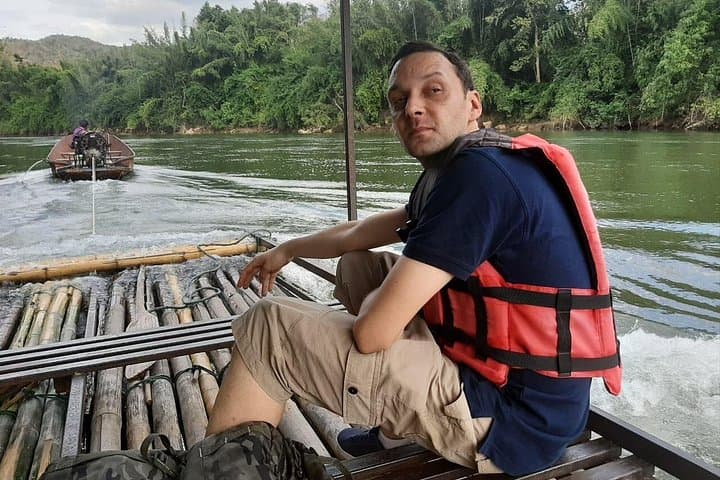
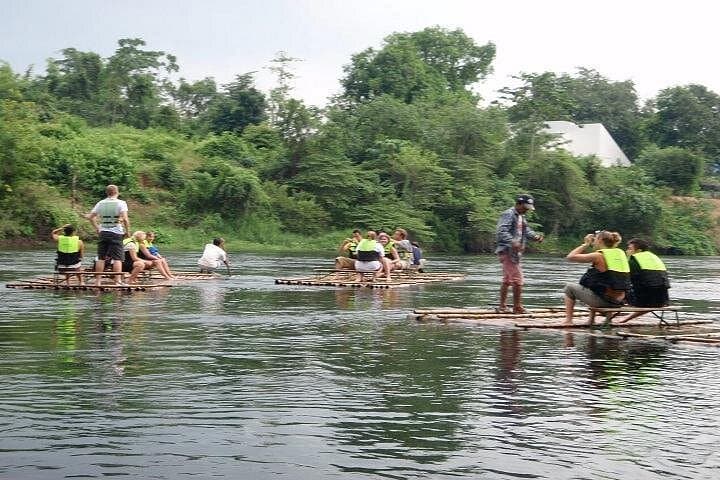
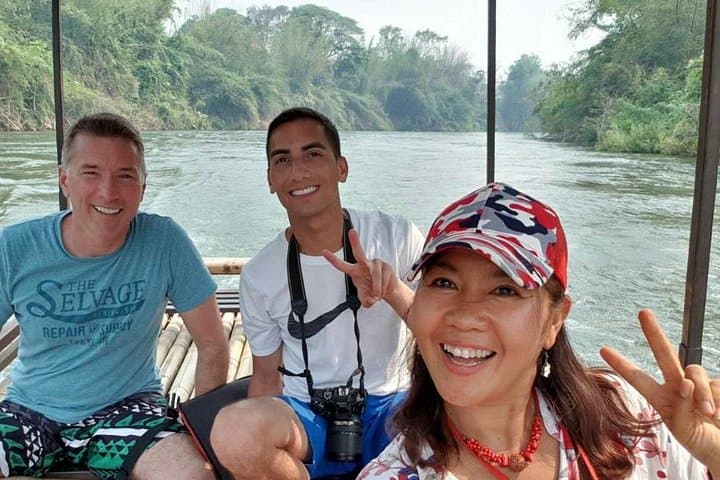
Local life threads between these scenes: village markets selling sticky rice, long‑tail boats and bamboo rafts run by families who have rafted these channels for generations, and simple roadside restaurants serving fragrant Thai curry and fresh fruit.
Practical guide: the roundtrip drive from Bangkok is typically 2–3 hours each way; expect a 14‑hour full‑day itinerary with about 1–2 hours of light trekking at Erawan (the trail to the top tiers is roughly 1.5–2 km one‑way with ~200–300 m cumulative ascent, on uneven steps). Bring quick‑dry swimwear, sturdy trail shoes, insect repellent and sun protection; allow time for quiet reflection at the war cemetery and respect signage near memorial sites. Peak visiting months are the cooler, drier season—arrive early to avoid crowds and midday heat.
moderate.
10–14 hours (full day).
Suitable for travelers in regular health who can manage 1–2 hours of walking, stairs and short steeper sections; not technical.
Expect roughly 2–3 hours each way from central Bangkok depending on traffic; the tour is arranged as a full‑day (about 10–14 hours including transfers).
Yes — many visitors swim in the lower and mid tiers; bring appropriate swimwear and be cautious on slippery rocks and in stronger currents after heavy rain.
The overall tour accommodates a wide range of fitness levels, but accessing upper tiers at Erawan requires stairs and uneven footing; children and less mobile guests can enjoy lower tiers and bamboo rafting instead.
These are historical and solemn sites; dress respectfully, avoid loud behavior, and follow local signage. Photography rules may vary at certain memorial areas.
Kanchanaburi’s wartime sites center on the Burma Railway — built by prisoners of war and Asian laborers during WWII — and the area preserves multiple museums and the Allied cemetery documenting that period.
Erawan National Park manages visitor access to protect cascades and aquatic life; stick to marked trails and avoid introducing soaps or sunscreens into pools to reduce impact.
Mam Holidays Thailand Co Ltd operates guided outdoor trips and adventures with an emphasis on safety, stewardship, and memorable experiences.
You step out of the air‑conditioned car and the countryside opens: rice paddies flatten into river plains, and the Khwae river moves with a deliberate current that seems to dare you to slow down. By midday the jungle around Erawan hums — birds call, insects thrum, and water over limestone tiers pours in clear, green pools.
You step out of the air‑conditioned car and the countryside opens: rice paddies flatten into river plains, and the Khwae river moves with a deliberate current that seems to dare you to slow down. By midday the jungle around Erawan hums — birds call, insects thrum, and water over limestone tiers pours in clear, green pools.
The day pairs two different faces of Kanchanaburi. One is history: the Death Railway, the Bridge over the River Kwai and the JEATH War Museum recount the wartime slog of forced labor and the Allied cemetery where neatly ordered gravestones mark a hard chapter in the region’s past. The other is geological and physical — Erawan National Park’s famous seven‑tier waterfall, carved into limestone and fed by mountain streams, creates stepped pools that invite paddles and swims.
Local life threads between these scenes: village markets selling sticky rice, long‑tail boats and bamboo rafts run by families who have rafted these channels for generations, and simple roadside restaurants serving fragrant Thai curry and fresh fruit.
Practical guide: the roundtrip drive from Bangkok is typically 2–3 hours each way; expect a 14‑hour full‑day itinerary with about 1–2 hours of light trekking at Erawan (the trail to the top tiers is roughly 1.5–2 km one‑way with ~200–300 m cumulative ascent, on uneven steps). Bring quick‑dry swimwear, sturdy trail shoes, insect repellent and sun protection; allow time for quiet reflection at the war cemetery and respect signage near memorial sites. Peak visiting months are the cooler, drier season—arrive early to avoid crowds and midday heat.