THE ADVENTURE COLLECTIVE® · Independent discovery and booking for outdoor travel

Spend a long day out of Athens exploring Mycenae’s Bronze Age citadel, the acoustic perfection of Epidaurus theater, and the Venetian elegance of Nafplio. This private tour packs UNESCO history, coastal views, and practical comforts into an 8–9 hour itinerary.
Spend a long day out of Athens exploring Mycenae’s Bronze Age citadel, the acoustic perfection of Epidaurus theater, and the Venetian elegance of Nafplio. This private tour packs UNESCO history, coastal views, and practical comforts into an 8–9 hour itinerary.
You step into an air-conditioned minivan in Athens and, within an hour and three quarters, the highway opens onto olive-dotted low hills and the Argolic Gulf glittering to the right. The day unfolds like a compact archaeology lesson played out across sun-baked stone: a Bronze Age citadel, a perfect classical theater, and a Venetian port town that still argues with the sea.
Verified experiences and guided adventures in the surrounding area.
Operated by Greece Athens Transfers & Tours · Nafplio, Argolis
You step into an air-conditioned minivan in Athens and, within an hour and three quarters, the highway opens onto olive-dotted low hills and the Argolic Gulf glittering to the right. The day unfolds like a compact archaeology lesson played out across sun-baked stone: a Bronze Age citadel, a perfect classical theater, and a Venetian port town that still argues with the sea.
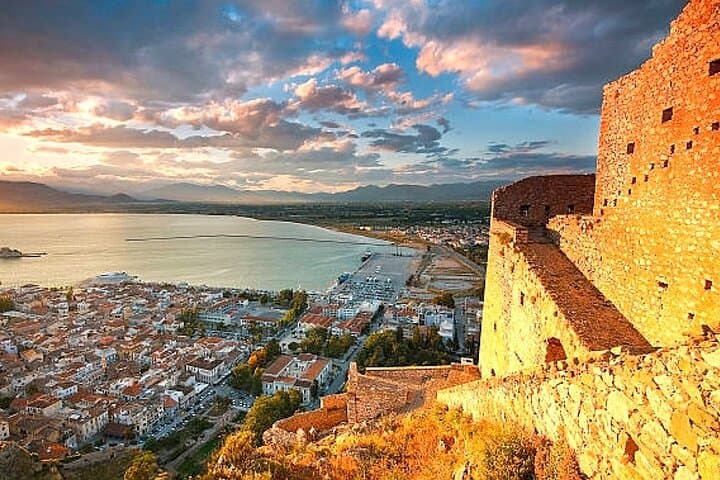
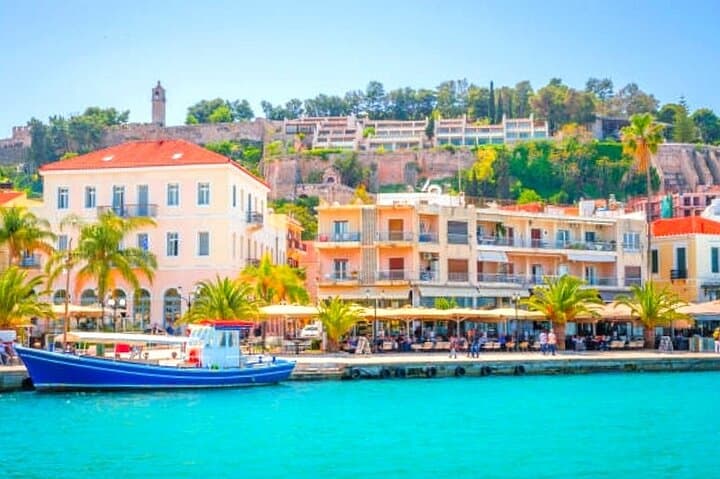
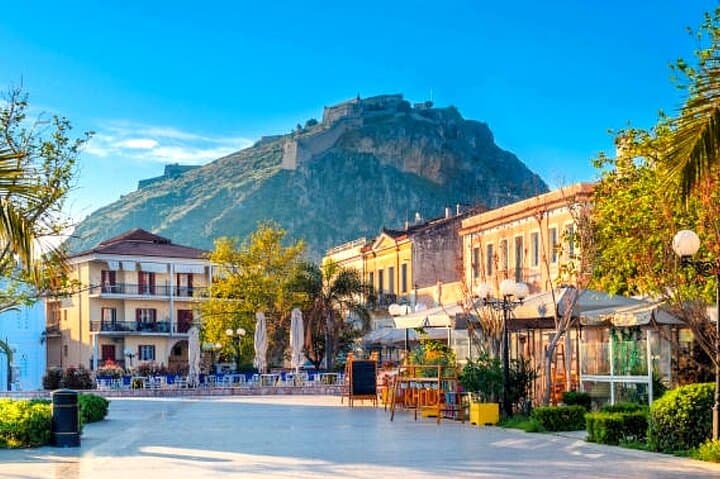
At Mycenae the Lion Gate glares down from 13th-century BC Cyclopean walls and the Treasury of Atreus shows how Bronze Age builders handled monumental weight. Epidaurus follows, where the 4th-century BC theater still hands its applause back to the present—sound travels with an almost deliberate clarity across limestone terraces. Nafplio closes the loop: Venetian ramparts, the Bourtzi islet fortress, and the climb to Palamidi’s ramparts for a commanding view over the Argolic Gulf.
Geology here favors limestone bedrock scored by ancient rivers; soils are thin and thirsty, meaning scrub and olive groves dominate the visual field. Culture is tactile—espresso at a café, slow seafood by the harbor, and local guides who fold myth into measurements of stone.
Practicalities: expect a long day (8–9 hours), lots of standing and some uneven archaeological paths. Bring a brimmed hat, sturdy walking shoes, and water; sunscreen and small change for optional museum entrance or a taxi up to Palamidi will save time and energy. If you want the best photos, aim to arrive at Epidaurus early before tour groups fill the rows. The route is historically dense but physically friendly—this is a tour of discovery paced for curiosity rather than endurance.
easy.
8–9 hours.
Suitable for average fitness; the day involves standing, walking on uneven ground, and optional stairs to viewpoints
Entrance fees are included only if you select the option that adds tickets; otherwise you will pay onsite or upgrade during booking.
Travel from central Athens to Nafplio or the Peloponnese sites is roughly 1 hour 45 minutes one-way, depending on traffic.
Most walking is moderate—uneven surfaces and some steps at Mycenae and Palamidi; minimal steep hiking is required unless you climb the full Palamidi staircase.
The tour is generally family-friendly, but it’s not recommended for pregnant travelers due to uneven terrain and a long day; check operator policies for infants and child seats.
Mycenae was the center of a Bronze Age civilization (c.1600–1100 BC) and Nafplio later served as Greece’s first capital after independence in the 1820s.
Sites are protected by Greek antiquities law—stay on marked paths, avoid touching carvings, and use local services to support community conservation efforts.
Greece Athens Transfers & Tours operates guided outdoor trips and adventures with an emphasis on safety, stewardship, and memorable experiences.
You step into an air-conditioned minivan in Athens and, within an hour and three quarters, the highway opens onto olive-dotted low hills and the Argolic Gulf glittering to the right. The day unfolds like a compact archaeology lesson played out across sun-baked stone: a Bronze Age citadel, a perfect classical theater, and a Venetian port town that still argues with the sea.
You step into an air-conditioned minivan in Athens and, within an hour and three quarters, the highway opens onto olive-dotted low hills and the Argolic Gulf glittering to the right. The day unfolds like a compact archaeology lesson played out across sun-baked stone: a Bronze Age citadel, a perfect classical theater, and a Venetian port town that still argues with the sea.
At Mycenae the Lion Gate glares down from 13th-century BC Cyclopean walls and the Treasury of Atreus shows how Bronze Age builders handled monumental weight. Epidaurus follows, where the 4th-century BC theater still hands its applause back to the present—sound travels with an almost deliberate clarity across limestone terraces. Nafplio closes the loop: Venetian ramparts, the Bourtzi islet fortress, and the climb to Palamidi’s ramparts for a commanding view over the Argolic Gulf.
Geology here favors limestone bedrock scored by ancient rivers; soils are thin and thirsty, meaning scrub and olive groves dominate the visual field. Culture is tactile—espresso at a café, slow seafood by the harbor, and local guides who fold myth into measurements of stone.
Practicalities: expect a long day (8–9 hours), lots of standing and some uneven archaeological paths. Bring a brimmed hat, sturdy walking shoes, and water; sunscreen and small change for optional museum entrance or a taxi up to Palamidi will save time and energy. If you want the best photos, aim to arrive at Epidaurus early before tour groups fill the rows. The route is historically dense but physically friendly—this is a tour of discovery paced for curiosity rather than endurance.