THE ADVENTURE COLLECTIVE® · Independent discovery and booking for outdoor travel

Depart Kusadasi for a focused, private tour of Ephesus and Selçuk with guaranteed no shopping detours. Explore the Celsus Library, Great Theatre, Temple of Artemis remains, and learn local history with a licensed guide.
Depart Kusadasi for a focused, private tour of Ephesus and Selçuk with guaranteed no shopping detours. Explore the Celsus Library, Great Theatre, Temple of Artemis remains, and learn local history with a licensed guide.
A salt-sweet breeze from the Aegean follows the group off the gangway and through Kusadasi’s port gates. Within twenty minutes the shudder of the ship is replaced by the steady hum of a private coach; olive-dotted hills slip past as the driver heads inland toward Selçuk and the ruins of Ephesus. On arrival, scarred marble streets and the stone face of the Celsus Library rise like chapters in a history book — tangible, stubborn, tactile.
Verified experiences and guided adventures in the surrounding area.
Operated by Turkey Experiences · Kusadasi, Aydın
A salt-sweet breeze from the Aegean follows the group off the gangway and through Kusadasi’s port gates. Within twenty minutes the shudder of the ship is replaced by the steady hum of a private coach; olive-dotted hills slip past as the driver heads inland toward Selçuk and the ruins of Ephesus. On arrival, scarred marble streets and the stone face of the Celsus Library rise like chapters in a history book — tangible, stubborn, tactile.
Ephesus was a major Greco-Roman port and a religious hub whose names still appear in ancient texts; the Temple of Artemis stood nearby as one of the ancient world’s wonders. The geology here is coastal plain formed by alluvial deposits, which helped create the harbor that later silted up, preserving the city layout. Local culture blends Aegean cuisine and Ottoman-era architecture in Selçuk and nearby Şirince village.
This private, no-shopping-stops tour is built for focused time on archaeological highlights: the Library of Celsus, the Great Theatre, and the Ephesus Museum. Expect roughly 5–7 hours total, moderate walking on uneven marble and compacted dirt, and short photo stops overlooking Kusadasi Bay on the return.
Practicalities: wear sturdy shoes for slippery stones and stairs, bring water and sun protection, and plan for museum and site entrance fees — guides typically carry pre-paid tickets but may collect cash for admissions. Cruise passengers should confirm docking and reboarding times with the operator. The pace is tailored to small groups, but visitors with mobility limits should check accessibility options in advance.
moderate.
5–7 hours.
Suitable for travelers with moderate fitness who can walk 2–4 miles on uneven terrain and climb stairs.
No — the operator guarantees no visits to carpet, leather, ceramic, jewelry, or cooperative workshops; the itinerary focuses on archaeological and cultural sites.
Expect roughly 2–3 hours of walking through the archaeological park with opportunities to rest at shaded areas and the on-site café.
Yes, the licensed guide typically carries pre-paid tickets to minimize queueing; visitors may be asked to reimburse admission fees in cash if required.
The site includes uneven stone, steps and slopes. Travelers with significant mobility limitations should contact the operator to discuss accessible routes and alternatives before booking.
Ephesus grew from an Archaic Greek settlement into a major Roman metropolis and port; the Temple of Artemis, once nearby, marked it as a center of ancient pilgrimage.
The site is vulnerable to erosion and foot traffic; visitors are asked to stay on marked paths, avoid touching carved surfaces, and follow guide instructions to protect fragile ruins.
Turkey Experiences operates guided outdoor trips and adventures with an emphasis on safety, stewardship, and memorable experiences.
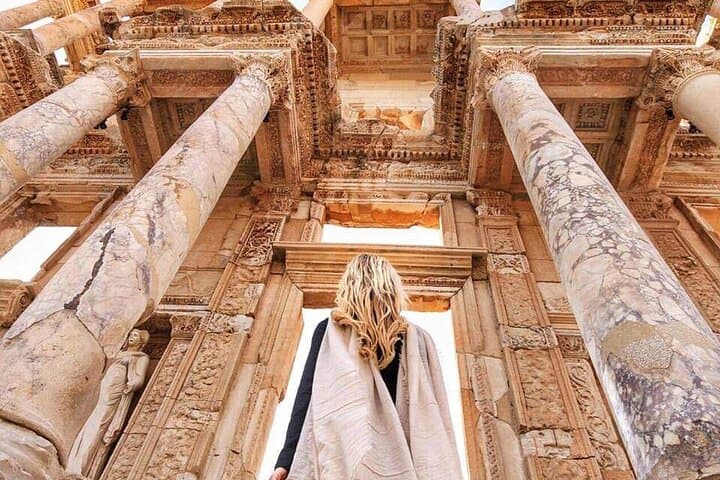
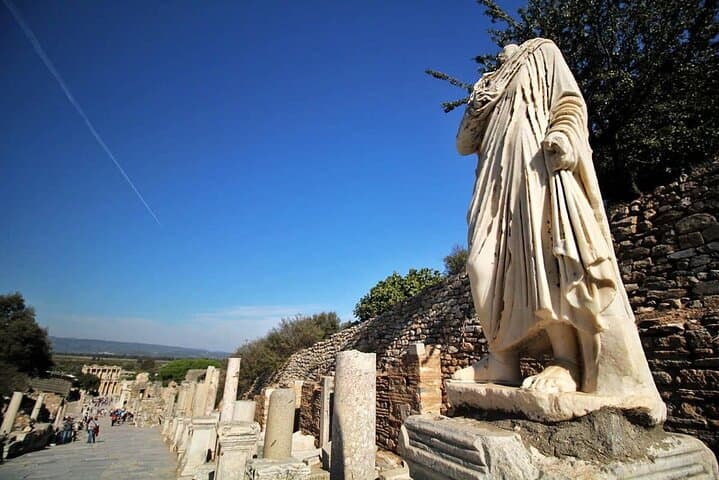
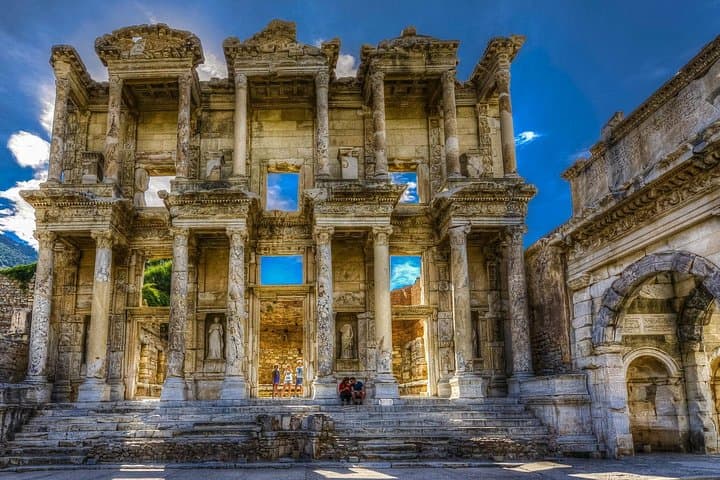
A salt-sweet breeze from the Aegean follows the group off the gangway and through Kusadasi’s port gates. Within twenty minutes the shudder of the ship is replaced by the steady hum of a private coach; olive-dotted hills slip past as the driver heads inland toward Selçuk and the ruins of Ephesus. On arrival, scarred marble streets and the stone face of the Celsus Library rise like chapters in a history book — tangible, stubborn, tactile.
A salt-sweet breeze from the Aegean follows the group off the gangway and through Kusadasi’s port gates. Within twenty minutes the shudder of the ship is replaced by the steady hum of a private coach; olive-dotted hills slip past as the driver heads inland toward Selçuk and the ruins of Ephesus. On arrival, scarred marble streets and the stone face of the Celsus Library rise like chapters in a history book — tangible, stubborn, tactile.
Ephesus was a major Greco-Roman port and a religious hub whose names still appear in ancient texts; the Temple of Artemis stood nearby as one of the ancient world’s wonders. The geology here is coastal plain formed by alluvial deposits, which helped create the harbor that later silted up, preserving the city layout. Local culture blends Aegean cuisine and Ottoman-era architecture in Selçuk and nearby Şirince village.
This private, no-shopping-stops tour is built for focused time on archaeological highlights: the Library of Celsus, the Great Theatre, and the Ephesus Museum. Expect roughly 5–7 hours total, moderate walking on uneven marble and compacted dirt, and short photo stops overlooking Kusadasi Bay on the return.
Practicalities: wear sturdy shoes for slippery stones and stairs, bring water and sun protection, and plan for museum and site entrance fees — guides typically carry pre-paid tickets but may collect cash for admissions. Cruise passengers should confirm docking and reboarding times with the operator. The pace is tailored to small groups, but visitors with mobility limits should check accessibility options in advance.