THE ADVENTURE COLLECTIVE® · Independent discovery and booking for outdoor travel

Fast-track entry to Ephesus and a visit to the remains of the Temple of Artemis on a private, all-inclusive shore excursion from Kusadasi. Skip the lines, enjoy a traditional Turkish lunch, and return to port on time.
Fast-track entry to Ephesus and a visit to the remains of the Temple of Artemis on a private, all-inclusive shore excursion from Kusadasi. Skip the lines, enjoy a traditional Turkish lunch, and return to port on time.
You step off your ship into the dry Aegean light and a driver in a Mercedes is already waiting—shaded leather seats, bottled water, and a licensed local guide ready to walk the marble avenues where Roman sandals once scuffed the stones.
Verified experiences and guided adventures in the surrounding area.
Operated by Goodman Tours · Kusadasi, Aydın
You step off your ship into the dry Aegean light and a driver in a Mercedes is already waiting—shaded leather seats, bottled water, and a licensed local guide ready to walk the marble avenues where Roman sandals once scuffed the stones.
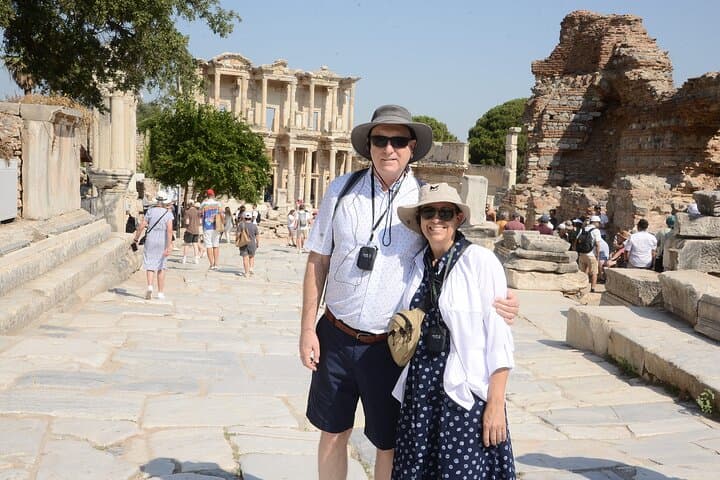
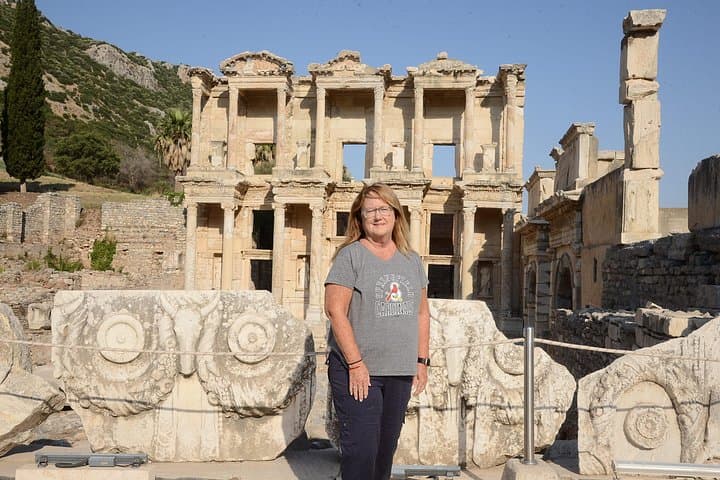
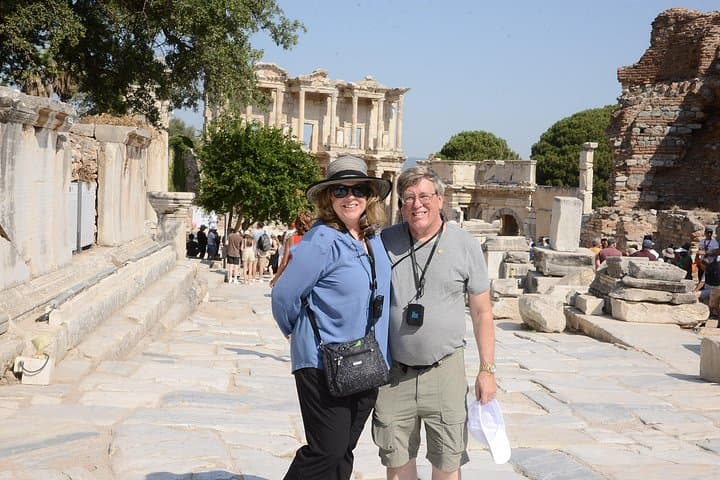
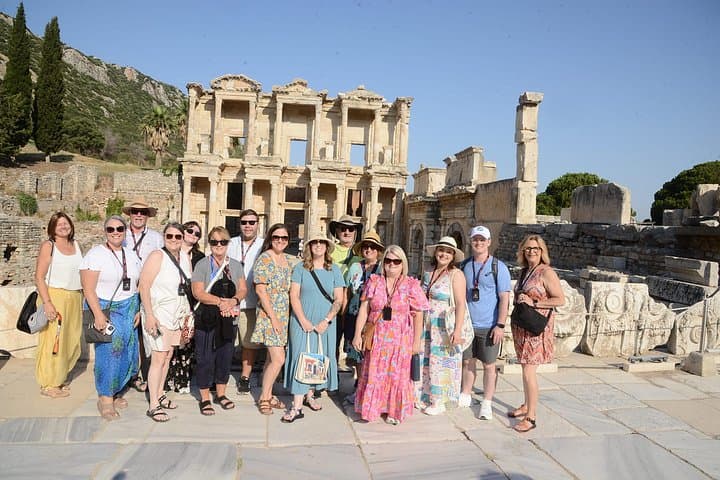
Ephesus opens like a ruined city reanimated: the Celsus façade rises, the Great Theatre plunges down toward where commerce and civic life once swirled. Your guide threads history and archaeology—Greek foundations, Roman rebuilding, and later Byzantine layers—into a clear narrative. Nearby, the Temple of Artemis exists mostly as a single column and a sense of scale: once one of the Seven Wonders, it now teaches through absence as much as through stone.
Geology here is tactile—soft limestone and marble quarried and carved, terraces cut into coastal plains, and soils that pushed Mediterranean scrub across ancient fields. Local culture leans rural and hospitable: a long lunch at a curated restaurant will emphasize Aegean olive oil, meze, and slow-brewed tea.
Practically, the day is paced for cruisers: door-to-door transfers, priority entry to Ephesus, and a guaranteed on-time return. Expect uneven, sometimes steep walking on exposed ruins; shade is limited, and temperatures spike midday in summer. Bring good walking shoes, sun protection, and a compact bag for water and camera.
This private, all-inclusive format removes crowds and timing stress—letting the stones, the wind, and the guide’s stories set the rhythm of the visit.
moderate.
4–5 hours.
Requires comfortable walking ability for up to a couple of miles over uneven surfaces and steps; suitable for most in fair health.
Yes; the tour includes port pickup and guaranteed on-time drop-off aligned with your ship schedule.
All entrance fees are covered and a traditional Turkish lunch at a selected local restaurant is included.
Ephesus has uneven terrain and steps—alternate routes can reduce stairs but full accessibility is limited; contact the operator to discuss needs.
Yes—this private format allows flexibility within the 4–5 hour window to focus on sites you prefer, subject to timing constraints.
Ephesus was a major Roman port and commercial center; the Temple of Artemis, mostly lost, was historically famed as one of the Seven Wonders of the Ancient World.
Conservation efforts focus on stabilizing marble façades and managing foot traffic to limit erosion; visitors are asked to stay on designated paths and avoid touching reliefs.
Goodman Tours operates guided outdoor trips and adventures with an emphasis on safety, stewardship, and memorable experiences.
You step off your ship into the dry Aegean light and a driver in a Mercedes is already waiting—shaded leather seats, bottled water, and a licensed local guide ready to walk the marble avenues where Roman sandals once scuffed the stones.
You step off your ship into the dry Aegean light and a driver in a Mercedes is already waiting—shaded leather seats, bottled water, and a licensed local guide ready to walk the marble avenues where Roman sandals once scuffed the stones.
Ephesus opens like a ruined city reanimated: the Celsus façade rises, the Great Theatre plunges down toward where commerce and civic life once swirled. Your guide threads history and archaeology—Greek foundations, Roman rebuilding, and later Byzantine layers—into a clear narrative. Nearby, the Temple of Artemis exists mostly as a single column and a sense of scale: once one of the Seven Wonders, it now teaches through absence as much as through stone.
Geology here is tactile—soft limestone and marble quarried and carved, terraces cut into coastal plains, and soils that pushed Mediterranean scrub across ancient fields. Local culture leans rural and hospitable: a long lunch at a curated restaurant will emphasize Aegean olive oil, meze, and slow-brewed tea.
Practically, the day is paced for cruisers: door-to-door transfers, priority entry to Ephesus, and a guaranteed on-time return. Expect uneven, sometimes steep walking on exposed ruins; shade is limited, and temperatures spike midday in summer. Bring good walking shoes, sun protection, and a compact bag for water and camera.
This private, all-inclusive format removes crowds and timing stress—letting the stones, the wind, and the guide’s stories set the rhythm of the visit.