THE ADVENTURE COLLECTIVE® · Independent discovery and booking for outdoor travel

A private shore excursion from Kusadasi lets you see Ephesus’s highlights—Library of Celsus, Terrace Houses, amphitheatre—with a licensed guide and guaranteed return to the ship. Ideal for cruise passengers who want an efficient, on-time visit to one of the Mediterranean’s great ancient cities.
A private shore excursion from Kusadasi lets you see Ephesus’s highlights—Library of Celsus, Terrace Houses, amphitheatre—with a licensed guide and guaranteed return to the ship. Ideal for cruise passengers who want an efficient, on-time visit to one of the Mediterranean’s great ancient cities.
You step off the gangway into the small bustle of Kusadasi and a local guide is already waiting—name card in hand, minivan humming, Aegean light cutting across limestone façades. Within an hour the city gives way to open fields and the ruined streets of Ephesus unfold: a marble avenue, the weathered face of the Library of Celsus, and the amphitheatre where orators once spoke to crowds of thousands.
Verified experiences and guided adventures in the surrounding area.
Operated by Kusadasi Shore Excursions · Selçuk, İzmir Province
You step off the gangway into the small bustle of Kusadasi and a local guide is already waiting—name card in hand, minivan humming, Aegean light cutting across limestone façades. Within an hour the city gives way to open fields and the ruined streets of Ephesus unfold: a marble avenue, the weathered face of the Library of Celsus, and the amphitheatre where orators once spoke to crowds of thousands.
Ephesus is one of the best-preserved Greco-Roman cities in the eastern Mediterranean. It rose as a port on a silting plain and grew wealthy through trade and temple cults; later it became an early Christian center tied to St. John. Geologically the site sits on alluvial deposits that pushed the coastline away over centuries, which is why the harbor is now inland.
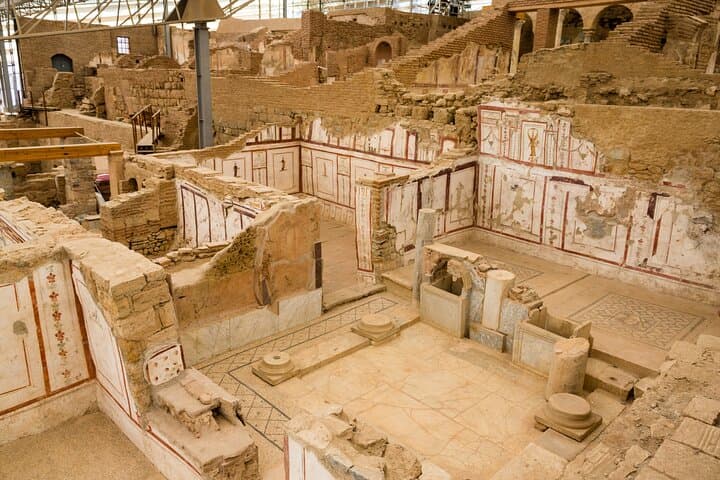
A private shore excursion concentrates the essentials in a single visit—the Celcus façade, the marble street, Roman baths, Terrace Houses with their frescoed interiors, and the Basilica of St. John—while offering context from a licensed local guide. Expect stone and stepped surfaces, intermittent shade from plane and olive trees, and brisk sun in summer.
Practical notes: allow 4–6 hours for pick-up, exploration, and guaranteed return to ship. Skip-the-line options save time but the extra margin for port procedures (meet within 30–45 minutes of docking) is the real insurance. Wear sturdy shoes, carry water, and budget a lunch stop or brief free time for local handicrafts in Selçuk or Kusadasi.
easy.
4–6 hours.
Suitable for most fitness levels; comfortable walking on uneven ancient stone and short stair sections required
Skip-the-line options reduce waiting time but entry still depends on site capacity and port timing; meeting early improves the chance for smoother access.
The overall tour is labeled wheelchair accessible for primary paths and transport, but Terrace Houses include steps and uneven surfaces—confirm specific accessibility needs when booking.
Tours are customizable and often include a short stop for a local lunch or handicraft browsing in Selçuk or Kusadasi—confirm preferences at booking.
Operators coordinate ship schedules and confirm departure times with passengers; you will be routed back to the port with time to spare barring exceptional delays.
Ephesus grew from an Anatolian port into a major Hellenistic and Roman city and later an early Christian center associated with St. John; its monuments reflect successive cultural layers.
Archaeological conservation is ongoing—visitors are asked to stick to paths and not touch fragile mosaics; local teams conduct careful excavation and stabilization projects.
Kusadasi Shore Excursions operates guided outdoor trips and adventures with an emphasis on safety, stewardship, and memorable experiences.
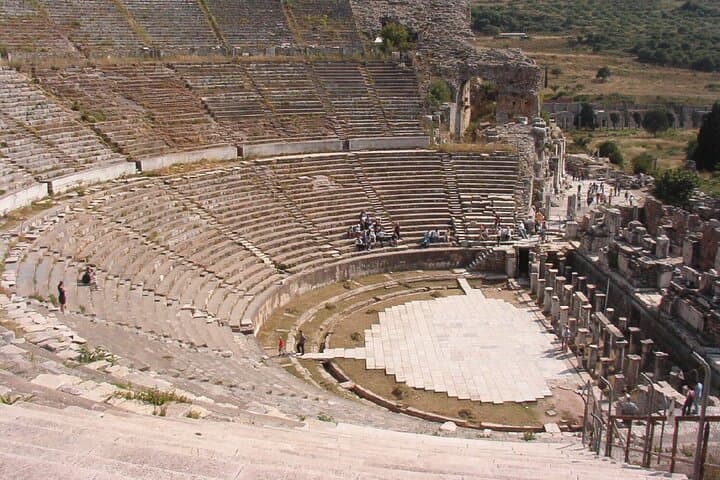
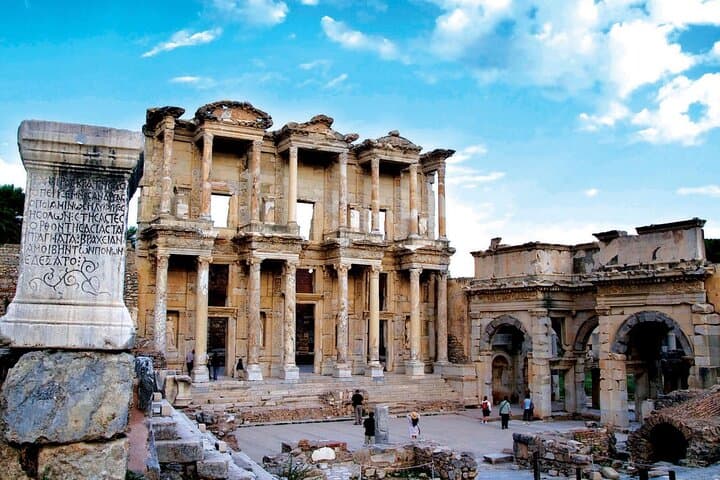
You step off the gangway into the small bustle of Kusadasi and a local guide is already waiting—name card in hand, minivan humming, Aegean light cutting across limestone façades. Within an hour the city gives way to open fields and the ruined streets of Ephesus unfold: a marble avenue, the weathered face of the Library of Celsus, and the amphitheatre where orators once spoke to crowds of thousands.
You step off the gangway into the small bustle of Kusadasi and a local guide is already waiting—name card in hand, minivan humming, Aegean light cutting across limestone façades. Within an hour the city gives way to open fields and the ruined streets of Ephesus unfold: a marble avenue, the weathered face of the Library of Celsus, and the amphitheatre where orators once spoke to crowds of thousands.
Ephesus is one of the best-preserved Greco-Roman cities in the eastern Mediterranean. It rose as a port on a silting plain and grew wealthy through trade and temple cults; later it became an early Christian center tied to St. John. Geologically the site sits on alluvial deposits that pushed the coastline away over centuries, which is why the harbor is now inland.
A private shore excursion concentrates the essentials in a single visit—the Celcus façade, the marble street, Roman baths, Terrace Houses with their frescoed interiors, and the Basilica of St. John—while offering context from a licensed local guide. Expect stone and stepped surfaces, intermittent shade from plane and olive trees, and brisk sun in summer.
Practical notes: allow 4–6 hours for pick-up, exploration, and guaranteed return to ship. Skip-the-line options save time but the extra margin for port procedures (meet within 30–45 minutes of docking) is the real insurance. Wear sturdy shoes, carry water, and budget a lunch stop or brief free time for local handicrafts in Selçuk or Kusadasi.