THE ADVENTURE COLLECTIVE® · Independent discovery and booking for outdoor travel

Walk the stone streets of one of antiquity’s great cities on a private shore excursion from Kuşadası. This guided tour pairs Ephesus’ open-air ruins with curated museum exhibits and a visit to the Temple of Artemis.
Walk the stone streets of one of antiquity’s great cities on a private shore excursion from Kuşadası. This guided tour pairs Ephesus’ open-air ruins with curated museum exhibits and a visit to the Temple of Artemis.
You step off the coach and the Aegean wind meets you—brisk, salt-tinged, and curious—pushing you toward a stone street worn by two millennia of feet. The marble of Ephesus absorbs that breeze, cooling the columns of the Library of Celsus as a guide begins to thread the city’s story through the ruin’s open arches.
Verified experiences and guided adventures in the surrounding area.
Operated by Farout Turkey - Turkey Package Tours · Selçuk, İzmir
You step off the coach and the Aegean wind meets you—brisk, salt-tinged, and curious—pushing you toward a stone street worn by two millennia of feet. The marble of Ephesus absorbs that breeze, cooling the columns of the Library of Celsus as a guide begins to thread the city’s story through the ruin’s open arches.
Ephesus rose from a Bronze Age settlement to a major Hellenistic and Roman port, its economy anchored by trade and its identity marked by the Temple of Artemis, once one of the Seven Wonders. Geologically this coast sits on alluvial plains fed by the Küçük Menderes River; centuries of silt shifted the shoreline, leaving Ephesus inland and preserving streets, baths, and the theatre in remarkable condition.
Selçuk’s culture is a layered one—Turkish village life, Ottoman mosques like İsa Bey, and the archaeological pulse of the ancient city—while nearby terrace houses reveal domestic mosaics and frescoes rescued into the Ephesus Museum.
Practical guidance: tours run about 4–5 hours with moderate walking on uneven stone and steps; bring a brimmed hat and refillable water, and expect intermittent shade. Photography is allowed but climbing ruins is prohibited to protect fragile masonry. The museum visit offers cooler shelter and context after the open-site exploration, and a local lunch in Selçuk rounds the day.
Aim for morning starts to avoid peak sun and cruise-timing crowds; with a licensed guide you’ll move efficiently between sites, gaining historical depth and keeping the pace comfortable for most travelers.
easy.
4–5 hours.
Suitable for most fitness levels; requires walking on uneven surfaces and stair climbing.
Admission is not included in the tour price; bring payment for both sites unless the operator states otherwise.
Pickup is from Kuşadası Harbour with return to the same point; exact pickup details are confirmed at booking.
The tour is physically easy but includes uneven terrain and stairs; not recommended for travelers with serious spinal, heart, or mobility concerns.
Yes, the itinerary includes a local lunch in Selçuk as part of the tour.
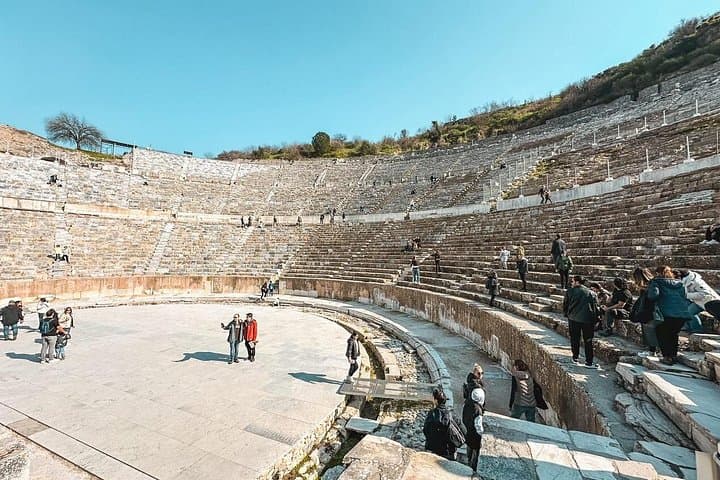
Ephesus was a major Ionian city that flourished under Hellenistic and Roman rule; its Library of Celsus and monumental theatre reflect its civic and commercial power.
Ongoing conservation focuses on stabilizing marble facades and managing visitor impact; follow marked paths and local guidelines to help protect fragile archaeology.
Farout Turkey - Turkey Package Tours operates guided outdoor trips and adventures with an emphasis on safety, stewardship, and memorable experiences.
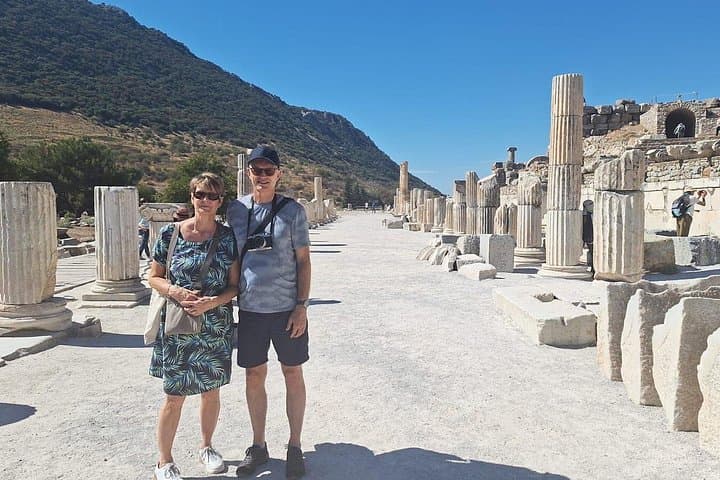
You step off the coach and the Aegean wind meets you—brisk, salt-tinged, and curious—pushing you toward a stone street worn by two millennia of feet. The marble of Ephesus absorbs that breeze, cooling the columns of the Library of Celsus as a guide begins to thread the city’s story through the ruin’s open arches.
You step off the coach and the Aegean wind meets you—brisk, salt-tinged, and curious—pushing you toward a stone street worn by two millennia of feet. The marble of Ephesus absorbs that breeze, cooling the columns of the Library of Celsus as a guide begins to thread the city’s story through the ruin’s open arches.
Ephesus rose from a Bronze Age settlement to a major Hellenistic and Roman port, its economy anchored by trade and its identity marked by the Temple of Artemis, once one of the Seven Wonders. Geologically this coast sits on alluvial plains fed by the Küçük Menderes River; centuries of silt shifted the shoreline, leaving Ephesus inland and preserving streets, baths, and the theatre in remarkable condition.
Selçuk’s culture is a layered one—Turkish village life, Ottoman mosques like İsa Bey, and the archaeological pulse of the ancient city—while nearby terrace houses reveal domestic mosaics and frescoes rescued into the Ephesus Museum.
Practical guidance: tours run about 4–5 hours with moderate walking on uneven stone and steps; bring a brimmed hat and refillable water, and expect intermittent shade. Photography is allowed but climbing ruins is prohibited to protect fragile masonry. The museum visit offers cooler shelter and context after the open-site exploration, and a local lunch in Selçuk rounds the day.
Aim for morning starts to avoid peak sun and cruise-timing crowds; with a licensed guide you’ll move efficiently between sites, gaining historical depth and keeping the pace comfortable for most travelers.