THE ADVENTURE COLLECTIVE® · Independent discovery and booking for outdoor travel

Fly from Istanbul to Izmir for a private, all-inclusive day at Ephesus—walk marble streets, visit the Terrace Houses and the House of the Virgin Mary, and return the same evening. This guide outlines what to expect and how to plan for a full day of archaeology and Aegean light.
Fly from Istanbul to Izmir for a private, all-inclusive day at Ephesus—walk marble streets, visit the Terrace Houses and the House of the Virgin Mary, and return the same evening. This guide outlines what to expect and how to plan for a full day of archaeology and Aegean light.
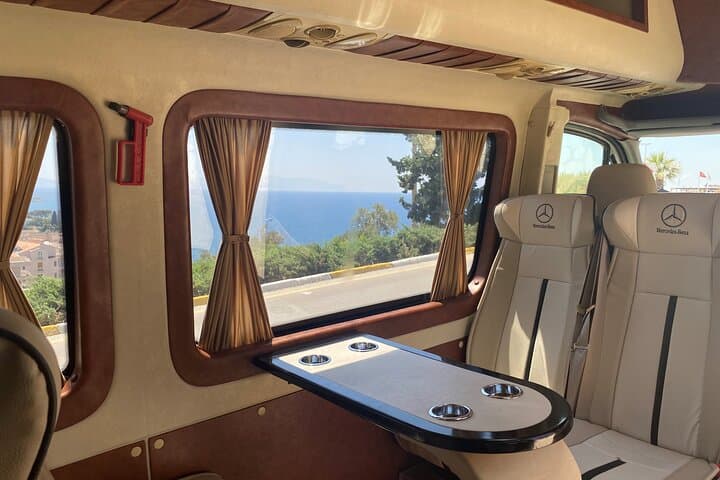
You step onto the plane still smelling Istanbul’s coffee and spices; 75 minutes later the Aegean light pours through the window as fields and olive groves slide beneath you. A private vehicle collects you at Izmir and the road narrows toward the stone-and-sage hills that guard Ephesus. The first sight is marble—columns and streets that still hold the fingerprints of traders, not just stones on a map.
Verified experiences and guided adventures in the surrounding area.
Operated by Private & Small Group Ephesus & Istanbul & Turkey Tours · Selçuk, İzmir Province
You step onto the plane still smelling Istanbul’s coffee and spices; 75 minutes later the Aegean light pours through the window as fields and olive groves slide beneath you. A private vehicle collects you at Izmir and the road narrows toward the stone-and-sage hills that guard Ephesus. The first sight is marble—columns and streets that still hold the fingerprints of traders, not just stones on a map.
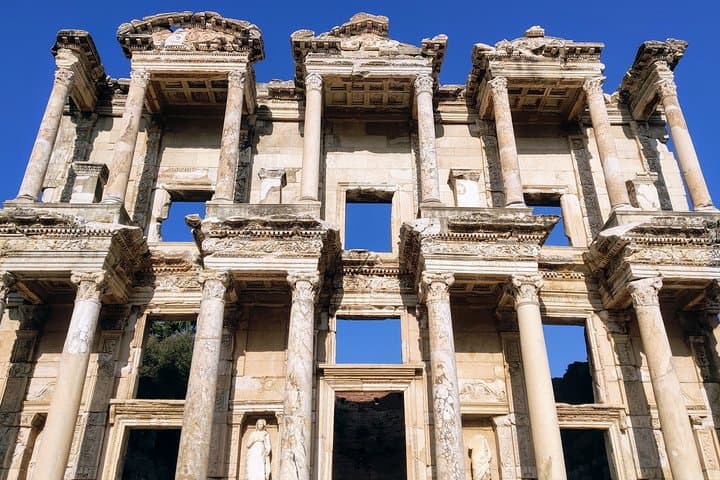
Ephesus grew from an Ionian port into a Roman metropolis; its marble façades and the carved library façade of Celsus speak to trade, law and the city’s cultural weight. Geologically the site sits on alluvial plains where the former harbor silted up over centuries, pushing the coastline away and preserving the urban core under dry land rather than sea.
Culturally you’ll move from Roman theaters to early-Christian shrines: the House of the Virgin Mary on the slopes above the valley and the foundations of St. John’s Basilica. Between stops your guide may bring you to a local garden for lunch and a demonstration of regional carpet weaving—an everyday craft that ties modern Selçuk to the region’s trade history.
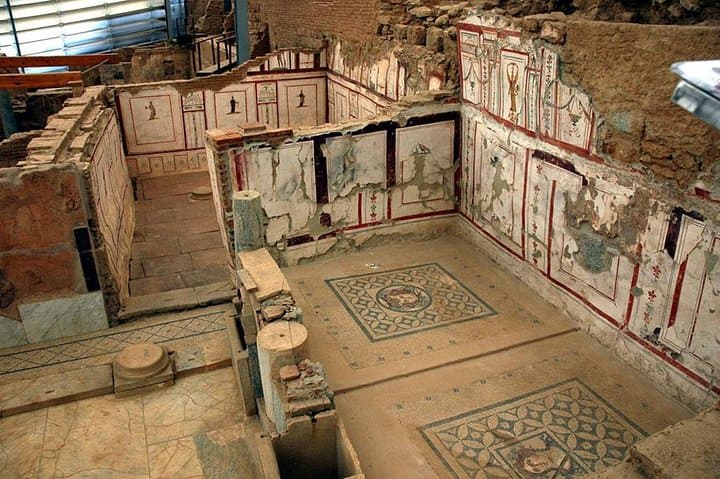
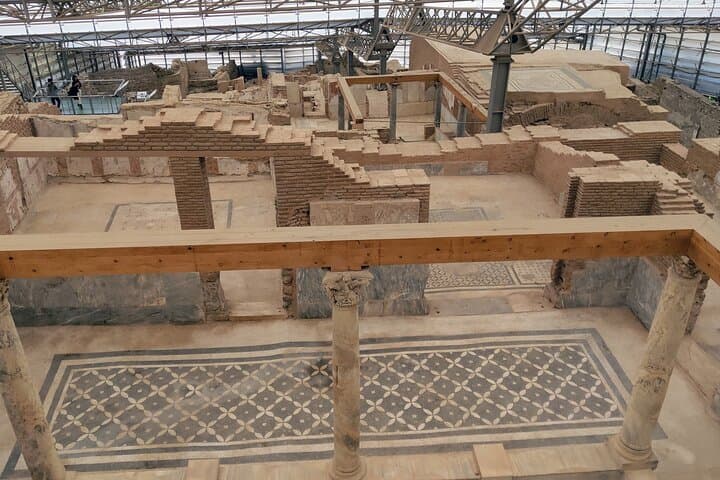
Practical notes: allow 2–3 hours to walk Ephesus proper—stone streets, steps and narrow alleys are standard. Terrace Houses demand short, steady climbs; wear sturdy shoes and keep water handy. Flights between Istanbul and Izmir are included but note luggage limits. Pace your time: the Grand Theatre opens vistas and shade, while the House of the Virgin Mary sits higher and can be windy. Bring sun protection, carry your passport for flights, and stay on marked paths—archaeology is fragile but rewards careful attention.
moderate.
12–14 hours.
Moderate fitness: expect several hours of walking on uneven ground and climbing steps; basic stamina required.
Yes—round-trip flights are included with a 15 kg checked luggage allowance and 8 kg cabin bag; pack accordingly to avoid extra fees.
Expect 2–3 hours of on-site walking across uneven marble streets and steps; Terrace Houses require additional short climbs.
The site sits above the valley with a series of steps and sloping paths; while reachable by road, mobility-impaired visitors may find access challenging and should discuss specifics with the operator beforehand.
Yes—the tour includes entrance fees and prepaid tickets so you can avoid main-ticket lines at Ephesus and related sites.
Ephesus evolved from an Ionian Greek port into one of the Roman Empire’s major cities; it housed the Temple of Artemis (one of the ancient wonders) and played a role in early Christian history.
Visitor pressure and erosion threaten exposed mosaics and fresco fragments—stay on marked trails, avoid touching surfaces, and support local conservation initiatives when possible.
Private & Small Group Ephesus & Istanbul & Turkey Tours operates guided outdoor trips and adventures with an emphasis on safety, stewardship, and memorable experiences.
You step onto the plane still smelling Istanbul’s coffee and spices; 75 minutes later the Aegean light pours through the window as fields and olive groves slide beneath you. A private vehicle collects you at Izmir and the road narrows toward the stone-and-sage hills that guard Ephesus. The first sight is marble—columns and streets that still hold the fingerprints of traders, not just stones on a map.
You step onto the plane still smelling Istanbul’s coffee and spices; 75 minutes later the Aegean light pours through the window as fields and olive groves slide beneath you. A private vehicle collects you at Izmir and the road narrows toward the stone-and-sage hills that guard Ephesus. The first sight is marble—columns and streets that still hold the fingerprints of traders, not just stones on a map.
Ephesus grew from an Ionian port into a Roman metropolis; its marble façades and the carved library façade of Celsus speak to trade, law and the city’s cultural weight. Geologically the site sits on alluvial plains where the former harbor silted up over centuries, pushing the coastline away and preserving the urban core under dry land rather than sea.
Culturally you’ll move from Roman theaters to early-Christian shrines: the House of the Virgin Mary on the slopes above the valley and the foundations of St. John’s Basilica. Between stops your guide may bring you to a local garden for lunch and a demonstration of regional carpet weaving—an everyday craft that ties modern Selçuk to the region’s trade history.
Practical notes: allow 2–3 hours to walk Ephesus proper—stone streets, steps and narrow alleys are standard. Terrace Houses demand short, steady climbs; wear sturdy shoes and keep water handy. Flights between Istanbul and Izmir are included but note luggage limits. Pace your time: the Grand Theatre opens vistas and shade, while the House of the Virgin Mary sits higher and can be windy. Bring sun protection, carry your passport for flights, and stay on marked paths—archaeology is fragile but rewards careful attention.