THE ADVENTURE COLLECTIVE® · Independent discovery and booking for outdoor travel
Step off your ship and into Roman streets: a private, skip-the-line visit to Ephesus and the Ephesus Museum tailored for cruise passengers. Expect guided access to the Library of Celsus, Terrace Houses, and a timely return to port.
Step off your ship and into Roman streets: a private, skip-the-line visit to Ephesus and the Ephesus Museum tailored for cruise passengers. Expect guided access to the Library of Celsus, Terrace Houses, and a timely return to port.
A bright Aegean morning opens as your shuttle leaves the cruise terminal and the coast drops away to olives and scrub. Within 20–30 minutes you stand beneath the marble façade of the Library of Celsus, the early sun painting the carved capitals and casting long shadows down Curetes Street. Voices of a past city feel immediate here — traders, philosophers and pilgrims threading the same stones.
Verified experiences and guided adventures in the surrounding area.
Operated by Kusadasi Shore Excursions · Selçuk, İzmir Province
A bright Aegean morning opens as your shuttle leaves the cruise terminal and the coast drops away to olives and scrub. Within 20–30 minutes you stand beneath the marble façade of the Library of Celsus, the early sun painting the carved capitals and casting long shadows down Curetes Street. Voices of a past city feel immediate here — traders, philosophers and pilgrims threading the same stones.
Ephesus rose from a Bronze Age settlement into a major Roman port and remains one of Turkey’s richest archaeological sites. Geologically, the site sits on alluvial plain; the ancient harbor has since silted, leaving the exposed marble and limestone streets that archaeologists have methodically uncovered. Cultural layers—Greek, Roman, early Christian—meet in the Terrace Houses, the open-air museum of domestic life, and the small but focused Ephesus Museum, which conserves sculptures and finds from nearby Artemis’s temple.
Practically, expect 2–3 km of walking over uneven cobbles and several stone staircases; total visit time commonly runs 3–4 hours including the museum. Summer afternoons are hot and exposed; mornings are best for light and fewer crowds. Guides make the logistics seamless for cruise guests: skip-the-line access, port pickup, and a guaranteed on-time return.
Bring sturdy shoes, sun protection, and a small water bottle, and plan to move deliberately through spaces that reward attention: an inscribed stele, a mosaic threshold, a quiet niche where history feels immediate. With modest planning, Ephesus delivers history that’s tactile, walkable, and surprisingly intimate.
Expect roughly 2–3 km of walking within the ruins plus the museum visit; plan on 3–4 hours total depending on how much you linger.
Many areas are wheelchair accessible by vehicle or level paths, but extensive cobbles and stairs at key ruins limit full access to some sections—check specific needs with the operator beforehand.
Skip-the-line entrance tickets can be arranged as part of the private tour — this saves time and is recommended for cruise schedules.
This operator guarantees on-time return for cruise passengers and coordinates pickup/drop-off based on ship schedules; confirm pickup time after booking.
Kusadasi Shore Excursions operates guided outdoor trips and adventures with an emphasis on safety, stewardship, and memorable experiences.
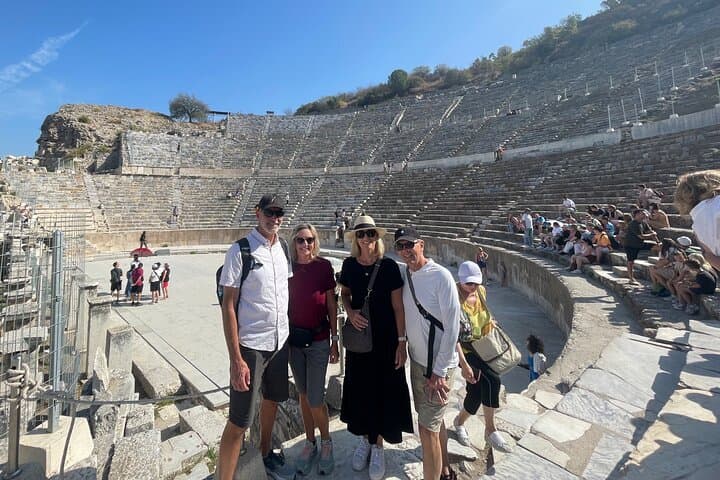
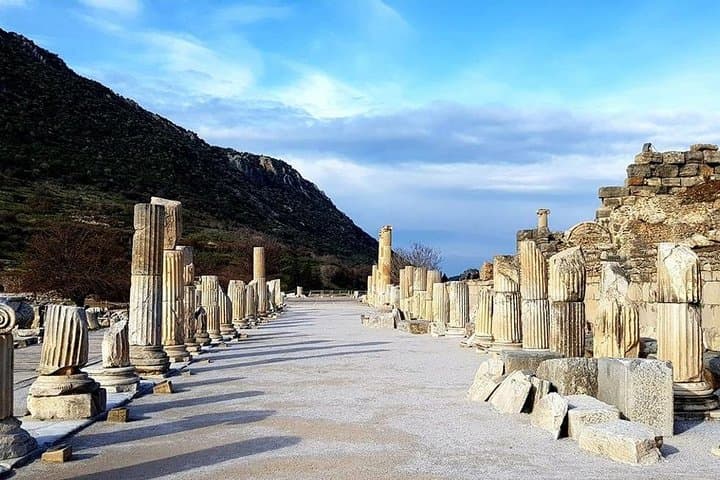
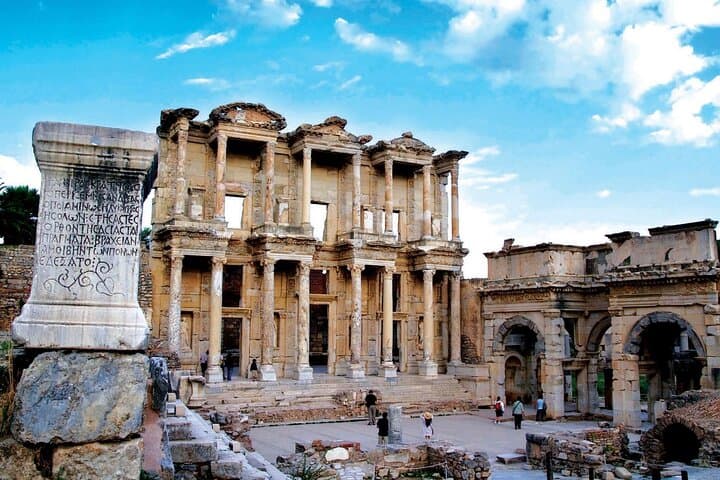
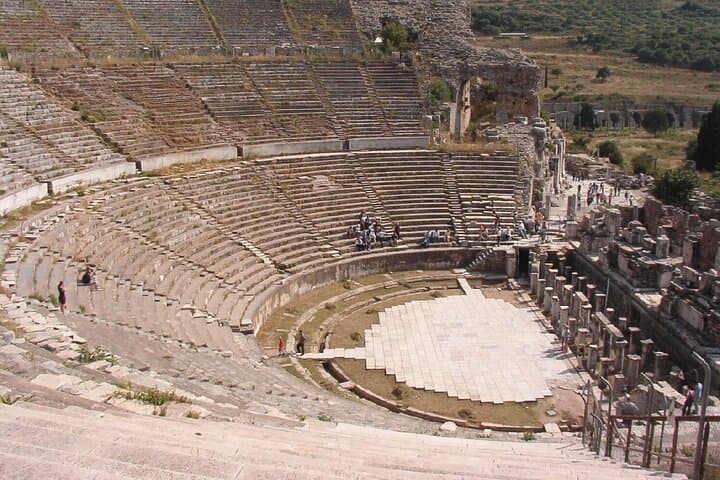
A bright Aegean morning opens as your shuttle leaves the cruise terminal and the coast drops away to olives and scrub. Within 20–30 minutes you stand beneath the marble façade of the Library of Celsus, the early sun painting the carved capitals and casting long shadows down Curetes Street. Voices of a past city feel immediate here — traders, philosophers and pilgrims threading the same stones.
A bright Aegean morning opens as your shuttle leaves the cruise terminal and the coast drops away to olives and scrub. Within 20–30 minutes you stand beneath the marble façade of the Library of Celsus, the early sun painting the carved capitals and casting long shadows down Curetes Street. Voices of a past city feel immediate here — traders, philosophers and pilgrims threading the same stones.
Ephesus rose from a Bronze Age settlement into a major Roman port and remains one of Turkey’s richest archaeological sites. Geologically, the site sits on alluvial plain; the ancient harbor has since silted, leaving the exposed marble and limestone streets that archaeologists have methodically uncovered. Cultural layers—Greek, Roman, early Christian—meet in the Terrace Houses, the open-air museum of domestic life, and the small but focused Ephesus Museum, which conserves sculptures and finds from nearby Artemis’s temple.
Practically, expect 2–3 km of walking over uneven cobbles and several stone staircases; total visit time commonly runs 3–4 hours including the museum. Summer afternoons are hot and exposed; mornings are best for light and fewer crowds. Guides make the logistics seamless for cruise guests: skip-the-line access, port pickup, and a guaranteed on-time return.
Bring sturdy shoes, sun protection, and a small water bottle, and plan to move deliberately through spaces that reward attention: an inscribed stele, a mosaic threshold, a quiet niche where history feels immediate. With modest planning, Ephesus delivers history that’s tactile, walkable, and surprisingly intimate.
