THE ADVENTURE COLLECTIVE® · Independent discovery and booking for outdoor travel

Escape Tokyo for a day and meet Mount Fuji on your own terms. This private, English-speaking tour threads Hakone’s steaming caldera and the Fuji Five Lakes into a customizable 10-hour itinerary — ideal for photographers, culture-seekers, and travelers who prefer a plan that bends with the weather.
Escape Tokyo for a day and meet Mount Fuji on your own terms. This private, English-speaking tour threads Hakone’s steaming caldera and the Fuji Five Lakes into a customizable 10-hour itinerary — ideal for photographers, culture-seekers, and travelers who prefer a plan that bends with the weather.
You step out of Tokyo's glass and steel and into a different Japan within an hour and a half: cedar-lined lanes, steaming sulfur vents, and a horizon framed by a perfectly conical peak. The private vehicle eases through dens of commuters and farmland, then the air thins and the landscape opens. By midmorning the guide points out a silhouette rising above the clouds — Mount Fuji — and the day becomes a sequence of tableaux: a mirrored lake, an active volcanic basin, a shrine where pilgrims once paused before the long ascent.
Verified experiences and guided adventures in the surrounding area.
Operated by Ohayo Nihon · Fujiyoshida, Yamanashi Prefecture
You step out of Tokyo's glass and steel and into a different Japan within an hour and a half: cedar-lined lanes, steaming sulfur vents, and a horizon framed by a perfectly conical peak. The private vehicle eases through dens of commuters and farmland, then the air thins and the landscape opens. By midmorning the guide points out a silhouette rising above the clouds — Mount Fuji — and the day becomes a sequence of tableaux: a mirrored lake, an active volcanic basin, a shrine where pilgrims once paused before the long ascent.
This full-day private tour stitches together Hakone's volcanic theater and the Fuji Five Lakes region into a single, flexible itinerary. Geologically, the Fuji area is young and volatile: Fuji itself is a stratovolcano whose last major eruption (the Hōei eruption) in 1707 left ash over Edo-era towns; Hakone is the remnant of a collapsed caldera that created Lake Ashinoko roughly 3,000 years ago. Culturally, the route reads like a history of reverence — Kitaguchi Hongu Fuji Sengen Shrine marks centuries of mountain worship and the starting point for pilgrim trails, while the lakeside villages preserve crafts and foodways shaped by volcanic soil.
On the ground you’ll trade long guided lectures for short, purposeful stops: Moto-Hakone for the classic Fuji-and-lake shot, the steam-billowed vistas at Owakudani, the filtered springwater at Oshino Hakkai, and the Subaru Line 5th Station where the road meets the Yoshida Trail at about 2,305 meters elevation. The guide — English-speaking and road-smart — adapts the route to visibility and energy levels, swapping photo stops or extending time at a craft village if you want to try woodworking or washi making.
Practicalities matter on a day like this. The tour is roughly 10 hours from Tokyo (pick-up typically at Tokyo Station around 8:00 AM, allowance for traffic included), so dress in layers: mornings in the Fuji basin can be warm but the 5th Station is cool and gusty. Even short walks involve uneven ground, stairs and observation decks. Visibility is the day’s currency — Fuji can be fogged in — so plan your photography early or late in the day and accept that the mountain sometimes chooses to hide. Bottled water, parking fees, and private transport are included, and because this is private you can prioritize what matters: landscapes, easy shrine walks, or a longer lakeside lunch.
For travelers who want the maximum return on a single day, this tour is a practical, scenic immersion: the planet's heat still shapes the land here, and centuries of human devotion have shaped the way people look at the mountain. With a measured guide and a flexible schedule, you’ll see how geology, history, and daily life converge along Fuji’s slopes.
easy.
10 hours.
Suitable for travelers with basic mobility; expect short walks, stairs and some uneven ground—no strenuous hiking required.
Visibility depends on weather—clear views are most likely in the morning and in late autumn or winter; the guide will adjust stops to maximize viewing opportunities but cannot guarantee a clear summit.
This tour stops at the Subaru Line 5th Station for views and short walks; it is an observation stop, not a summit climb—no technical hiking is required.
Yes—stops like Lake Kawaguchi, Hakone, and tourist sites have restrooms and restaurants; bring snacks if you prefer quick bites between stops.
Yes, it’s a private tour and the guide will tailor the route and time at each location to your interests, within the 10-hour schedule.
Short visits at ~2,305 m are generally well tolerated, but if you have pre-existing respiratory or cardiovascular conditions mention them when booking.
Pick-up is typically at Tokyo Station around 8:00 AM; the guide’s contact is provided 24 hours before departure and the vehicle may arrive up to 30 minutes late due to traffic.
Kitaguchi Hongu Fuji Sengen Shrine served as a core site of Fuji worship in the Edo period and is part of the Fujisan Cultural Site inscribed by UNESCO in 2013.
The Fuji region balances heavy visitation with protection: stick to marked paths, avoid swimming in protected springs, and support local businesses that use sustainable practices.
Ohayo Nihon operates guided outdoor trips and adventures with an emphasis on safety, stewardship, and memorable experiences.
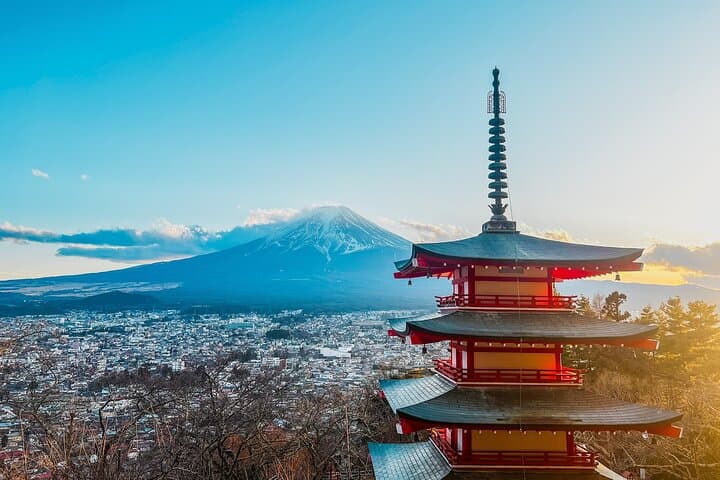
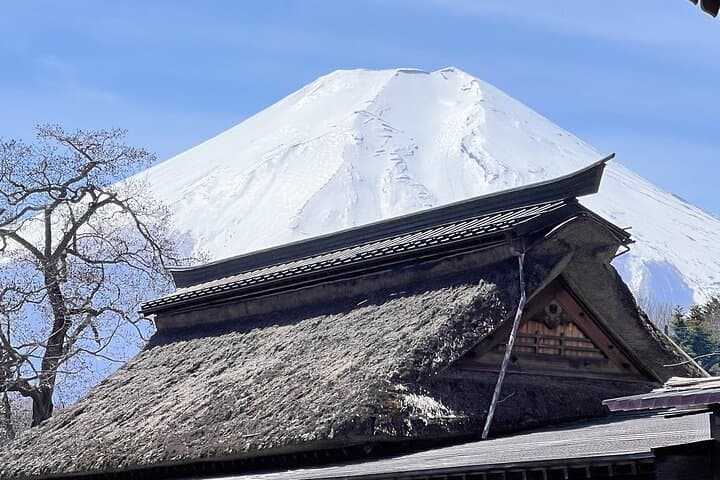
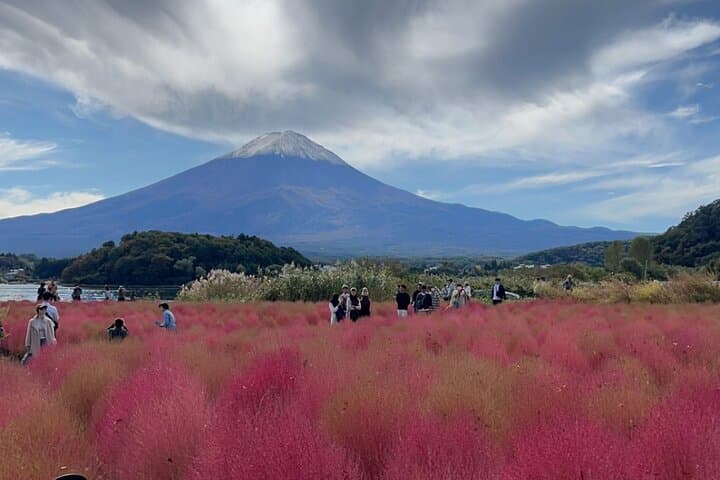
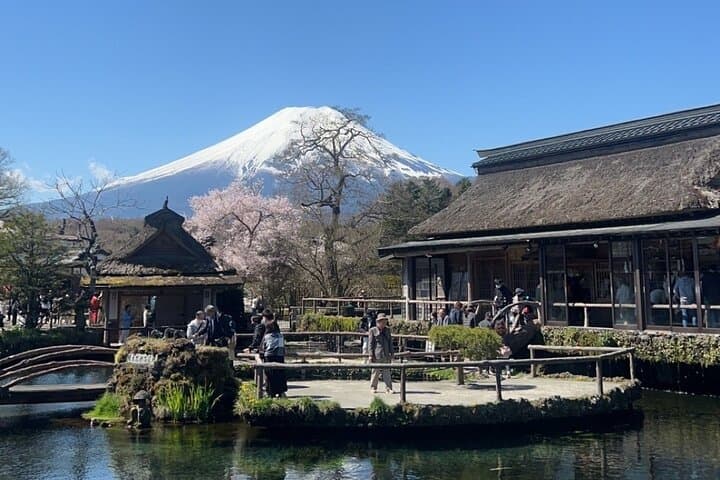
You step out of Tokyo's glass and steel and into a different Japan within an hour and a half: cedar-lined lanes, steaming sulfur vents, and a horizon framed by a perfectly conical peak. The private vehicle eases through dens of commuters and farmland, then the air thins and the landscape opens. By midmorning the guide points out a silhouette rising above the clouds — Mount Fuji — and the day becomes a sequence of tableaux: a mirrored lake, an active volcanic basin, a shrine where pilgrims once paused before the long ascent.
You step out of Tokyo's glass and steel and into a different Japan within an hour and a half: cedar-lined lanes, steaming sulfur vents, and a horizon framed by a perfectly conical peak. The private vehicle eases through dens of commuters and farmland, then the air thins and the landscape opens. By midmorning the guide points out a silhouette rising above the clouds — Mount Fuji — and the day becomes a sequence of tableaux: a mirrored lake, an active volcanic basin, a shrine where pilgrims once paused before the long ascent.
This full-day private tour stitches together Hakone's volcanic theater and the Fuji Five Lakes region into a single, flexible itinerary. Geologically, the Fuji area is young and volatile: Fuji itself is a stratovolcano whose last major eruption (the Hōei eruption) in 1707 left ash over Edo-era towns; Hakone is the remnant of a collapsed caldera that created Lake Ashinoko roughly 3,000 years ago. Culturally, the route reads like a history of reverence — Kitaguchi Hongu Fuji Sengen Shrine marks centuries of mountain worship and the starting point for pilgrim trails, while the lakeside villages preserve crafts and foodways shaped by volcanic soil.
On the ground you’ll trade long guided lectures for short, purposeful stops: Moto-Hakone for the classic Fuji-and-lake shot, the steam-billowed vistas at Owakudani, the filtered springwater at Oshino Hakkai, and the Subaru Line 5th Station where the road meets the Yoshida Trail at about 2,305 meters elevation. The guide — English-speaking and road-smart — adapts the route to visibility and energy levels, swapping photo stops or extending time at a craft village if you want to try woodworking or washi making.
Practicalities matter on a day like this. The tour is roughly 10 hours from Tokyo (pick-up typically at Tokyo Station around 8:00 AM, allowance for traffic included), so dress in layers: mornings in the Fuji basin can be warm but the 5th Station is cool and gusty. Even short walks involve uneven ground, stairs and observation decks. Visibility is the day’s currency — Fuji can be fogged in — so plan your photography early or late in the day and accept that the mountain sometimes chooses to hide. Bottled water, parking fees, and private transport are included, and because this is private you can prioritize what matters: landscapes, easy shrine walks, or a longer lakeside lunch.
For travelers who want the maximum return on a single day, this tour is a practical, scenic immersion: the planet's heat still shapes the land here, and centuries of human devotion have shaped the way people look at the mountain. With a measured guide and a flexible schedule, you’ll see how geology, history, and daily life converge along Fuji’s slopes.