THE ADVENTURE COLLECTIVE® · Independent discovery and booking for outdoor travel

Leave Edinburgh for a private eight‑hour drive through Scotland’s central belt to Stirling Castle, the Bannockburn battlefield and the Wallace Monument. This shore excursion pairs compact walking with rich history and expansive views—ideal for travelers who want a focused immersion in the sites that shaped Scotland.
Leave Edinburgh for a private eight‑hour drive through Scotland’s central belt to Stirling Castle, the Bannockburn battlefield and the Wallace Monument. This shore excursion pairs compact walking with rich history and expansive views—ideal for travelers who want a focused immersion in the sites that shaped Scotland.
The day begins on smooth A-roads out of Edinburgh, the Firth of Forth receding in the rearview as an air-conditioned minivan threads past the low-lying farmland toward Stirling’s volcanic crag. By the time the vehicle pulls up beneath the castle’s sheer basalt rock, the scale of Scottish history becomes physical—the castle sitting like a worn, strategic keystone above the River Forth.
Verified experiences and guided adventures in the surrounding area.
Operated by Wee Scottish Tours · Stirling, Scotland
The day begins on smooth A-roads out of Edinburgh, the Firth of Forth receding in the rearview as an air-conditioned minivan threads past the low-lying farmland toward Stirling’s volcanic crag. By the time the vehicle pulls up beneath the castle’s sheer basalt rock, the scale of Scottish history becomes physical—the castle sitting like a worn, strategic keystone above the River Forth.
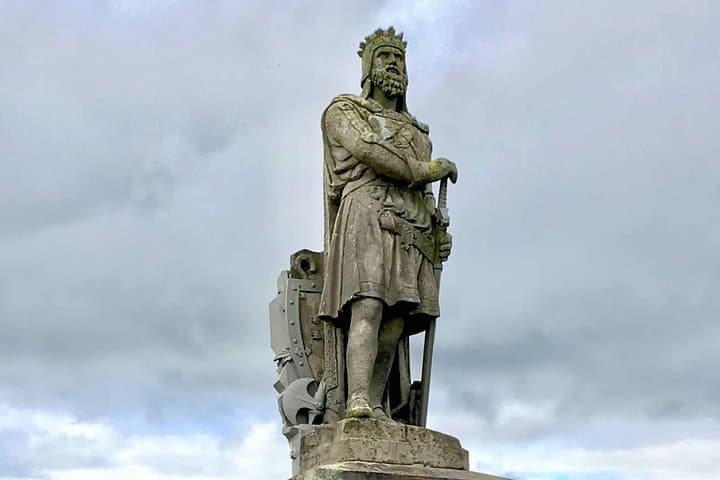
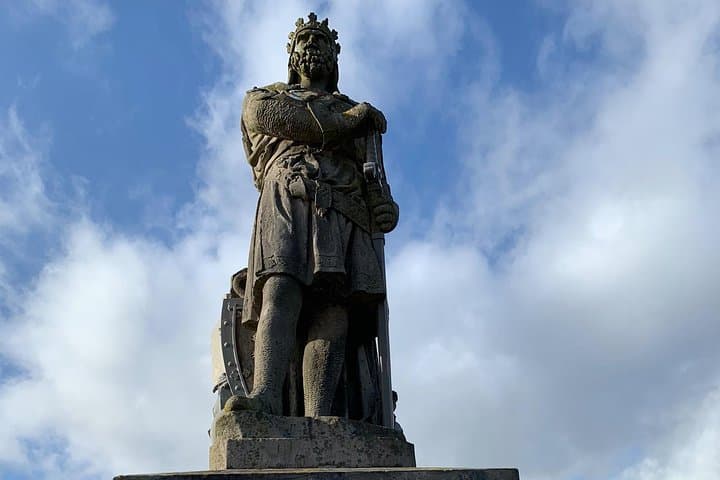
Stirling Castle was first recorded around 1100 and repeatedly contested because it controls the main east–west route across Scotland. A short drive away the ground flattens where Bannockburn’s marshy fields hosted Robert the Bruce’s 1314 victory, a turning point in Scotland’s fight for independence. Above the plain stands the Wallace Monument, a 19th‑century tower erected during a wave of national revival; its narrow stair and high viewpoint give a compact lesson in geology and defense—basalt crags, glacially scoured valleys, and the Ochil foothills framing the scene.
On a practical note: the full loop takes roughly eight hours, with time allocated for castle façades, the Bannockburn visitor area, and the monument’s climb. Admissions are commonly separate from the vehicle fare, but the tour provides bottled water, onboard Wi‑Fi, and flexible private pickup. Expect short walks, uneven paving at historic sites, and exposed viewpoints where wind and rain arrive fast.
Plan for layers and steady shoes, allow extra time if you want longer at any site, and bring a compact camera or binoculars—these are places where history and landscape push at you, asking for close attention.
easy.
8 hours.
Suitable for most fitness levels; participants should be able to walk short distances and climb sets of stairs.
Yes—this is a shore excursion designed for cruise schedules; confirm pickup and disembarkation times when booking.
Admissions are typically not included; the tour provides transport and stops, but castle and monument entry fees are paid separately unless specified.
Expect short walks around castle courtyards, paths at the Bannockburn site, and a steep stair climb at the Wallace Monument—nothing technical but some uneven ground.
As a private tour there is flexibility; discuss priorities with your driver-guide to reallocate time among stops.
Stirling’s strategic position made its castle a medieval power center; Bannockburn (1314) marked a decisive Scottish victory under Robert the Bruce that shifted national sovereignty.
Historic sites manage footpath erosion and protect archaeological features—stay on marked paths, avoid disturbing habitats, and follow local guidance to limit visitor impact.
Wee Scottish Tours operates guided outdoor trips and adventures with an emphasis on safety, stewardship, and memorable experiences.
The day begins on smooth A-roads out of Edinburgh, the Firth of Forth receding in the rearview as an air-conditioned minivan threads past the low-lying farmland toward Stirling’s volcanic crag. By the time the vehicle pulls up beneath the castle’s sheer basalt rock, the scale of Scottish history becomes physical—the castle sitting like a worn, strategic keystone above the River Forth.
The day begins on smooth A-roads out of Edinburgh, the Firth of Forth receding in the rearview as an air-conditioned minivan threads past the low-lying farmland toward Stirling’s volcanic crag. By the time the vehicle pulls up beneath the castle’s sheer basalt rock, the scale of Scottish history becomes physical—the castle sitting like a worn, strategic keystone above the River Forth.
Stirling Castle was first recorded around 1100 and repeatedly contested because it controls the main east–west route across Scotland. A short drive away the ground flattens where Bannockburn’s marshy fields hosted Robert the Bruce’s 1314 victory, a turning point in Scotland’s fight for independence. Above the plain stands the Wallace Monument, a 19th‑century tower erected during a wave of national revival; its narrow stair and high viewpoint give a compact lesson in geology and defense—basalt crags, glacially scoured valleys, and the Ochil foothills framing the scene.
On a practical note: the full loop takes roughly eight hours, with time allocated for castle façades, the Bannockburn visitor area, and the monument’s climb. Admissions are commonly separate from the vehicle fare, but the tour provides bottled water, onboard Wi‑Fi, and flexible private pickup. Expect short walks, uneven paving at historic sites, and exposed viewpoints where wind and rain arrive fast.
Plan for layers and steady shoes, allow extra time if you want longer at any site, and bring a compact camera or binoculars—these are places where history and landscape push at you, asking for close attention.