THE ADVENTURE COLLECTIVE® · Independent discovery and booking for outdoor travel

Drive the Nile corridor from Luxor to two Ptolemaic gems: the imposing Temple of Horus at Edfu and the twin shrines of Kom Ombo. This private tour combines easy walking on archaeological sites with several hours of scenic river‑valley driving.
Drive the Nile corridor from Luxor to two Ptolemaic gems: the imposing Temple of Horus at Edfu and the twin shrines of Kom Ombo. This private tour combines easy walking on archaeological sites with several hours of scenic river‑valley driving.
You step into the Nile valley before sunrise, the desert light flattening the horizon while the road south hums under the wheels of a private air‑conditioned car. Palm groves slip past, and soon the silhouette of Ptolemaic stone rises out of sand—first Edfu’s broad pylon, then Kom Ombo’s twin‑fronted façade.
Verified experiences and guided adventures in the surrounding area.
Operated by Egypt VIP Tours · Luxor, Luxor Governorate
You step into the Nile valley before sunrise, the desert light flattening the horizon while the road south hums under the wheels of a private air‑conditioned car. Palm groves slip past, and soon the silhouette of Ptolemaic stone rises out of sand—first Edfu’s broad pylon, then Kom Ombo’s twin‑fronted façade.
Edfu is among Egypt’s best‑preserved temples, erected during the Ptolemaic period and dedicated to Horus; its sandstone walls keep clear reliefs and processional ways carved in the language of a millennia of worship. Kom Ombo, by contrast, is a bi‑temple honoring Sobek and Haroeris, with crocodile burials and a unique, mirrored layout that reflects local cult practice and Nile‑edge life. Geologically these monuments sit on Nile alluvium and river terraces—flat, low elevation with mostly paved approach roads and compacted sand around the temple grounds.
Culturally, both sites illustrate the overlap of pharaonic, Greek, and Roman influences along the river; locally, small markets and boatyards still service fishermen and feluccas. Expect uneven stone floors, short steep steps, and shaded courtyards that offer brief relief from the sun.
Practical guidance: the operator lists a private vehicle and hotel pickup; the itinerary commonly runs toward 6–8 hours including transfers between Luxor, Edfu, Kom Ombo and return or drop‑off in Aswan. Carry cash for entry and guides, wear sturdy closed‑toe shoes, sun protection, and plan visits for early morning or late afternoon to avoid peak heat. Respect on‑site rules: don’t touch reliefs, and follow any photography restrictions to help preserve these ancient stones.
easy.
6–8 hours.
Suitable for most fitness levels; requires walking on uneven stone, climbing short steps, and tolerating several hours in a vehicle.
Although marketed as a 4‑hour private tour, typical itineraries with hotel pickup and transfers often run 6–8 hours depending on traffic and whether you return to Luxor or are dropped in Aswan.
No—admission to the temples is generally not included; bring Egyptian pounds to purchase tickets and optional local guides at the sites.
Yes—this private option includes pickup from your Luxor hotel in an air‑conditioned vehicle and drop‑off according to the booking (Luxor or Aswan options may be offered).
The activity is rated easy and accessible for most ages, but infants may be required to sit on an adult’s lap in the vehicle; note temple surfaces are uneven and supervision is advised.
Edfu’s Temple of Horus was largely built during the Ptolemaic era with ritual spaces and reliefs recording festivals; Kom Ombo developed as a dual cult site combining Sobek and Haroeris worship, reflecting the Nile’s importance to local identity.
Both sites are managed by Egyptian antiquities authorities; visitors help preservation by staying on pathways, not touching reliefs, and avoiding litter—support local conservation by using licensed guides.
Egypt VIP Tours operates guided outdoor trips and adventures with an emphasis on safety, stewardship, and memorable experiences.
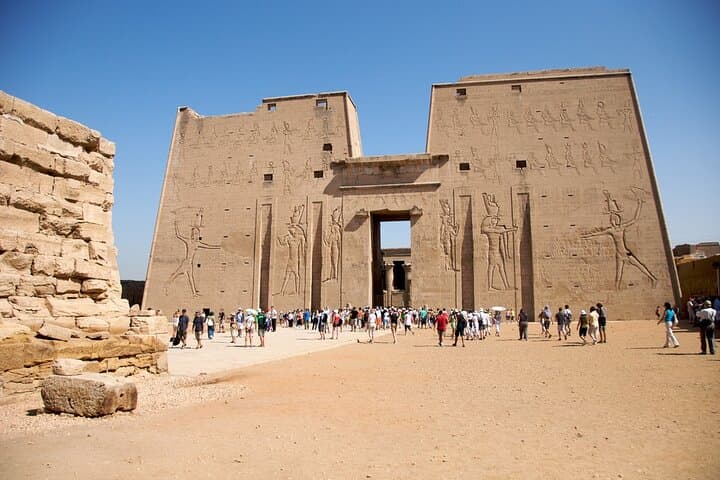
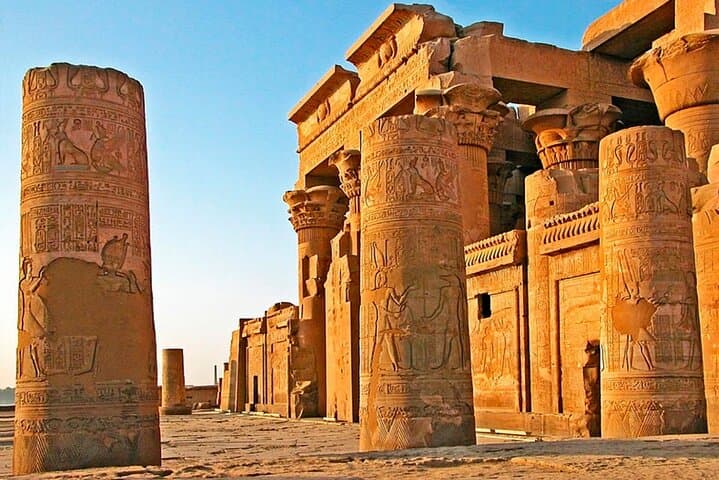
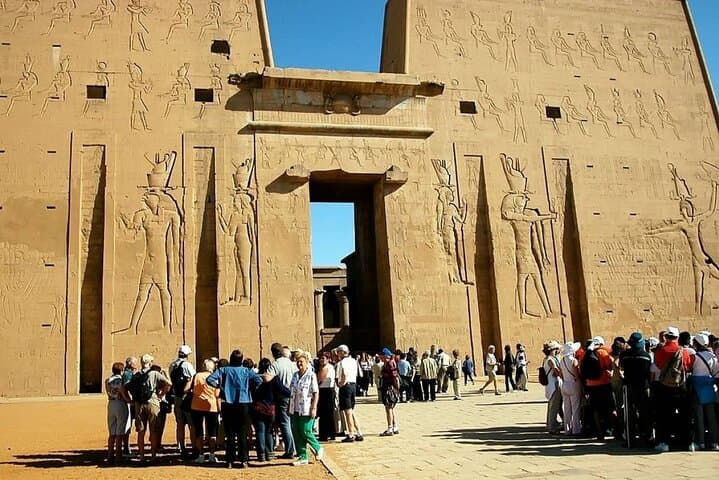
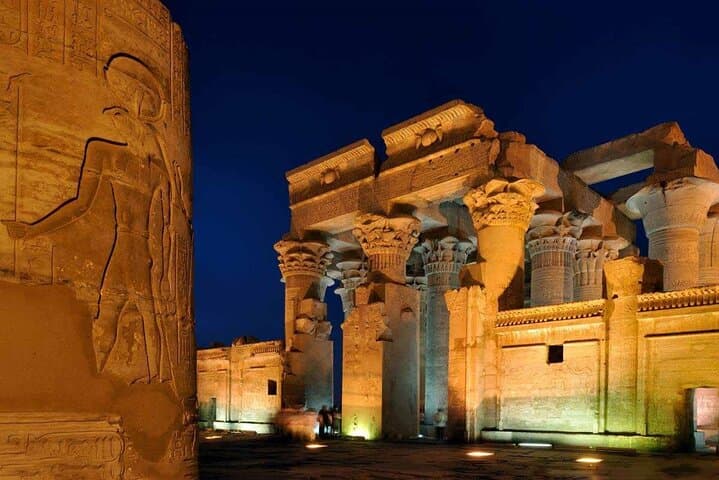
You step into the Nile valley before sunrise, the desert light flattening the horizon while the road south hums under the wheels of a private air‑conditioned car. Palm groves slip past, and soon the silhouette of Ptolemaic stone rises out of sand—first Edfu’s broad pylon, then Kom Ombo’s twin‑fronted façade.
You step into the Nile valley before sunrise, the desert light flattening the horizon while the road south hums under the wheels of a private air‑conditioned car. Palm groves slip past, and soon the silhouette of Ptolemaic stone rises out of sand—first Edfu’s broad pylon, then Kom Ombo’s twin‑fronted façade.
Edfu is among Egypt’s best‑preserved temples, erected during the Ptolemaic period and dedicated to Horus; its sandstone walls keep clear reliefs and processional ways carved in the language of a millennia of worship. Kom Ombo, by contrast, is a bi‑temple honoring Sobek and Haroeris, with crocodile burials and a unique, mirrored layout that reflects local cult practice and Nile‑edge life. Geologically these monuments sit on Nile alluvium and river terraces—flat, low elevation with mostly paved approach roads and compacted sand around the temple grounds.
Culturally, both sites illustrate the overlap of pharaonic, Greek, and Roman influences along the river; locally, small markets and boatyards still service fishermen and feluccas. Expect uneven stone floors, short steep steps, and shaded courtyards that offer brief relief from the sun.
Practical guidance: the operator lists a private vehicle and hotel pickup; the itinerary commonly runs toward 6–8 hours including transfers between Luxor, Edfu, Kom Ombo and return or drop‑off in Aswan. Carry cash for entry and guides, wear sturdy closed‑toe shoes, sun protection, and plan visits for early morning or late afternoon to avoid peak heat. Respect on‑site rules: don’t touch reliefs, and follow any photography restrictions to help preserve these ancient stones.