THE ADVENTURE COLLECTIVE® · Independent discovery and booking for outdoor travel

See Belém’s riverside monuments and taste the original Pastéis de Belém on a 2-hour private eco tuk tuk. This driver-led tour pairs UNESCO architecture with skip-the-line pastry access in a compact, sustainable vehicle.
See Belém’s riverside monuments and taste the original Pastéis de Belém on a 2-hour private eco tuk tuk. This driver-led tour pairs UNESCO architecture with skip-the-line pastry access in a compact, sustainable vehicle.
The tuk tuk eases away from a sun-bright quay, the Tagus lapping at its tires as tiles and Manueline stone flash past. In two hours the driver-threaded route stitches together Lisbon’s seafaring past—bridges and docks, a UNESCO monastery and a riverside fort—while the scent of warm pastry promises a claim on the city’s most famous sweet.
Verified experiences and guided adventures in the surrounding area.
Operated by Eco Tuk Tuk - Portugal · Lisbon, Lisbon
The tuk tuk eases away from a sun-bright quay, the Tagus lapping at its tires as tiles and Manueline stone flash past. In two hours the driver-threaded route stitches together Lisbon’s seafaring past—bridges and docks, a UNESCO monastery and a riverside fort—while the scent of warm pastry promises a claim on the city’s most famous sweet.
Belém sits at the mouth of the Tagus, where tidal flats and alluvial soils met the ambitions of 15th-century navigators. The Jerónimos Monastery and Belém Tower display the rich Manueline language—ornate ropes, armillary spheres and maritime motifs carved in limestone—as well as the physical legacy of Portugal’s Age of Discovery. Modern notes arrive at the MAAT and the silhouette of the 25 de Abril bridge, a reminder of industrial and twentieth-century eras layered on top of earlier history.
Culturally, Belém is both pilgrimage and neighborhood: pilgrims to monuments, locals to cafés and the pastry shop where Pastéis de Belém have been made since 1837. Expect brief photo stops rather than long explorations—this is a compact, driver-led introduction designed to orient and delight.
Practical notes: tours are private (max four per tuk tuk), run in most weather, and include a skip-the-line Pastéis de Belém stop. Tuk tuks carry no trunks—travel light—drivers assist seniors but strollers, wheelchairs and pets aren’t allowed. Book mornings to avoid crowds, carry a light layer for riverside wind, and bring comfortable shoes for short on-foot stops.
easy.
2 hours.
Suitable for almost all fitness levels; requires short on-foot stops and ability to board a low-step tuk tuk
Yes — the itinerary includes a stop at the original pastry shop with skip-the-line access and time to taste the custard tart.
No — tuk tuks have no trunks and cannot transport strollers or wheelchairs; vehicles are suitable for seniors and drivers can assist boarding.
The legal maximum is four passengers per tuk tuk; tours are private and priced per vehicle configuration.
Admissions are not included; stops at Jerónimos Monastery and Belém Tower are for photos and exterior appreciation unless you arrange separate tickets.
Belém was the launching point for many 15th- and 16th-century voyages; monuments like Jerónimos Monastery and Belém Tower commemorate Portugal’s maritime empire and are key Manueline examples.
These UNESCO-listed sites face heavy visitor pressure—stick to paths, avoid touching carved stone, and follow local guidance to help preserve fragile limestone façades.
Eco Tuk Tuk - Portugal operates guided outdoor trips and adventures with an emphasis on safety, stewardship, and memorable experiences.
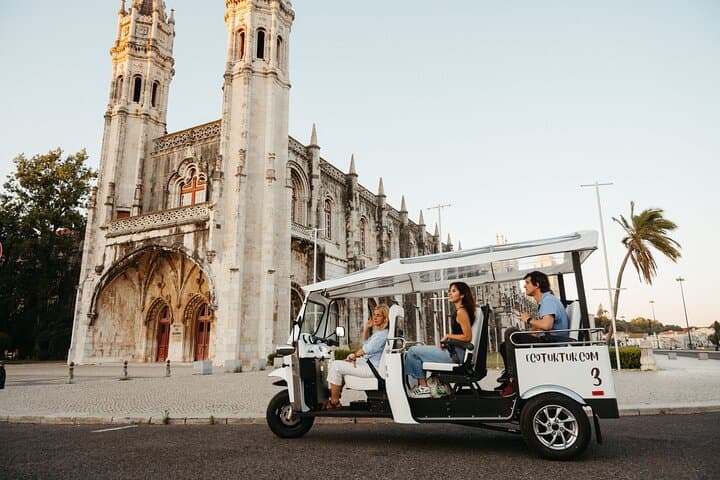

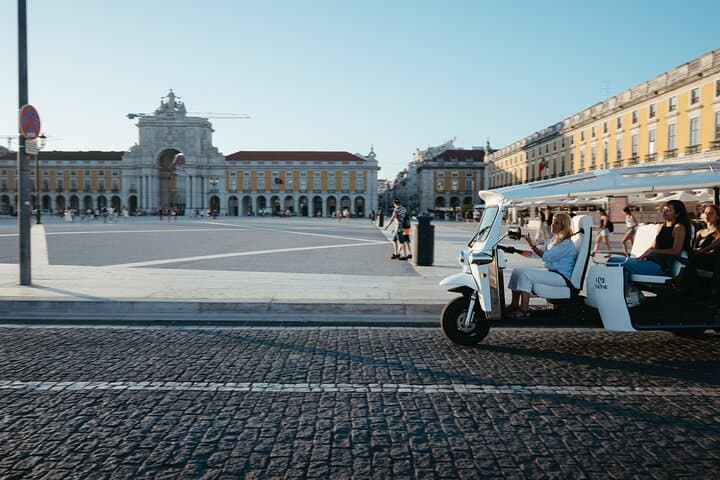
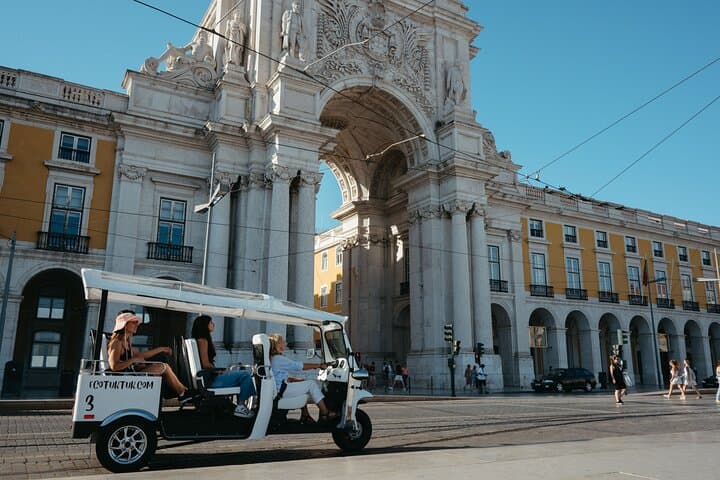
The tuk tuk eases away from a sun-bright quay, the Tagus lapping at its tires as tiles and Manueline stone flash past. In two hours the driver-threaded route stitches together Lisbon’s seafaring past—bridges and docks, a UNESCO monastery and a riverside fort—while the scent of warm pastry promises a claim on the city’s most famous sweet.
The tuk tuk eases away from a sun-bright quay, the Tagus lapping at its tires as tiles and Manueline stone flash past. In two hours the driver-threaded route stitches together Lisbon’s seafaring past—bridges and docks, a UNESCO monastery and a riverside fort—while the scent of warm pastry promises a claim on the city’s most famous sweet.
Belém sits at the mouth of the Tagus, where tidal flats and alluvial soils met the ambitions of 15th-century navigators. The Jerónimos Monastery and Belém Tower display the rich Manueline language—ornate ropes, armillary spheres and maritime motifs carved in limestone—as well as the physical legacy of Portugal’s Age of Discovery. Modern notes arrive at the MAAT and the silhouette of the 25 de Abril bridge, a reminder of industrial and twentieth-century eras layered on top of earlier history.
Culturally, Belém is both pilgrimage and neighborhood: pilgrims to monuments, locals to cafés and the pastry shop where Pastéis de Belém have been made since 1837. Expect brief photo stops rather than long explorations—this is a compact, driver-led introduction designed to orient and delight.
Practical notes: tours are private (max four per tuk tuk), run in most weather, and include a skip-the-line Pastéis de Belém stop. Tuk tuks carry no trunks—travel light—drivers assist seniors but strollers, wheelchairs and pets aren’t allowed. Book mornings to avoid crowds, carry a light layer for riverside wind, and bring comfortable shoes for short on-foot stops.