THE ADVENTURE COLLECTIVE® · Independent discovery and booking for outdoor travel

Explore Luxor’s East Bank on a private four‑hour tour that pairs the intimate Luxor Temple with the monumental Karnak complex. This guided walk offers close-up access to colonnades, pylons, and hieroglyphs with hotel pickup and admission included.
Explore Luxor’s East Bank on a private four‑hour tour that pairs the intimate Luxor Temple with the monumental Karnak complex. This guided walk offers close-up access to colonnades, pylons, and hieroglyphs with hotel pickup and admission included.
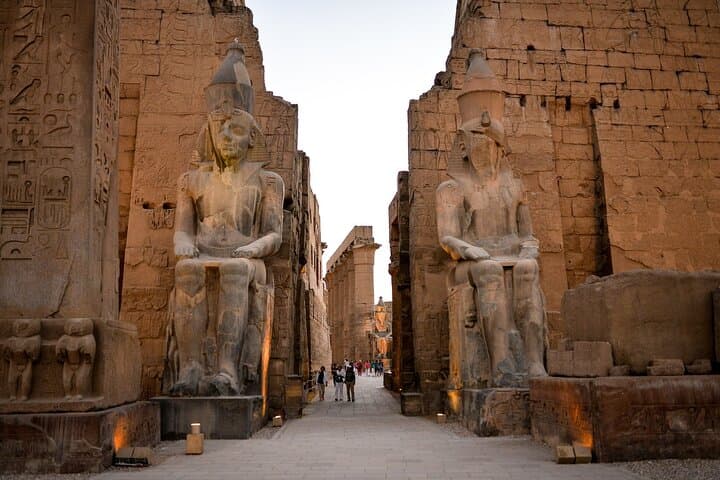
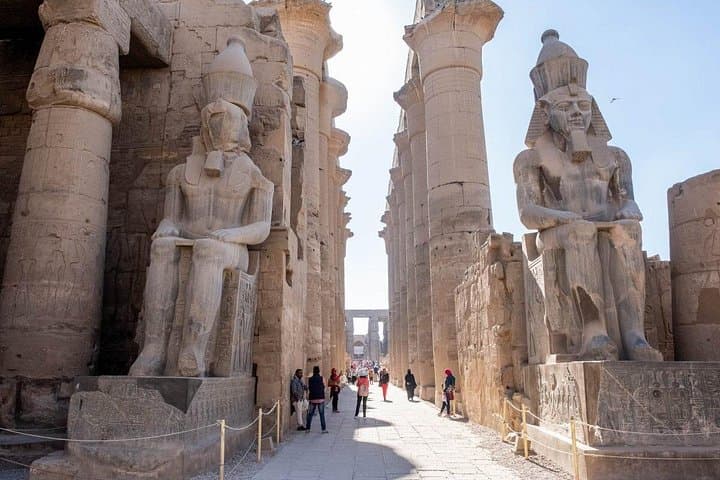
Morning light in Luxor cuts across sandstone pillars, drawing the hieroglyphs into sharp relief as a private car eases onto the East Bank. A licensed guide meets you at your hotel or Nile cruise, and within minutes the city’s modern bustle gives way to colonnaded courts, pylons, and the dry, sun-warmed air that has preserved these stones for millennia.
Verified experiences and guided adventures in the surrounding area.
Operated by Icon Tours Egypt · Luxor, Luxor Governorate
Morning light in Luxor cuts across sandstone pillars, drawing the hieroglyphs into sharp relief as a private car eases onto the East Bank. A licensed guide meets you at your hotel or Nile cruise, and within minutes the city’s modern bustle gives way to colonnaded courts, pylons, and the dry, sun-warmed air that has preserved these stones for millennia.
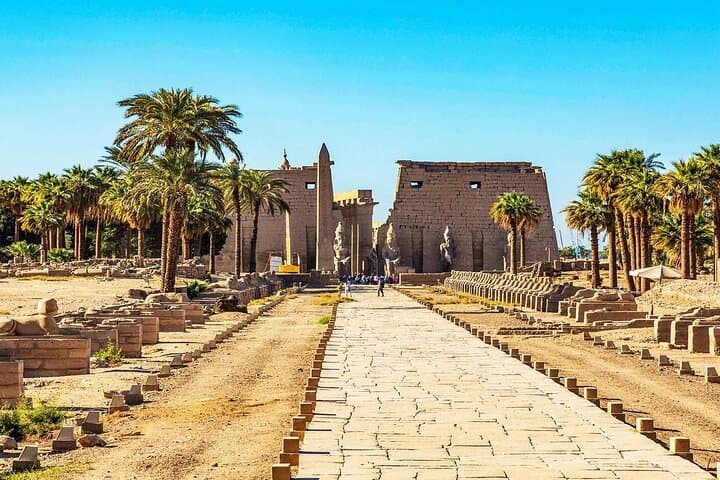
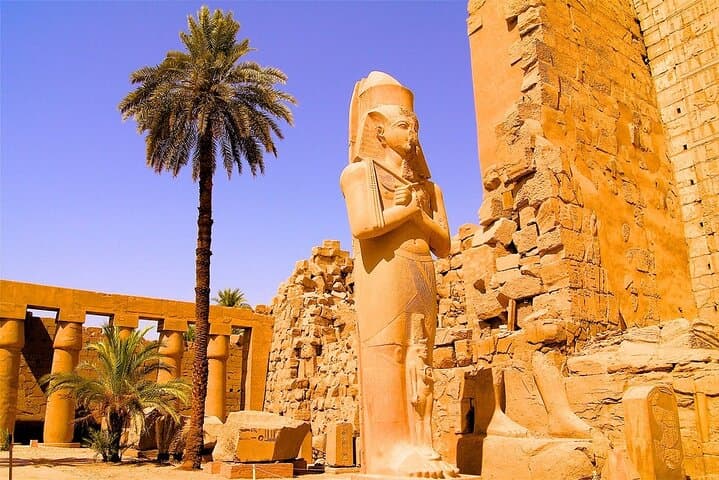
Luxor Temple (circa 1400 BCE) and the sprawling Karnak complex sit on the floodplain of the Nile, constructed from local sandstone and limestone quarried along the valley. Karnak’s Great Hypostyle Hall — a forest of 134 towering columns — and Luxor’s avenue of ram-headed sphinxes reflect layers of pharaonic patronage from the Middle Kingdom through the New Kingdom. The route you follow echoes the ancient Opet Festival procession that once linked these ceremonial sites.
Beyond the monuments, local life frames the visit: market vendors on Sharia Al-Mahatta, feluccas slipping the Nile, and small cafés serving mint tea. Expect uneven flagstones, intermittent shade, and strong sunlight; the landscape is as much architectural as it is geological, where Nile-deposited silt enabled the agriculture that funded temple building.
Practical guidance: this private half‑day covers close-up access to major halls with admission included and moderate walking over packed stone and sand. Wear sturdy, closed-toe shoes, sun protection, and modest clothing. Morning or late-afternoon departures avoid peak heat and provide softer light for photography. Bring a refillable bottle—your guide typically supplies bottled water—and small local currency for tips or quick purchases. The tour is accessible to most fitness levels but requires steady footing and an appetite for history.
easy.
4 hours.
Suitable for most fitness levels; requires moderate walking and negotiating uneven stone surfaces.
Yes — this tour’s listed inclusions specify admission to both Luxor Temple and Karnak Temple are included.
Yes — the booking is for a private guide and vehicle with hotel or cruise pickup and drop‑off.
Expect two hours of on‑foot exploration split between sites; terrain is mostly paved or compacted stone but can be uneven.
The tour is suitable for children; infants must sit on laps per the additional booking information, and parents should plan for sun protection and breaks.
Luxor and Karnak were central ceremonial sites in ancient Thebes; successive pharaohs expanded the complexes over centuries, leaving layers of construction and reused stone.
High visitor volume stresses fragile surfaces—stick to marked paths, avoid touching reliefs, and follow guide instructions to help preserve carvings and pigments.
Icon Tours Egypt operates guided outdoor trips and adventures with an emphasis on safety, stewardship, and memorable experiences.
Morning light in Luxor cuts across sandstone pillars, drawing the hieroglyphs into sharp relief as a private car eases onto the East Bank. A licensed guide meets you at your hotel or Nile cruise, and within minutes the city’s modern bustle gives way to colonnaded courts, pylons, and the dry, sun-warmed air that has preserved these stones for millennia.
Morning light in Luxor cuts across sandstone pillars, drawing the hieroglyphs into sharp relief as a private car eases onto the East Bank. A licensed guide meets you at your hotel or Nile cruise, and within minutes the city’s modern bustle gives way to colonnaded courts, pylons, and the dry, sun-warmed air that has preserved these stones for millennia.
Luxor Temple (circa 1400 BCE) and the sprawling Karnak complex sit on the floodplain of the Nile, constructed from local sandstone and limestone quarried along the valley. Karnak’s Great Hypostyle Hall — a forest of 134 towering columns — and Luxor’s avenue of ram-headed sphinxes reflect layers of pharaonic patronage from the Middle Kingdom through the New Kingdom. The route you follow echoes the ancient Opet Festival procession that once linked these ceremonial sites.
Beyond the monuments, local life frames the visit: market vendors on Sharia Al-Mahatta, feluccas slipping the Nile, and small cafés serving mint tea. Expect uneven flagstones, intermittent shade, and strong sunlight; the landscape is as much architectural as it is geological, where Nile-deposited silt enabled the agriculture that funded temple building.
Practical guidance: this private half‑day covers close-up access to major halls with admission included and moderate walking over packed stone and sand. Wear sturdy, closed-toe shoes, sun protection, and modest clothing. Morning or late-afternoon departures avoid peak heat and provide softer light for photography. Bring a refillable bottle—your guide typically supplies bottled water—and small local currency for tips or quick purchases. The tour is accessible to most fitness levels but requires steady footing and an appetite for history.