THE ADVENTURE COLLECTIVE® · Independent discovery and booking for outdoor travel

A private, skip-the-line exploration of Florence’s Duomo complex moves from the Baptistry to Brunelleschi’s dome and into the Opera del Duomo museum. Expect focused art-historical insight, enforced dress codes, and about two to three hours of walking and stairs.
A private, skip-the-line exploration of Florence’s Duomo complex moves from the Baptistry to Brunelleschi’s dome and into the Opera del Duomo museum. Expect focused art-historical insight, enforced dress codes, and about two to three hours of walking and stairs.
You step into Piazza del Duomo with the cathedral’s dome filling the sky, its bands of green, pink and white marble catching hard light. A private guide sets the pace: you move from the Baptistry’s bronze doors into the cool shadow beneath Brunelleschi’s dome, then onward to the Opera del Duomo museum where original sculptures and the Baptistry gates sit quiet behind glass.
Verified experiences and guided adventures in the surrounding area.
Operated by Guida Turistica in Toscna · Florence, Tuscany
You step into Piazza del Duomo with the cathedral’s dome filling the sky, its bands of green, pink and white marble catching hard light. A private guide sets the pace: you move from the Baptistry’s bronze doors into the cool shadow beneath Brunelleschi’s dome, then onward to the Opera del Duomo museum where original sculptures and the Baptistry gates sit quiet behind glass.
Florence’s Duomo complex traces the city’s leap into the Renaissance. The Baptistry predates the cathedral and baptized figures like Dante; Brunelleschi’s dome, completed in the 15th century without visible buttresses, altered architectural practice across Europe. The museum preserves fragments of the medieval façade, original sculptures and liturgical objects removed for protection.
Geology and materiality play a role: Tuscan and Carrara marbles, worked into the cathedral’s façade, reflect regional stonecraft and trade. Culturally, the complex remains a civic heart — ceremonies, processions and the visible legacy of guild patronage.
Practical guidance: book a skip-the-line private slot in the morning to avoid busier midday windows; the full private visit runs about two to three hours with seated opportunities inside the museum. Dress code is enforced — shoulders and knees must be covered. Wear supportive shoes for cobbled streets and some stairs inside; bring a small water bottle and a compact bag to comply with museum security. Photography is allowed in many spaces but restricted for certain artifacts. For accessibility, parts of the complex are ramped though some areas include steps. A private guide will make navigation efficient and deepen context — essential for first-time visitors.
easy.
2–3 hours.
Basic walking fitness; ability to manage short flights of stairs and cobbled streets.
Yes — knees and shoulders must be covered for entry to the cathedral and baptistry; failure to comply can result in refusal of entry.
This private tour includes timed admission and bypasses standard queues, but security checks remain and short waits can occur at peak times.
Parts of the complex and museum are accessible via ramps and lifts, but some areas (crypt and certain steps) have limited access; check with the operator for specific needs.
Guidelines indicate children under 11 may be asked for passports or ID, so carry official documents when travelling with minors.
The Duomo complex reflects Florence’s civic ambition: the Baptistry predates the cathedral and Brunelleschi’s unsupported dome (completed 1436) marked a turning point in Renaissance engineering.
The complex is heavily managed to protect fragile artworks; follow signage, avoid flash photography where prohibited, and support conservation by sticking to marked paths and not touching artifacts.
Guida Turistica in Toscna operates guided outdoor trips and adventures with an emphasis on safety, stewardship, and memorable experiences.
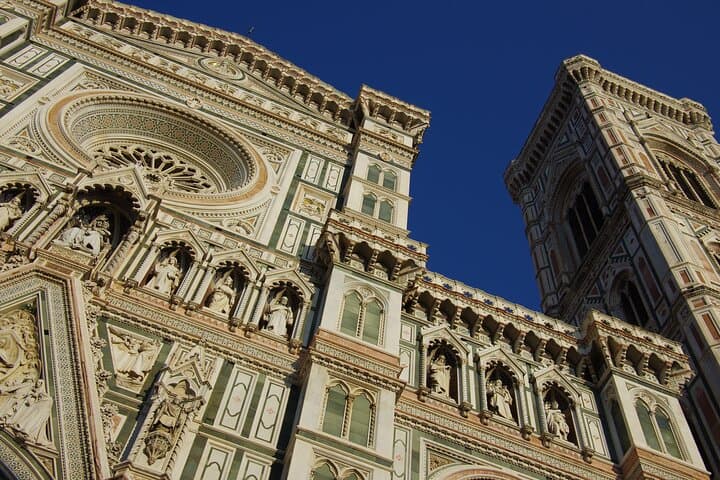

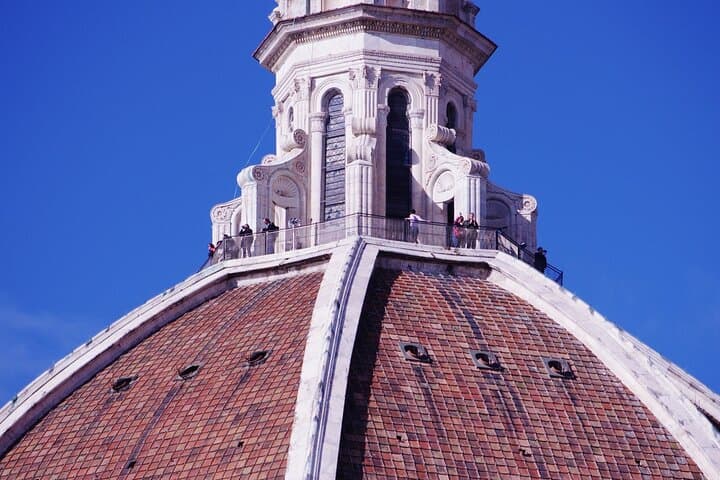
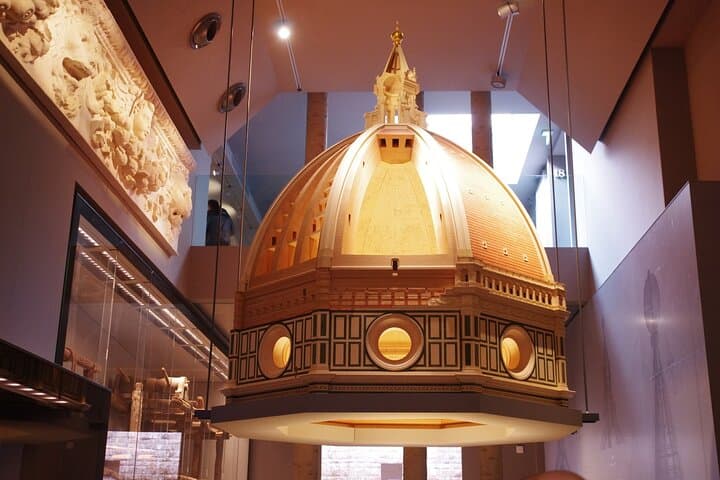
You step into Piazza del Duomo with the cathedral’s dome filling the sky, its bands of green, pink and white marble catching hard light. A private guide sets the pace: you move from the Baptistry’s bronze doors into the cool shadow beneath Brunelleschi’s dome, then onward to the Opera del Duomo museum where original sculptures and the Baptistry gates sit quiet behind glass.
You step into Piazza del Duomo with the cathedral’s dome filling the sky, its bands of green, pink and white marble catching hard light. A private guide sets the pace: you move from the Baptistry’s bronze doors into the cool shadow beneath Brunelleschi’s dome, then onward to the Opera del Duomo museum where original sculptures and the Baptistry gates sit quiet behind glass.
Florence’s Duomo complex traces the city’s leap into the Renaissance. The Baptistry predates the cathedral and baptized figures like Dante; Brunelleschi’s dome, completed in the 15th century without visible buttresses, altered architectural practice across Europe. The museum preserves fragments of the medieval façade, original sculptures and liturgical objects removed for protection.
Geology and materiality play a role: Tuscan and Carrara marbles, worked into the cathedral’s façade, reflect regional stonecraft and trade. Culturally, the complex remains a civic heart — ceremonies, processions and the visible legacy of guild patronage.
Practical guidance: book a skip-the-line private slot in the morning to avoid busier midday windows; the full private visit runs about two to three hours with seated opportunities inside the museum. Dress code is enforced — shoulders and knees must be covered. Wear supportive shoes for cobbled streets and some stairs inside; bring a small water bottle and a compact bag to comply with museum security. Photography is allowed in many spaces but restricted for certain artifacts. For accessibility, parts of the complex are ramped though some areas include steps. A private guide will make navigation efficient and deepen context — essential for first-time visitors.