THE ADVENTURE COLLECTIVE® · Independent discovery and booking for outdoor travel

Walk the nearly thousand-year-old ramparts of Dubrovnik with a local guide who grew up in the Old Town. This private 2‑hour tour pairs panoramic sea views, defensive architecture and street-level cultural stories—perfect for photographers and history lovers.
Walk the nearly thousand-year-old ramparts of Dubrovnik with a local guide who grew up in the Old Town. This private 2‑hour tour pairs panoramic sea views, defensive architecture and street-level cultural stories—perfect for photographers and history lovers.
Stepping onto Dubrovnik’s City Walls feels like crossing a seam between centuries—stone underfoot, the Adriatic wind pulling at your jacket, and the Old Town spread below like a living map. Your guide, born and raised in the city’s alleys, points out crenellations, cannon embrasures and the narrow streets that thread between ochre roofs. The walls pace you: a slow climb, a sunlit stretch, a sudden sweep of blue where the sea seems to dare you to look away.
Verified experiences and guided adventures in the surrounding area.
Operated by Dubrovnik Walk Of Fame · Dubrovnik, Dubrovnik-Neretva County
Stepping onto Dubrovnik’s City Walls feels like crossing a seam between centuries—stone underfoot, the Adriatic wind pulling at your jacket, and the Old Town spread below like a living map. Your guide, born and raised in the city’s alleys, points out crenellations, cannon embrasures and the narrow streets that thread between ochre roofs. The walls pace you: a slow climb, a sunlit stretch, a sudden sweep of blue where the sea seems to dare you to look away.
Built and rebuilt from the 12th to the 17th centuries, these fortifications were shaped by medieval commerce and Venetian influence; bastions and towers respond to siege-era tactics and later artillery upgrades. Geologically, the walls sit on limestone bedrock scored by men and weather alike, while local culture—fishing, festival processions, and the rhythm of café life—still orbits the Old Town below.
Expect uneven stone steps, short exposed sections with low parapets, and spectacular photographic lines toward Fort Lovrijenac and Lokrum Island. Guides often punctuate historical detail with personal stories about daily life in the Sponza and Stradun neighborhoods.
Practically: buy your City Walls ticket in advance during high season, arrive early to avoid heat and crowds, wear sturdy shoes, and bring water. The route is roughly 1–2 kilometers with intermittent stairs; pace yourself and pause at the bastions to watch gulls wheel and fishermen work the coves. For a shorter option, combine a half-wall route with a cable car ride up Mount Srđ for a complementary panoram.
moderate.
2 hours.
Able to climb multiple flights of uneven stone steps and walk short distances at a steady pace; not suitable for wheelchairs.
No. City Walls entry must be purchased separately—your guide can advise on online options and the best time slot.
No. The walls include steep, uneven steps and narrow passages unsuitable for strollers or wheelchairs.
Yes. Guides can deliver a half-walls itinerary and recommend pairing it with the Mount Srđ cable car for broader views.
Aim to arrive 10–15 minutes early to meet your guide and handle ticket pickup; the Old Town has strict traffic-free zones to navigate.
Dubrovnik’s walls evolved between the 12th and 17th centuries, expanded to resist Venetian and Ottoman pressures and later artillery advances.
High visitor numbers stress the fabric of the walls—stick to marked paths, avoid touching delicate masonry, and carry out any trash to help preserve the site.
Dubrovnik Walk Of Fame operates guided outdoor trips and adventures with an emphasis on safety, stewardship, and memorable experiences.

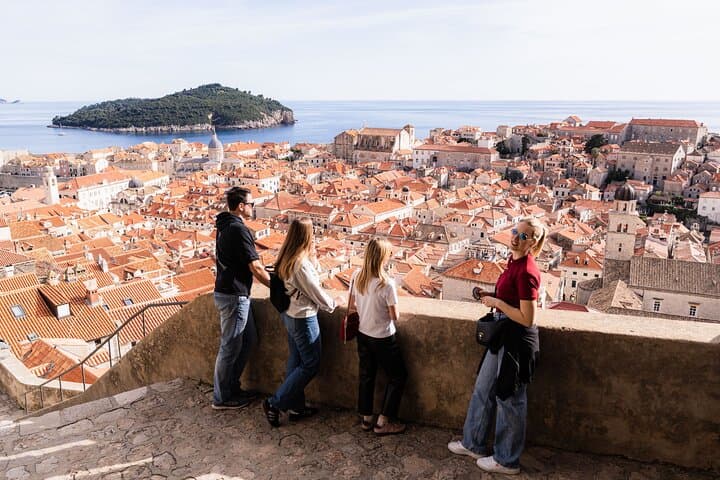
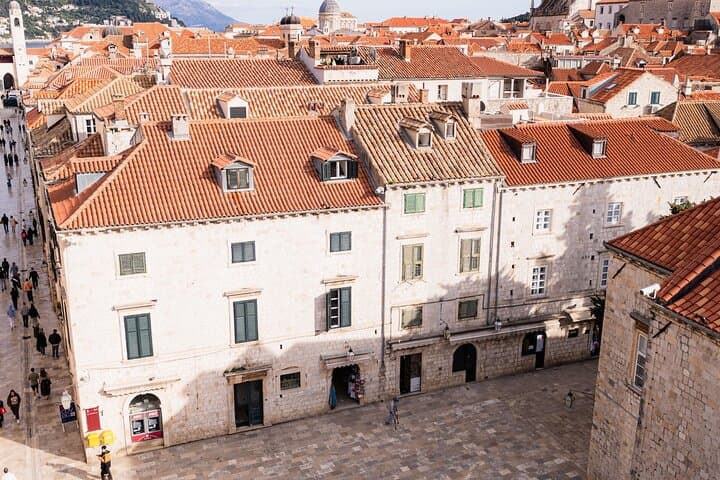

Stepping onto Dubrovnik’s City Walls feels like crossing a seam between centuries—stone underfoot, the Adriatic wind pulling at your jacket, and the Old Town spread below like a living map. Your guide, born and raised in the city’s alleys, points out crenellations, cannon embrasures and the narrow streets that thread between ochre roofs. The walls pace you: a slow climb, a sunlit stretch, a sudden sweep of blue where the sea seems to dare you to look away.
Stepping onto Dubrovnik’s City Walls feels like crossing a seam between centuries—stone underfoot, the Adriatic wind pulling at your jacket, and the Old Town spread below like a living map. Your guide, born and raised in the city’s alleys, points out crenellations, cannon embrasures and the narrow streets that thread between ochre roofs. The walls pace you: a slow climb, a sunlit stretch, a sudden sweep of blue where the sea seems to dare you to look away.
Built and rebuilt from the 12th to the 17th centuries, these fortifications were shaped by medieval commerce and Venetian influence; bastions and towers respond to siege-era tactics and later artillery upgrades. Geologically, the walls sit on limestone bedrock scored by men and weather alike, while local culture—fishing, festival processions, and the rhythm of café life—still orbits the Old Town below.
Expect uneven stone steps, short exposed sections with low parapets, and spectacular photographic lines toward Fort Lovrijenac and Lokrum Island. Guides often punctuate historical detail with personal stories about daily life in the Sponza and Stradun neighborhoods.
Practically: buy your City Walls ticket in advance during high season, arrive early to avoid heat and crowds, wear sturdy shoes, and bring water. The route is roughly 1–2 kilometers with intermittent stairs; pace yourself and pause at the bastions to watch gulls wheel and fishermen work the coves. For a shorter option, combine a half-wall route with a cable car ride up Mount Srđ for a complementary panoram.