THE ADVENTURE COLLECTIVE® · Independent discovery and booking for outdoor travel

Trace Dubai’s transformation on a private walking tour from Al Fahidi’s wind towers to the bustle of Dubai Creek and the spice and gold souks. Expect flat walking, close-up cultural insights, and time on a traditional abra across the creek.
Trace Dubai’s transformation on a private walking tour from Al Fahidi’s wind towers to the bustle of Dubai Creek and the spice and gold souks. Expect flat walking, close-up cultural insights, and time on a traditional abra across the creek.
The tour begins with the heat-softened light of an early Dubai morning, when wind towers of Al Fahidi cast long shadows over narrow alleys and the air carries the faint scent of cardamom from nearby cafés.
Verified experiences and guided adventures in the surrounding area.
Operated by Jasmine's Tour (Italian - French - Spanish) · Dubai, Dubai
The tour begins with the heat-softened light of an early Dubai morning, when wind towers of Al Fahidi cast long shadows over narrow alleys and the air carries the faint scent of cardamom from nearby cafés.
Walking these lanes feels like stepping into a working archive: coral-built houses, wooden mashrabiya, and abrupt modern facades that test the city’s rapid timeline. The guide moves with purpose—pointing out wind tower construction, local architectural responses to desert heat, and the evolution from pearling village to trading port.
History here is literal: Dubai Creek carved the city’s economy, shaping where souks and dhows replenished supplies and stories. Geologically, the creek is a tidal inlet that allowed salt-flat settlements to become a maritime crossroads. Culturally, the Coffee Museum and Dubai Museum frame daily life—from Bedouin trade routes to the oil-fueled boom that remade the skyline.
Practical guidance follows the narrative: pace the walk with water, plan for shaded pauses in courtyards, and allow an hour for the spice and gold souks where bargaining is customary. The abras (wooden ferries) across the creek offer a 10–20 minute transit that doubles as a cooling break and photographic moment.
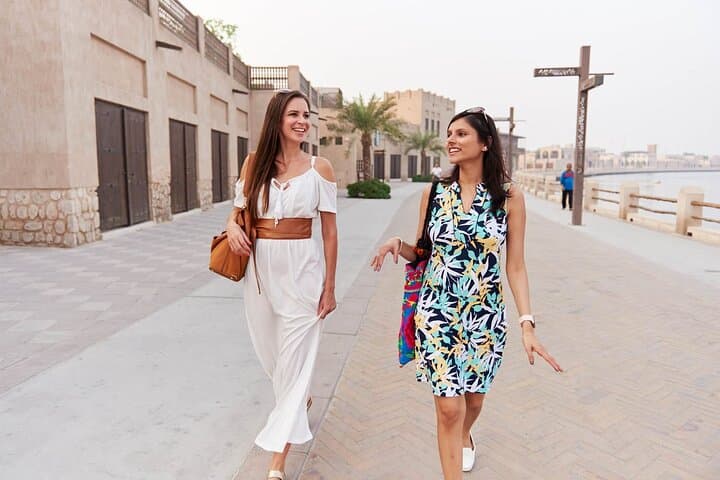
Expect flat, paved walking with short, stepped alleys; comfortable shoes and sun protection make the difference. The private format means the guide tailors stops to interest—history, markets, or architecture—and can adjust for stroller access or low-mobility needs. By the end, visitors carry more than a souvenir: a clearer map of how Dubai’s past and present travel together.
easy.
3–4 hours.
Suitable for most fitness levels; requires standing and walking on flat, sometimes uneven pavements for several hours.
The tour lasts approximately 3–4 hours, depending on group pace and time spent at souks.
Many parts of Al Fahidi and the Creek are stroller-friendly, but some narrow alleys and older market lanes may be uneven; confirm access needs when booking.
The itinerary notes Dubai Museum admission is included for the scheduled stop; other purchases in souks are separate.
Private tours can be arranged in multiple languages—confirm language preference at booking to ensure availability.
Dubai Creek was the trading artery that turned a fishing and pearling settlement into a regional trading hub; the Al Fahidi area preserves many pre-oil-era buildings.
Local conservation focuses on protecting historic buildings and managing tourist impact in narrow districts; shop responsibly and minimize single-use plastics in markets.
Jasmine's Tour (Italian - French - Spanish) operates guided outdoor trips and adventures with an emphasis on safety, stewardship, and memorable experiences.
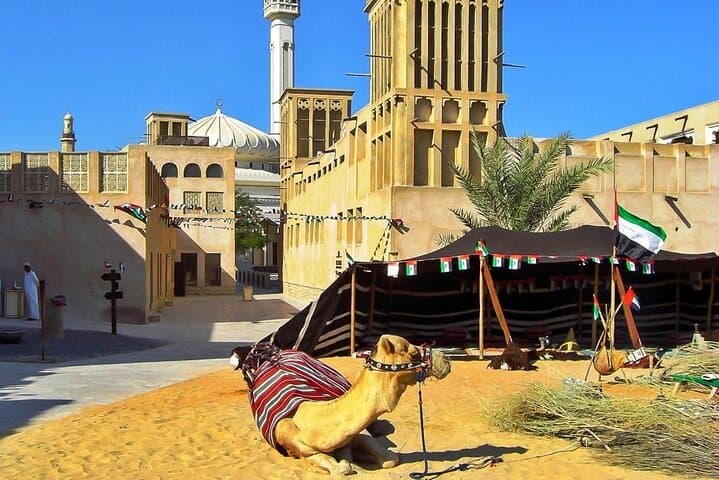
The tour begins with the heat-softened light of an early Dubai morning, when wind towers of Al Fahidi cast long shadows over narrow alleys and the air carries the faint scent of cardamom from nearby cafés.
The tour begins with the heat-softened light of an early Dubai morning, when wind towers of Al Fahidi cast long shadows over narrow alleys and the air carries the faint scent of cardamom from nearby cafés.
Walking these lanes feels like stepping into a working archive: coral-built houses, wooden mashrabiya, and abrupt modern facades that test the city’s rapid timeline. The guide moves with purpose—pointing out wind tower construction, local architectural responses to desert heat, and the evolution from pearling village to trading port.
History here is literal: Dubai Creek carved the city’s economy, shaping where souks and dhows replenished supplies and stories. Geologically, the creek is a tidal inlet that allowed salt-flat settlements to become a maritime crossroads. Culturally, the Coffee Museum and Dubai Museum frame daily life—from Bedouin trade routes to the oil-fueled boom that remade the skyline.
Practical guidance follows the narrative: pace the walk with water, plan for shaded pauses in courtyards, and allow an hour for the spice and gold souks where bargaining is customary. The abras (wooden ferries) across the creek offer a 10–20 minute transit that doubles as a cooling break and photographic moment.
Expect flat, paved walking with short, stepped alleys; comfortable shoes and sun protection make the difference. The private format means the guide tailors stops to interest—history, markets, or architecture—and can adjust for stroller access or low-mobility needs. By the end, visitors carry more than a souvenir: a clearer map of how Dubai’s past and present travel together.