THE ADVENTURE COLLECTIVE® · Independent discovery and booking for outdoor travel

Spend a full day crossing from Prague to Dresden to explore the Zwinger, Royal Palace and reconstructed Frauenkirche with a private driver and guide. This single-day private tour combines efficient transport with flexible stops in Dresden’s rebuilt baroque center.
Spend a full day crossing from Prague to Dresden to explore the Zwinger, Royal Palace and reconstructed Frauenkirche with a private driver and guide. This single-day private tour combines efficient transport with flexible stops in Dresden’s rebuilt baroque center.
You leave Prague in the soft light of morning and the highway carries you north; the Elbe, like a patient guide, waits in the basin of Dresden and promises a day of art, architecture and riverfront streets.
Verified experiences and guided adventures in the surrounding area.
Operated by Lucytours · Dresden, Saxony
You leave Prague in the soft light of morning and the highway carries you north; the Elbe, like a patient guide, waits in the basin of Dresden and promises a day of art, architecture and riverfront streets.
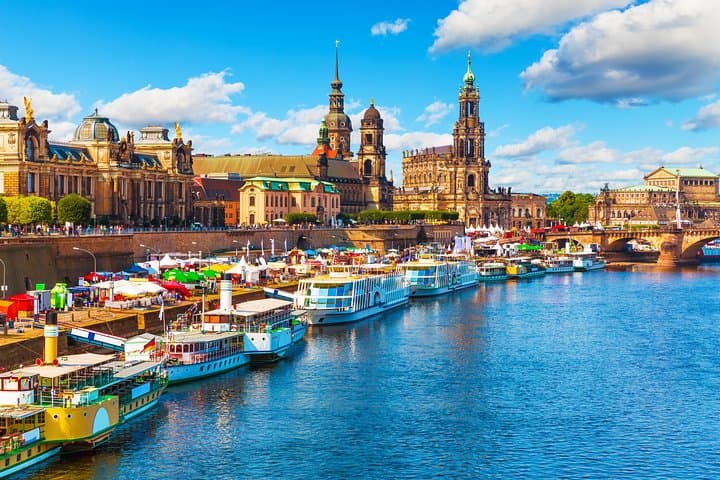
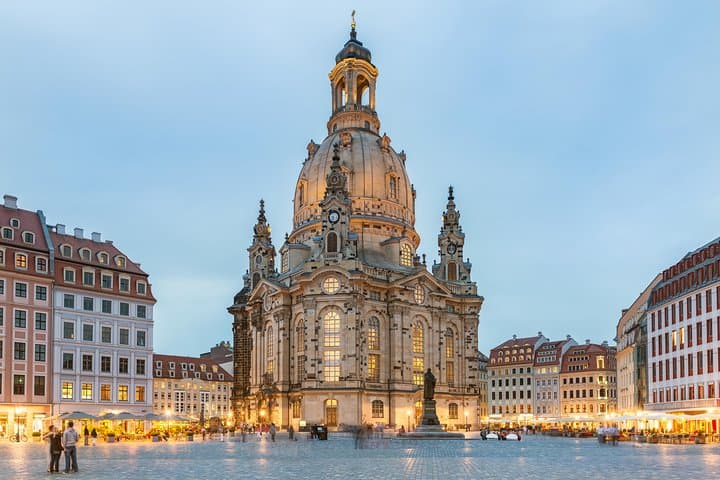
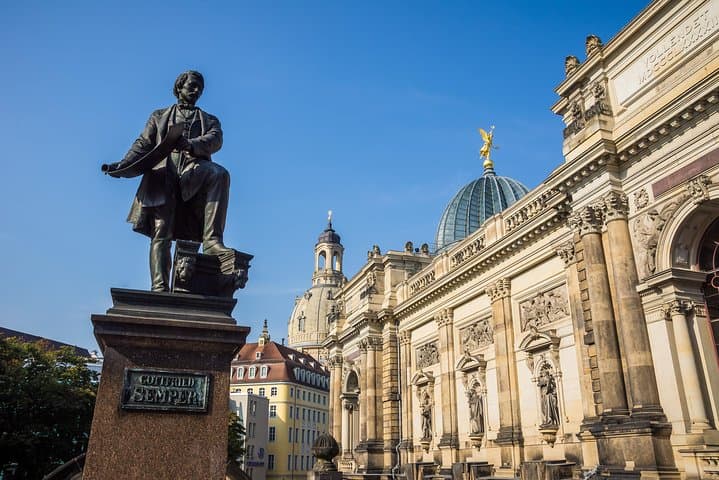
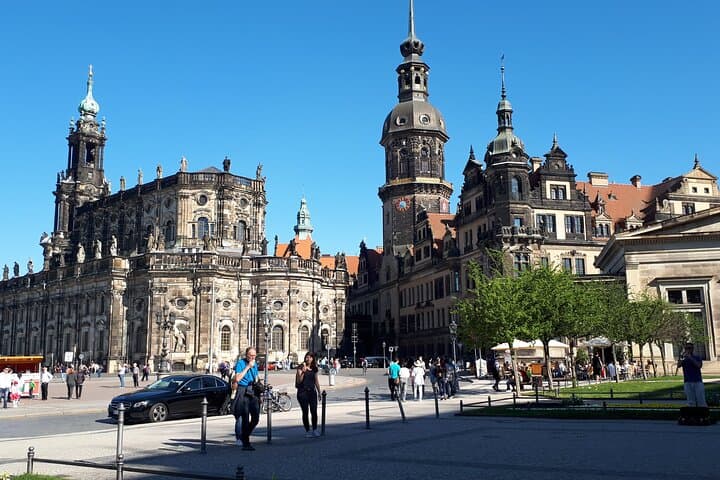
Dresden sits on a sweep of the Elbe shaped by centuries of trade and rebuilding. Bombed heavily in 1945, its baroque heart—Zwinger’s galleries, the Royal Palace collections and the restored Frauenkirche—has been painstakingly reconstructed from original plans and salvaged stone. The Zwinger reveals German Baroque sculpture and porcelain, the Royal Palace houses royal regalia and the Taschenbergpalais facades frame the parade of history. The Frauenkirche, returned to service in the early 21st century, is both a Protestant landmark and a symbol of cultural restoration.
Geology plays a quieter part: the Elbe’s low floodplain frames broad views and cobbled quays, while the city’s sandstone and limestone façades record local quarries and rebuilding campaigns.
Practical guidance: allow about 9–10 hours for a round trip—roughly 2 hours each way by road and 6–7 hours in Dresden for a guided walk plus gallery stops. Admissions to some museums and interiors are typically extra; the tour includes private transport and a driver/guide. Expect city walking on mostly flat, often cobbled streets—comfortable shoes and a light daypack suffice. Bring ID for border checks, some euros for small purchases, and a rain layer; summers are warm, winters can be icy. The tour is wheelchair accessible and suited to a wide range of fitness levels, making it a compact, full-day introduction to one of Germany’s most rebuilt and recovered cities.
easy.
9–10 hours.
Suitable for most fitness levels; expect several hours of standing and walking on flat to uneven city surfaces.
Typical drive time is about 1.5–2 hours each way depending on traffic; the full tour runs roughly 9–10 hours including stops in Dresden.
Admissions are usually not included for major museum interiors; check the tour booking for specifics and bring payment or book tickets in advance.
Yes—the listing indicates wheelchair-accessible transport and surfaces in the itinerary, though some historic interiors may have limited access—confirm specific venue access with the provider.
Yes—stroller and infant seats are available and the tour is suitable for families, but verify seating and child policies when booking.
Dresden’s core was largely destroyed in 1945 and has undergone extensive, documented reconstruction; many façades incorporate original stone and historic plans.
The Elbe’s floodplain management shapes riverside development; visitors are encouraged to follow local signage to protect riverbanks and historic masonry.
Lucytours operates guided outdoor trips and adventures with an emphasis on safety, stewardship, and memorable experiences.
You leave Prague in the soft light of morning and the highway carries you north; the Elbe, like a patient guide, waits in the basin of Dresden and promises a day of art, architecture and riverfront streets.
You leave Prague in the soft light of morning and the highway carries you north; the Elbe, like a patient guide, waits in the basin of Dresden and promises a day of art, architecture and riverfront streets.
Dresden sits on a sweep of the Elbe shaped by centuries of trade and rebuilding. Bombed heavily in 1945, its baroque heart—Zwinger’s galleries, the Royal Palace collections and the restored Frauenkirche—has been painstakingly reconstructed from original plans and salvaged stone. The Zwinger reveals German Baroque sculpture and porcelain, the Royal Palace houses royal regalia and the Taschenbergpalais facades frame the parade of history. The Frauenkirche, returned to service in the early 21st century, is both a Protestant landmark and a symbol of cultural restoration.
Geology plays a quieter part: the Elbe’s low floodplain frames broad views and cobbled quays, while the city’s sandstone and limestone façades record local quarries and rebuilding campaigns.
Practical guidance: allow about 9–10 hours for a round trip—roughly 2 hours each way by road and 6–7 hours in Dresden for a guided walk plus gallery stops. Admissions to some museums and interiors are typically extra; the tour includes private transport and a driver/guide. Expect city walking on mostly flat, often cobbled streets—comfortable shoes and a light daypack suffice. Bring ID for border checks, some euros for small purchases, and a rain layer; summers are warm, winters can be icy. The tour is wheelchair accessible and suited to a wide range of fitness levels, making it a compact, full-day introduction to one of Germany’s most rebuilt and recovered cities.