THE ADVENTURE COLLECTIVE® · Independent discovery and booking for outdoor travel

Spend a full day tracing Transylvania’s history on a private tour from Bucharest—explore Bran Castle’s dramatic ramparts, the ornate rooms of Peleș Castle, and the medieval streets of Brașov. This guided route blends myth, royal history, and Carpathian scenery into one long, walkable day.
Spend a full day tracing Transylvania’s history on a private tour from Bucharest—explore Bran Castle’s dramatic ramparts, the ornate rooms of Peleș Castle, and the medieval streets of Brașov. This guided route blends myth, royal history, and Carpathian scenery into one long, walkable day.
The day begins before dawn in Bucharest, a low rumble of an engine and a map of the Carpathians unfolding outside the window. Hills sharpen into ridgelines and fog lifts off fir stands as you approach Bran Castle, its stone silhouette daring you to step through narrow passages and climb lookout platforms for a raw view of the valley below.
Verified experiences and guided adventures in the surrounding area.
Operated by Romania On The Map · Bran, Brașov County
The day begins before dawn in Bucharest, a low rumble of an engine and a map of the Carpathians unfolding outside the window. Hills sharpen into ridgelines and fog lifts off fir stands as you approach Bran Castle, its stone silhouette daring you to step through narrow passages and climb lookout platforms for a raw view of the valley below.
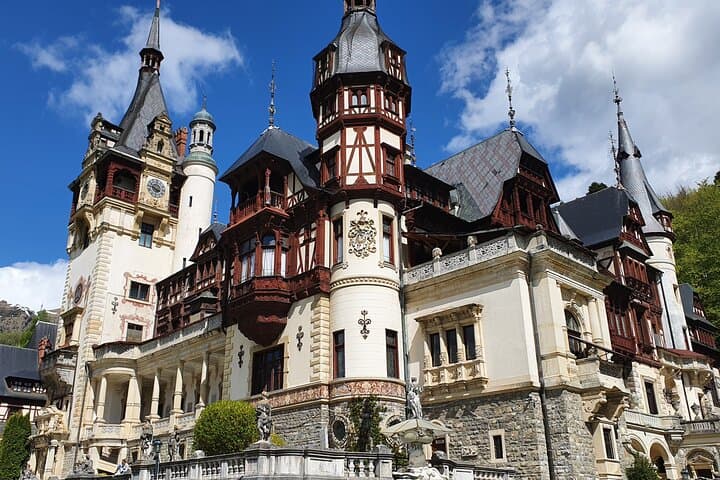
These sites are crossroads of geology and history: the Carpathians’ folded limestone and sandstone give way to high forest and rocky outcrops that sheltered medieval trade routes. Bran Castle’s Gothic form is more legend than fortress—popular myth links it to Vlad Țepeș, but its real story is a patchwork of medieval border control and later romantic tourism. Further north, Peleș Castle in Sinaia lays out late-19th-century Neo‑Renaissance craftsmanship and the royal tastes of King Carol I, set against managed alpine forests that hum with birdlife.
Culturally, the region mixes Romanian village life with Saxon and Hungarian influences—look for carved wooden goods and paprika-scented dishes in market stalls.
Practical note: this is a 10–12 hour private day with several short walks, cobbled streets, and stairs—moderate fitness needed. Peles’ interiors close on some weekdays; confirm in advance. Bring layered clothing, sturdy shoes, a charged camera, and local currency for small purchases. Expect hotel pickup and return in Bucharest, a friendly English-speaking guide, and a full day that alternates museum calm and open-air views—efficient, illuminating, and grounded in the landscapes that shaped Transylvania.
moderate.
10–12 hours.
Moderate—able to walk for several short distances over uneven ground and climb stairs throughout the day
This private tour typically includes hotel pickup and return in Bucharest; confirm your exact pickup address at booking.
Bran Castle is tied to Dracula lore in popular culture, but historical links to Vlad Țepeș are tenuous—its appeal is both architectural and atmospheric rather than a precise historical residence.
Admission to Bran and Peles interiors is usually included on this private tour, but confirm at booking and note Peles may be exterior-only on some weekdays.
Children who can handle stairs and short walks will enjoy it; limited mobility can be challenging due to cobbles and steps—discuss accommodations with the operator in advance.
Transylvania’s castles reflect shifting borders: Bran acted as a customs post and romanticized fortress, while Peleș was conceived as a modern royal retreat by Romania’s monarchy in the late 19th century.
Visitor pressure affects fragile mountain forests and local trails—stay on marked paths, avoid feeding wildlife, and support local guides and craft-makers to keep economic benefits in the region.
Romania On The Map operates guided outdoor trips and adventures with an emphasis on safety, stewardship, and memorable experiences.


The day begins before dawn in Bucharest, a low rumble of an engine and a map of the Carpathians unfolding outside the window. Hills sharpen into ridgelines and fog lifts off fir stands as you approach Bran Castle, its stone silhouette daring you to step through narrow passages and climb lookout platforms for a raw view of the valley below.
The day begins before dawn in Bucharest, a low rumble of an engine and a map of the Carpathians unfolding outside the window. Hills sharpen into ridgelines and fog lifts off fir stands as you approach Bran Castle, its stone silhouette daring you to step through narrow passages and climb lookout platforms for a raw view of the valley below.
These sites are crossroads of geology and history: the Carpathians’ folded limestone and sandstone give way to high forest and rocky outcrops that sheltered medieval trade routes. Bran Castle’s Gothic form is more legend than fortress—popular myth links it to Vlad Țepeș, but its real story is a patchwork of medieval border control and later romantic tourism. Further north, Peleș Castle in Sinaia lays out late-19th-century Neo‑Renaissance craftsmanship and the royal tastes of King Carol I, set against managed alpine forests that hum with birdlife.
Culturally, the region mixes Romanian village life with Saxon and Hungarian influences—look for carved wooden goods and paprika-scented dishes in market stalls.
Practical note: this is a 10–12 hour private day with several short walks, cobbled streets, and stairs—moderate fitness needed. Peles’ interiors close on some weekdays; confirm in advance. Bring layered clothing, sturdy shoes, a charged camera, and local currency for small purchases. Expect hotel pickup and return in Bucharest, a friendly English-speaking guide, and a full day that alternates museum calm and open-air views—efficient, illuminating, and grounded in the landscapes that shaped Transylvania.