THE ADVENTURE COLLECTIVE® · Independent discovery and booking for outdoor travel

Ski the storied slopes of the Dolomites with a private, intermediate-focused guide: warm-up cruisers in Alta Badia, then tackle runs at Lagazuoi, Vallon and Santa Croce. Expect varied groomers, historical WWI sites, and personalized line choices across a 5‑hour day.
Ski the storied slopes of the Dolomites with a private, intermediate-focused guide: warm-up cruisers in Alta Badia, then tackle runs at Lagazuoi, Vallon and Santa Croce. Expect varied groomers, historical WWI sites, and personalized line choices across a 5‑hour day.
A cold ribbon of piste opens beneath the skis as the Dolomite ridgelines slice the sky: wind-polished rock above, dense spruce and larch below. The guide leads a small private group onto Alta Badia’s interconnected slopes, warming up on cruisers before pointing the skis toward Lagazuoi’s broad descents, the narrower Vallon runs and the exposed faces around Santa Croce.
Verified experiences and guided adventures in the surrounding area.
Operated by UIAGM/IFMGA Mountain Guide · Cortina d'Ampezzo, Veneto
A cold ribbon of piste opens beneath the skis as the Dolomite ridgelines slice the sky: wind-polished rock above, dense spruce and larch below. The guide leads a small private group onto Alta Badia’s interconnected slopes, warming up on cruisers before pointing the skis toward Lagazuoi’s broad descents, the narrower Vallon runs and the exposed faces around Santa Croce.
These mountains are limestone and dolomite—ancient reef rock turned vertical by tectonic shove—so craggy spires and steep couloirs are common. The area around Cortina saw fierce front-line combat during World War I; tunnels and open-air exhibits near Lagazuoi remind skiers that these slopes carry human history as much as geological time. As part of the Dolomiti Superski network, the terrain mixes groomed blues and reds with steeper black sections and occasional off-piste exits for experienced parties.
Practically speaking: expect a 5‑hour guided day covering elevations roughly between 1,200–2,750 m, with typical vertical descents of 300–700 m per run. Intermediate skiers should be comfortable with parallel turns and controlling speed on steeper groomers; the guide tailors line choice to ability. Carry a valid lift pass, wear a helmet, and layer for sharp alpine sun and sudden wind. Start early to catch firmer snow and quieter lifts; mid-afternoon brings softer snow and reduced visibility in storms.
Respect piste closures, follow the guide’s route, and linger at a rifugio for a quick polenta or hot broth—these kitchens are as alpine as the slopes themselves, and a proper finish to a day on the Dolomites.
moderate.
5 hours.
Moderate cardiovascular fitness and leg strength; comfortable skiing multiple long runs and short lift rides throughout the day.
This private experience is designed for intermediate alpine skiers comfortable with parallel turns and moderate‑steep groomed runs; guides can adjust terrain within that range.
Lift passes are not included in the tour price—participants should purchase a Dolomiti Superski pass valid for Alta Badia/Cortina on the day of the tour.
Meeting is typically in Cortina d'Ampezzo or an Alta Badia base area; exact meeting details are provided by the operator after booking and depend on conditions and chosen slopes.
All sales are final per the operator’s policy; the tour may be canceled for bad weather or insufficient travelers and refund rules are determined by the supplier.
The Dolomites preserve World War I trenches and tunnel systems, particularly around Lagazuoi where warfare was fought at high elevation; the rock itself is ancient carbonate reef uplifted over millions of years.
The Dolomites are a UNESCO World Heritage site; stick to marked pistes, minimize single‑use plastics, and use lifts and shuttles to reduce car traffic in valleys.
UIAGM/IFMGA Mountain Guide operates guided outdoor trips and adventures with an emphasis on safety, stewardship, and memorable experiences.

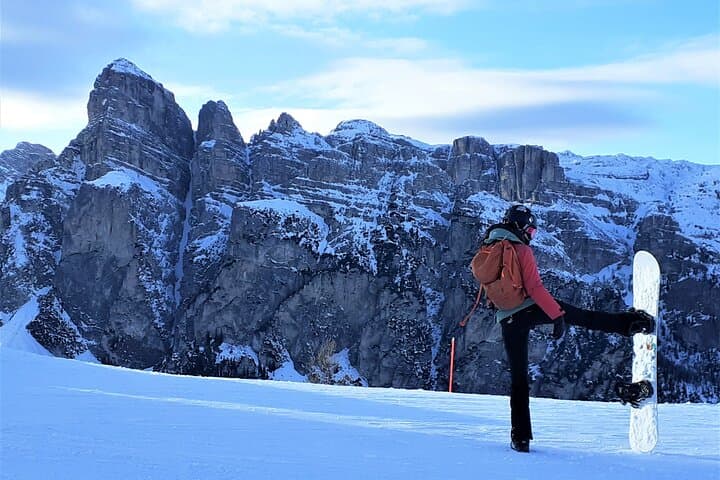

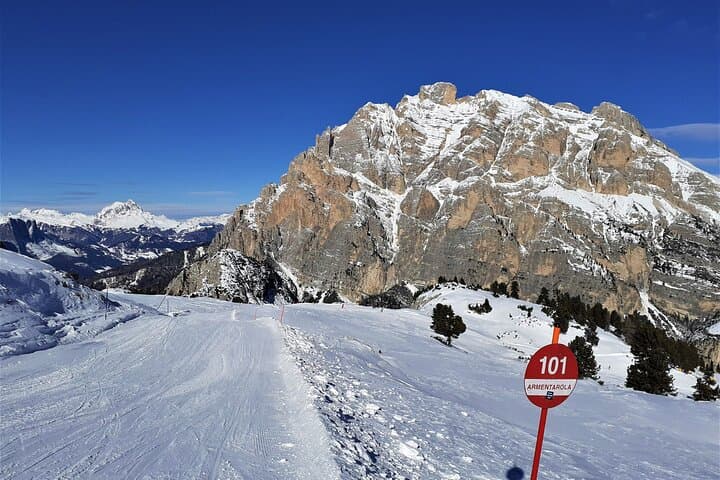
A cold ribbon of piste opens beneath the skis as the Dolomite ridgelines slice the sky: wind-polished rock above, dense spruce and larch below. The guide leads a small private group onto Alta Badia’s interconnected slopes, warming up on cruisers before pointing the skis toward Lagazuoi’s broad descents, the narrower Vallon runs and the exposed faces around Santa Croce.
A cold ribbon of piste opens beneath the skis as the Dolomite ridgelines slice the sky: wind-polished rock above, dense spruce and larch below. The guide leads a small private group onto Alta Badia’s interconnected slopes, warming up on cruisers before pointing the skis toward Lagazuoi’s broad descents, the narrower Vallon runs and the exposed faces around Santa Croce.
These mountains are limestone and dolomite—ancient reef rock turned vertical by tectonic shove—so craggy spires and steep couloirs are common. The area around Cortina saw fierce front-line combat during World War I; tunnels and open-air exhibits near Lagazuoi remind skiers that these slopes carry human history as much as geological time. As part of the Dolomiti Superski network, the terrain mixes groomed blues and reds with steeper black sections and occasional off-piste exits for experienced parties.
Practically speaking: expect a 5‑hour guided day covering elevations roughly between 1,200–2,750 m, with typical vertical descents of 300–700 m per run. Intermediate skiers should be comfortable with parallel turns and controlling speed on steeper groomers; the guide tailors line choice to ability. Carry a valid lift pass, wear a helmet, and layer for sharp alpine sun and sudden wind. Start early to catch firmer snow and quieter lifts; mid-afternoon brings softer snow and reduced visibility in storms.
Respect piste closures, follow the guide’s route, and linger at a rifugio for a quick polenta or hot broth—these kitchens are as alpine as the slopes themselves, and a proper finish to a day on the Dolomites.