THE ADVENTURE COLLECTIVE® · Independent discovery and booking for outdoor travel

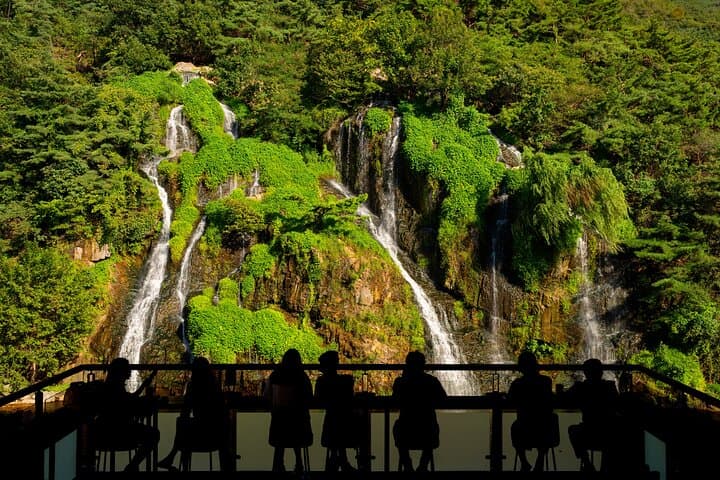
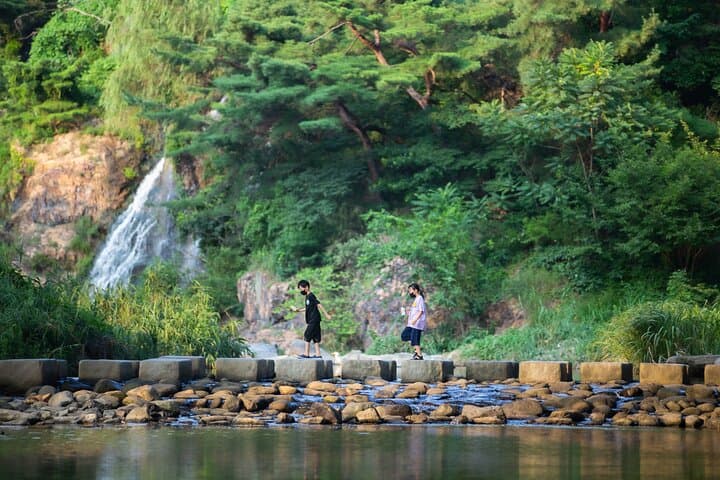
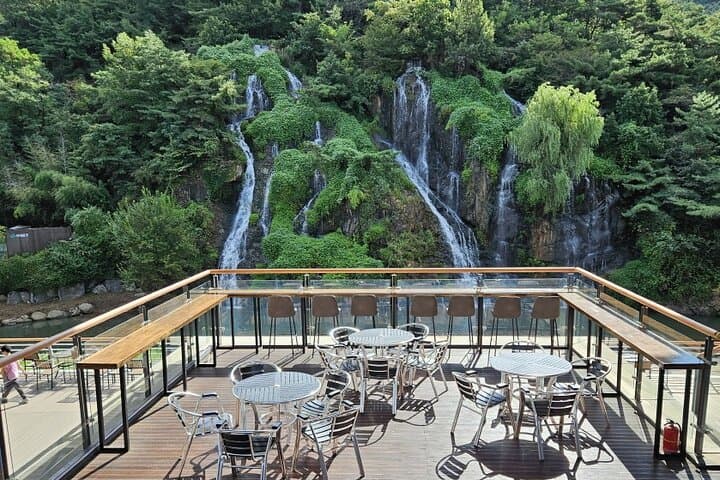
Experience the DMZ’s hard history and a soft urban cooldown in one private day tour. Walk part of the Third Infiltration Tunnel, scan North Korea from Dora Observatory, then unwind at Hongjecheon Artificial Waterfall.
Experience the DMZ’s hard history and a soft urban cooldown in one private day tour. Walk part of the Third Infiltration Tunnel, scan North Korea from Dora Observatory, then unwind at Hongjecheon Artificial Waterfall.
A low, cool wind moves across the Imjin River as the tour vehicle pulls into Imjingak Peace Nuri Park, where rusted relics and the Freedom Bridge sit against wide floodplains that once marked the first separation between North and South Korea.
Verified experiences and guided adventures in the surrounding area.
Operated by ESC TRAVEL · Seoul, Seoul
A low, cool wind moves across the Imjin River as the tour vehicle pulls into Imjingak Peace Nuri Park, where rusted relics and the Freedom Bridge sit against wide floodplains that once marked the first separation between North and South Korea.
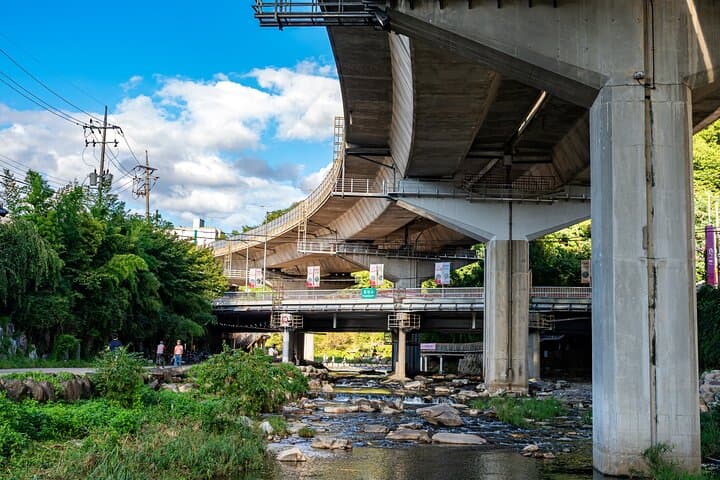
The day unfolds through sharply different rhythms: deliberate history at the Third Infiltration Tunnel, panoramic observation from Dora Observatory, intimate village life at Unification Village, then a quiet urban cooldown beside Seoul’s Hongjecheon Artificial Waterfall. The tunnel — discovered in 1978 and extending over 1.6 kilometers toward Seoul — gives a tactile sense of Cold War urgency; visitors wear helmets and walk a prepared, well-lit section while guides explain the border’s military logic.
Geology here is simple but decisive: low river plains sculpted by the Imjin’s seasonal flow, with observation points on basalt-capped hills that afford long sightlines across the Demilitarized Zone to Kaesong. Culturally, the itinerary balances national memory with everyday life — from barbed-wire art and wartime remnants to small farms selling ginseng and soybean goods in the civilian control zone.
Practical notes: the private tour runs about 7–9 hours, requires a moderate fitness level for standing and short walks, and includes transport in an air-conditioned vehicle. Carry photo ID, dress in layers for wind at viewpoints, and expect security checks and guided movement through controlled sites. The final stop at Hongjecheon rewards tired legs with a gentle riverside walk and calming waterfall sounds — a deliberate, restorative counterpoint to a heavy morning of history.
moderate.
7–9 hours.
Moderate: able to stand, walk short distances, and climb stairs; not suitable for those with severe mobility limits
No. Civilian tours visit observation points and controlled sites on the South Korean side; you can view North Korea through binoculars at Dora Observatory but will not cross the border.
Yes. Visitors walk a reinforced, illuminated section while wearing helmets; movement is supervised and restricted to established paths.
A government-issued ID or passport is required for all participants to pass DMZ security checks—bring the original document, not a copy.
Some sites have steps and uneven ground; those with significant mobility limitations should notify the operator in advance to discuss access and potential alternatives.
The DMZ was established under the 1953 armistice and functions as a 4-kilometer-wide buffer; sites like the Third Tunnel and Imjingak memorialize Korea’s division and peace efforts.
Restricted access has created de facto wildlife refuges in the DMZ fringe; visitors should follow routes and avoid disturbing habitats to support conservation.
ESC TRAVEL operates guided outdoor trips and adventures with an emphasis on safety, stewardship, and memorable experiences.
A low, cool wind moves across the Imjin River as the tour vehicle pulls into Imjingak Peace Nuri Park, where rusted relics and the Freedom Bridge sit against wide floodplains that once marked the first separation between North and South Korea.
A low, cool wind moves across the Imjin River as the tour vehicle pulls into Imjingak Peace Nuri Park, where rusted relics and the Freedom Bridge sit against wide floodplains that once marked the first separation between North and South Korea.
The day unfolds through sharply different rhythms: deliberate history at the Third Infiltration Tunnel, panoramic observation from Dora Observatory, intimate village life at Unification Village, then a quiet urban cooldown beside Seoul’s Hongjecheon Artificial Waterfall. The tunnel — discovered in 1978 and extending over 1.6 kilometers toward Seoul — gives a tactile sense of Cold War urgency; visitors wear helmets and walk a prepared, well-lit section while guides explain the border’s military logic.
Geology here is simple but decisive: low river plains sculpted by the Imjin’s seasonal flow, with observation points on basalt-capped hills that afford long sightlines across the Demilitarized Zone to Kaesong. Culturally, the itinerary balances national memory with everyday life — from barbed-wire art and wartime remnants to small farms selling ginseng and soybean goods in the civilian control zone.
Practical notes: the private tour runs about 7–9 hours, requires a moderate fitness level for standing and short walks, and includes transport in an air-conditioned vehicle. Carry photo ID, dress in layers for wind at viewpoints, and expect security checks and guided movement through controlled sites. The final stop at Hongjecheon rewards tired legs with a gentle riverside walk and calming waterfall sounds — a deliberate, restorative counterpoint to a heavy morning of history.