THE ADVENTURE COLLECTIVE® · Independent discovery and booking for outdoor travel

Cross the High Atlas, sleep under the stars on Erg Chebbi, and ride camels at dawn on this private 3-day Marrakech to Merzouga luxury tour. Expect long drives, dramatic landscapes, and culturally rich stops in Ait Ben Haddou and Todra Gorge.
Cross the High Atlas, sleep under the stars on Erg Chebbi, and ride camels at dawn on this private 3-day Marrakech to Merzouga luxury tour. Expect long drives, dramatic landscapes, and culturally rich stops in Ait Ben Haddou and Todra Gorge.
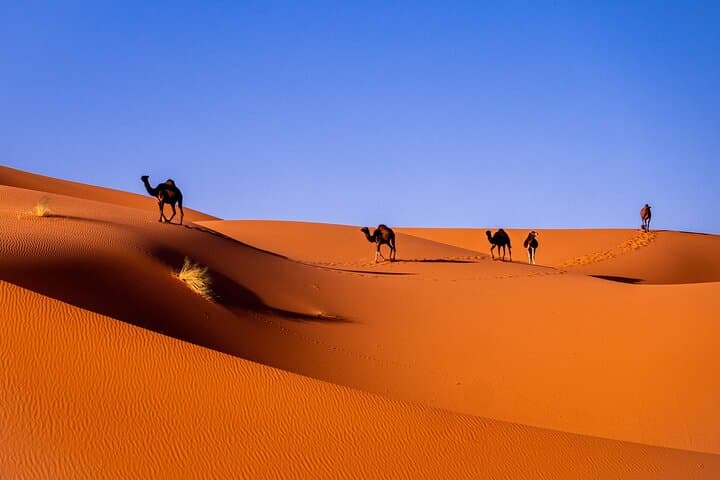
When the minivan leaves Marrakech the Atlas climbs like a hand pulling you up. The road curves through Tizi n’Tichka (about 2,260 m), past terraced Berber villages and kasbahs that shift from ochre to rust as the light changes. By late afternoon the High Atlas gives way to the wide, bright plain of the Draa and then the long, rippling fingers of Erg Chebbi—gold dunes that push and fall under the wind.
Verified experiences and guided adventures in the surrounding area.
Operated by Morocco lifetime Tours · Merzouga, Drâa-Tafilalet
When the minivan leaves Marrakech the Atlas climbs like a hand pulling you up. The road curves through Tizi n’Tichka (about 2,260 m), past terraced Berber villages and kasbahs that shift from ochre to rust as the light changes. By late afternoon the High Atlas gives way to the wide, bright plain of the Draa and then the long, rippling fingers of Erg Chebbi—gold dunes that push and fall under the wind.
This three-day itinerary threads Morocco’s layered history: a UNESCO kasbah at Ait Ben Haddou, gorges cut into limestone at Todra, and the palm oases of Tinghir and Tafilalet that supported caravan routes for centuries. Geologically, Erg Chebbi is wind-built sand—mobile, sculpted daily—while the surrounding hamadas hold fossilized riverbeds and washed stone.
Culturally the trip centers on Berber hospitality: nights in a valley hotel and a luxury Merzouga camp, dinner around a fire with local musicians, and short camel treks timed for sunrise and sunset. Expect simple comforts in the desert camp—private tents, mattresses, and shared facilities vary by operator.
Practical guidance: plan for long drives (several hours each day), altitude gain at the Atlas pass, and wide temperature swings—hot days, chilly nights. Wear closed-toe shoes for sandboarding, pack sun protection and layered clothing, and bring water and a lightweight headlamp. Aim to ride camels for the 45–75 minute dune transfers rather than long treks if you prefer less strain. This tour is ideal for travelers who want immersive scenery and cultural stops without technical demands—just steady travel stamina and a readiness to be moved by silence and star-filled desert nights.
moderate.
3 days (approx. 72 hours).
Suitable for travelers in good general health who can handle long drives, short camel rides, and walking on sand.
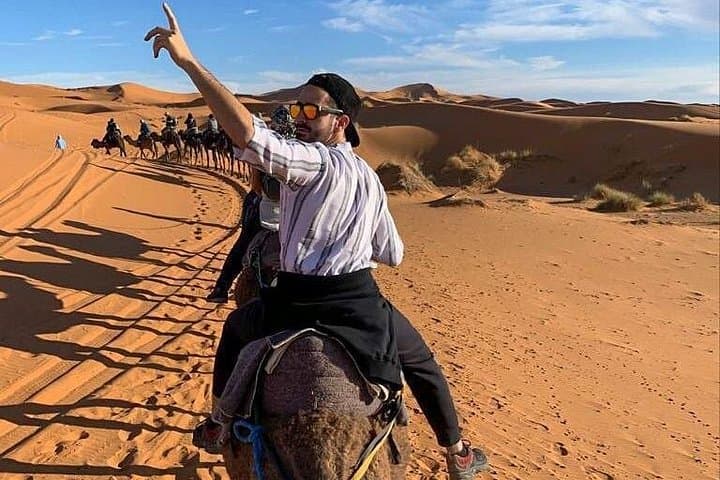
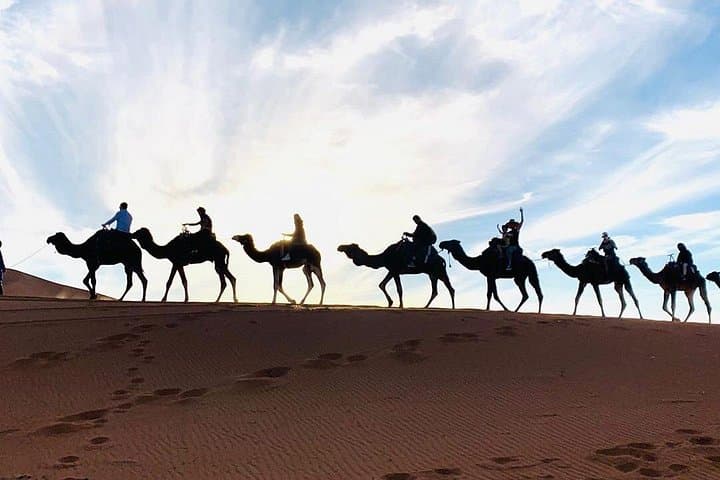
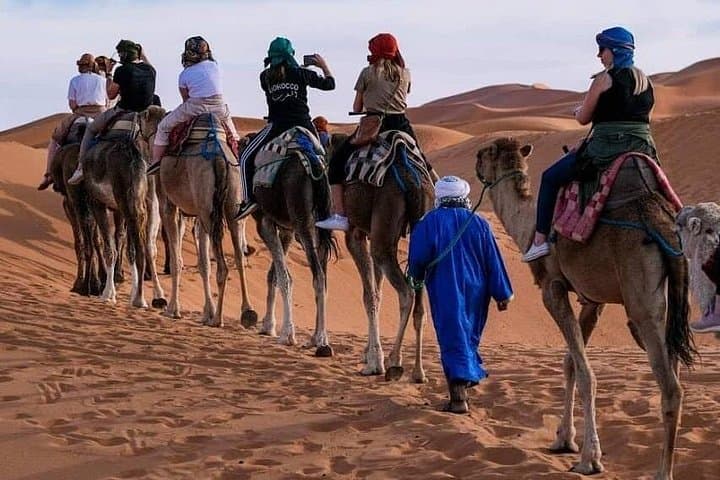
Typical camel transfers to and from the camp range from 45 minutes to 1 hour at sunset and sunrise—enough to reach a camp location and watch colors change.
Night one is in a valley hotel with standard amenities; the desert night is at a ‘luxury’ camp—private tents and mattresses are common but facilities vary by operator.
Yes for most ages if travelers can mount a camel and handle long drives; it's not recommended for people with serious back, heart, or pregnancy-related restrictions.
Low to moderate: most activity is on/off a camel and short dune walks; sandboarding adds more physical effort but is optional.
The route follows historic caravan corridors; Ait Ben Haddou guarded trans-Saharan trade and many kasbahs are built from local mud-brick traditions dating back centuries.
Erg Chebbi’s dunes are ecologically sensitive—avoid disturbing vegetation and use established paths at camps; support operators that manage waste and limit quad-bike impact.
Morocco lifetime Tours operates guided outdoor trips and adventures with an emphasis on safety, stewardship, and memorable experiences.
When the minivan leaves Marrakech the Atlas climbs like a hand pulling you up. The road curves through Tizi n’Tichka (about 2,260 m), past terraced Berber villages and kasbahs that shift from ochre to rust as the light changes. By late afternoon the High Atlas gives way to the wide, bright plain of the Draa and then the long, rippling fingers of Erg Chebbi—gold dunes that push and fall under the wind.
When the minivan leaves Marrakech the Atlas climbs like a hand pulling you up. The road curves through Tizi n’Tichka (about 2,260 m), past terraced Berber villages and kasbahs that shift from ochre to rust as the light changes. By late afternoon the High Atlas gives way to the wide, bright plain of the Draa and then the long, rippling fingers of Erg Chebbi—gold dunes that push and fall under the wind.
This three-day itinerary threads Morocco’s layered history: a UNESCO kasbah at Ait Ben Haddou, gorges cut into limestone at Todra, and the palm oases of Tinghir and Tafilalet that supported caravan routes for centuries. Geologically, Erg Chebbi is wind-built sand—mobile, sculpted daily—while the surrounding hamadas hold fossilized riverbeds and washed stone.
Culturally the trip centers on Berber hospitality: nights in a valley hotel and a luxury Merzouga camp, dinner around a fire with local musicians, and short camel treks timed for sunrise and sunset. Expect simple comforts in the desert camp—private tents, mattresses, and shared facilities vary by operator.
Practical guidance: plan for long drives (several hours each day), altitude gain at the Atlas pass, and wide temperature swings—hot days, chilly nights. Wear closed-toe shoes for sandboarding, pack sun protection and layered clothing, and bring water and a lightweight headlamp. Aim to ride camels for the 45–75 minute dune transfers rather than long treks if you prefer less strain. This tour is ideal for travelers who want immersive scenery and cultural stops without technical demands—just steady travel stamina and a readiness to be moved by silence and star-filled desert nights.