THE ADVENTURE COLLECTIVE® · Independent discovery and booking for outdoor travel

Spend a private day driving from Luxor to Dendera and back, exploring the well-preserved Hathor temple and Luxor Temple at your own pace. This group-priced private transfer includes a local English-speaking driver but entrance fees are paid on-site.
Spend a private day driving from Luxor to Dendera and back, exploring the well-preserved Hathor temple and Luxor Temple at your own pace. This group-priced private transfer includes a local English-speaking driver but entrance fees are paid on-site.
You step into morning light on the Nile’s east bank and the driver eases the vehicle onto the road, the city of Luxor shrinking behind you while the river seems to dare you onward toward older stone. The road north unspools for roughly 60–70 km; in about 90 minutes you arrive at Dendera, where rows of Hathor-headed columns loom like sentries crowned with music and sky.
Verified experiences and guided adventures in the surrounding area.
Operated by Eyes of Egypt · Luxor, Luxor Governorate
You step into morning light on the Nile’s east bank and the driver eases the vehicle onto the road, the city of Luxor shrinking behind you while the river seems to dare you onward toward older stone. The road north unspools for roughly 60–70 km; in about 90 minutes you arrive at Dendera, where rows of Hathor-headed columns loom like sentries crowned with music and sky.
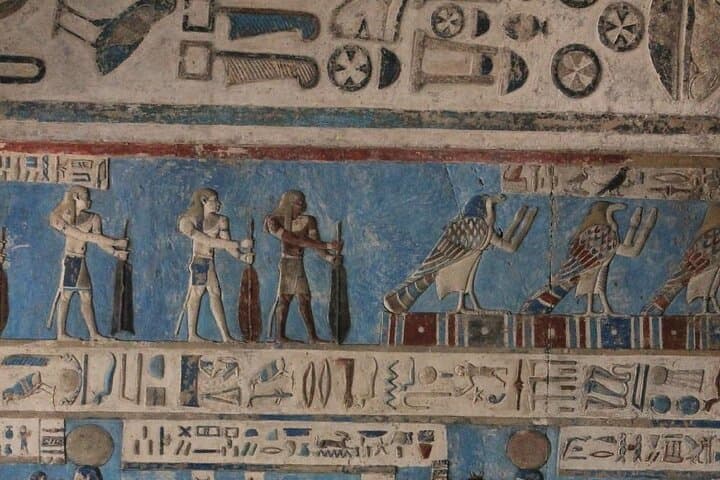
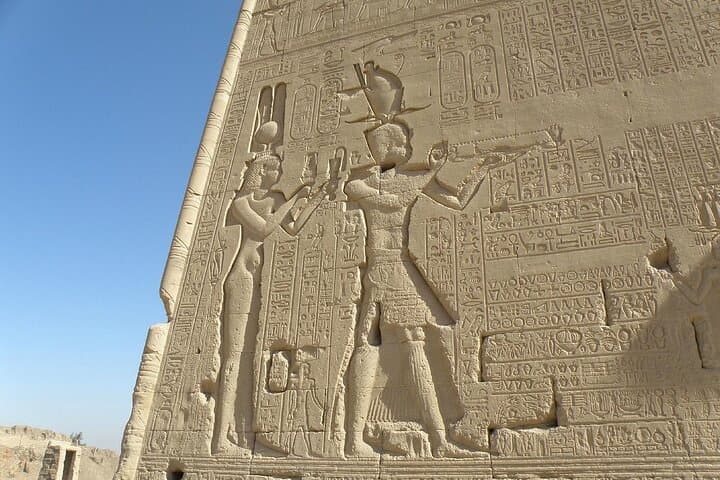
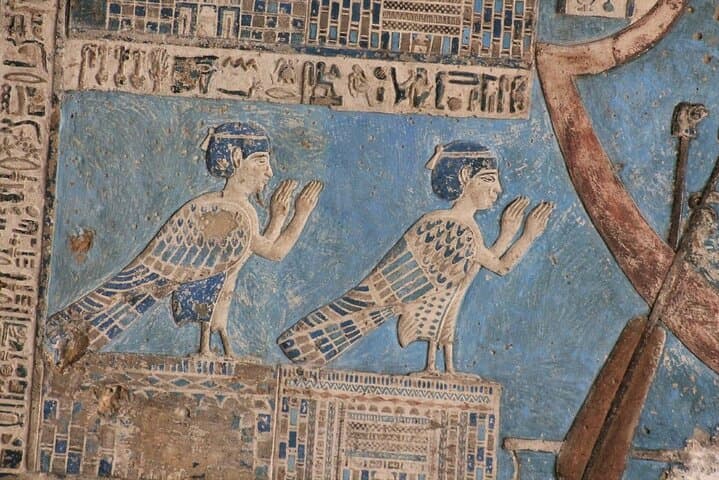
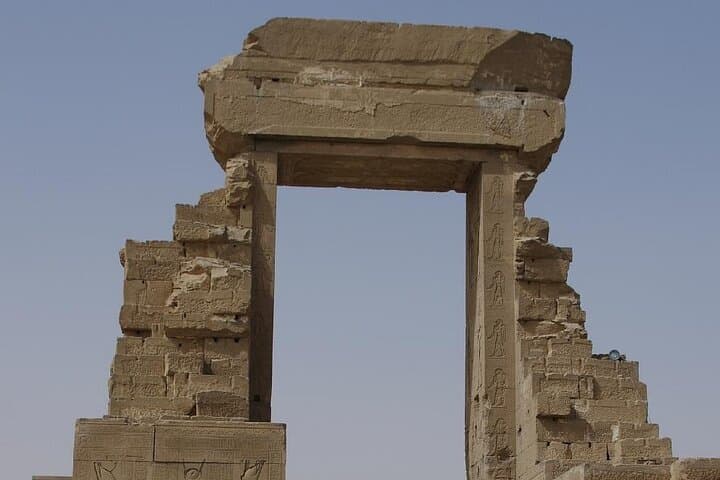
Dendera’s Ptolemaic temple is one of Egypt’s best preserved — look up to find astronomical reliefs on the ceiling and the carved sistrum motifs that mark the goddess Hathor’s cult. Later, back in Luxor, the Temple of Amun-Ra stitches eras together: New Kingdom pylons sit beside Roman and later additions, offering a concentrated walk through pharaonic, Greek, Roman and Islamic layers of history.
This private, group-priced transfer-and-driver setup lets you move at your own pace: no fixed guide, entrance tickets purchased on site. Expect comfortable road travel in an air-conditioned vehicle, short walks over uneven stone, and open courtyards exposed to desert sun. Photography is excellent at first and late light; interior reliefs require a steadier hand and patience with other visitors.
Practical guidance: carry sun protection, a refillable water bottle, and modest clothing for temple interiors; wear grippy shoes for stepped, sandy surfaces. Confirm pickup points on your hotel or Nile cruise and budget for entrance fees at both sites. With basic preparation, the day unfolds as a compact, intense survey of upper Egyptian ritual architecture — efficient, flexible, and quietly powerful.
easy.
7–8 hours.
Suitable for travelers of most fitness levels; requires repeated short walks and standing on uneven stone surfaces
No, entrance tickets for Dendera and Luxor temples are purchased on-site; the tour price covers the private vehicle and driver only.
The transfer takes about 1.5 hours each way (roughly 60–70 km), depending on traffic and stops.
The private vehicle and transportation are listed as wheelchair accessible, but many temple areas have steps and uneven surfaces that may limit access beyond the entrance and courtyards.
Photography is generally allowed, but flash may be restricted in some interior chambers to protect delicate reliefs—observe posted signs and staff instructions.
Dendera’s main temple complex dates to the Ptolemaic period but sits atop older cult sites, while Luxor Temple was begun in the New Kingdom and shows additions from Roman and later periods.
These monuments are protected by Egyptian antiquities authorities; visitors should avoid touching reliefs, use designated paths, and follow local signage to minimize wear.
Eyes of Egypt operates guided outdoor trips and adventures with an emphasis on safety, stewardship, and memorable experiences.
You step into morning light on the Nile’s east bank and the driver eases the vehicle onto the road, the city of Luxor shrinking behind you while the river seems to dare you onward toward older stone. The road north unspools for roughly 60–70 km; in about 90 minutes you arrive at Dendera, where rows of Hathor-headed columns loom like sentries crowned with music and sky.
You step into morning light on the Nile’s east bank and the driver eases the vehicle onto the road, the city of Luxor shrinking behind you while the river seems to dare you onward toward older stone. The road north unspools for roughly 60–70 km; in about 90 minutes you arrive at Dendera, where rows of Hathor-headed columns loom like sentries crowned with music and sky.
Dendera’s Ptolemaic temple is one of Egypt’s best preserved — look up to find astronomical reliefs on the ceiling and the carved sistrum motifs that mark the goddess Hathor’s cult. Later, back in Luxor, the Temple of Amun-Ra stitches eras together: New Kingdom pylons sit beside Roman and later additions, offering a concentrated walk through pharaonic, Greek, Roman and Islamic layers of history.
This private, group-priced transfer-and-driver setup lets you move at your own pace: no fixed guide, entrance tickets purchased on site. Expect comfortable road travel in an air-conditioned vehicle, short walks over uneven stone, and open courtyards exposed to desert sun. Photography is excellent at first and late light; interior reliefs require a steadier hand and patience with other visitors.
Practical guidance: carry sun protection, a refillable water bottle, and modest clothing for temple interiors; wear grippy shoes for stepped, sandy surfaces. Confirm pickup points on your hotel or Nile cruise and budget for entrance fees at both sites. With basic preparation, the day unfolds as a compact, intense survey of upper Egyptian ritual architecture — efficient, flexible, and quietly powerful.