THE ADVENTURE COLLECTIVE® · Independent discovery and booking for outdoor travel

Spend an hour wandering parkland with a local guide to observe and photograph red and fallow deer. Ideal for photographers and nature lovers, the tour combines wildlife insight with practical tips for ethical viewing.
Spend an hour wandering parkland with a local guide to observe and photograph red and fallow deer. Ideal for photographers and nature lovers, the tour combines wildlife insight with practical tips for ethical viewing.
Late afternoon light threads through parkland oaks as a group falls into step behind a local guide, boots soft on damp grass and cameras ready. The deer lift their heads—curious, unhurried—while the guide explains their habits and how the herd uses the glades. This is a hands-on encounter with British wild deer focused on observation and respectful photography.
Verified experiences and guided adventures in the surrounding area.
Operated by Sprinks farm deer park · Leek, Staffordshire
Late afternoon light threads through parkland oaks as a group falls into step behind a local guide, boots soft on damp grass and cameras ready. The deer lift their heads—curious, unhurried—while the guide explains their habits and how the herd uses the glades. This is a hands-on encounter with British wild deer focused on observation and respectful photography.
Deer parks are an old part of England’s rural landscape, some tracing back to medieval estates that managed deer for sport and sustenance. Geologically, the Leek area sits on the western edge of the Staffordshire Moorlands—gently rolling hill country, patchwork pastures and mixed woodland that create corridors for wildlife. Local culture still values small estates and community green space; the park reflects that continuity, where conservation and public access are balanced.
On the tour expect close-up looks at red and fallow deer, instruction in ethical wildlife photography, and conversation about seasonal behaviour. The terrain is grassy and uneven with shallow slopes; good waterproof shoes are recommended. Tours typically run in the afternoon and last about an hour to an hour and a half. Bring a telephoto or zoom lens, binoculars, and layers—weather shifts quickly here. Dogs and very young children may not be suitable; mobility can be limited on paths.
Practical tips: keep noise low, stay on the guide’s route, and allow the deer space to approach on their terms. Photography opportunities are best in low light; the guide times walks to increase sightings. This is a compact, immersive wildlife experience for photographers, families with older kids, and anyone keen to learn about Britain’s deer and parkland ecology.
moderate.
1–1.5 hours.
Moderate level of fitness needed — able to walk uneven grassy terrain for up to 90 minutes.
Older children who can walk on uneven ground and follow quiet viewing rules are welcome; very young children are not recommended.
Feeding wild deer is discouraged; the tour may offer controlled opportunities under the guide’s supervision to avoid habituation and health issues.
The park’s paths are natural and can be uneven—this tour is not suitable for most wheelchair users or those with significant mobility limitations.
Walks can proceed in light rain—good waterproof gear is advised—but tours may be canceled in heavy weather for safety and animal welfare.
Deer parks in this region often originate from medieval estate landscapes; managed herds and parkland fencing have shaped local habitats for centuries.
The park balances public access with habitat protection—stay on routes, follow guide rules, and avoid feeding to reduce human impact.
Sprinks farm deer park operates guided outdoor trips and adventures with an emphasis on safety, stewardship, and memorable experiences.
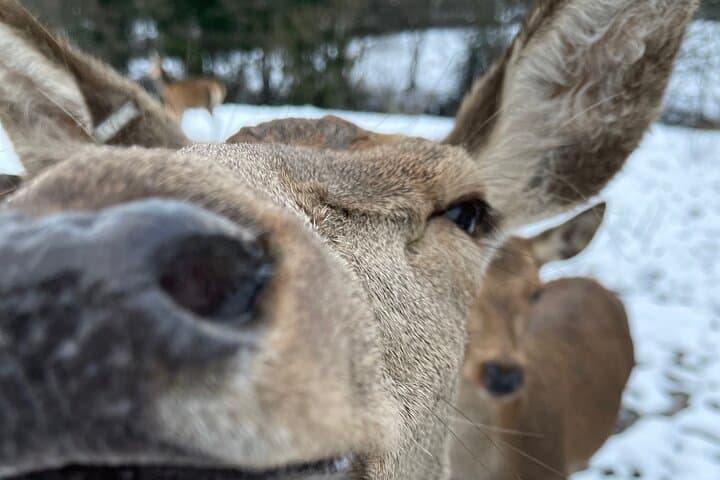
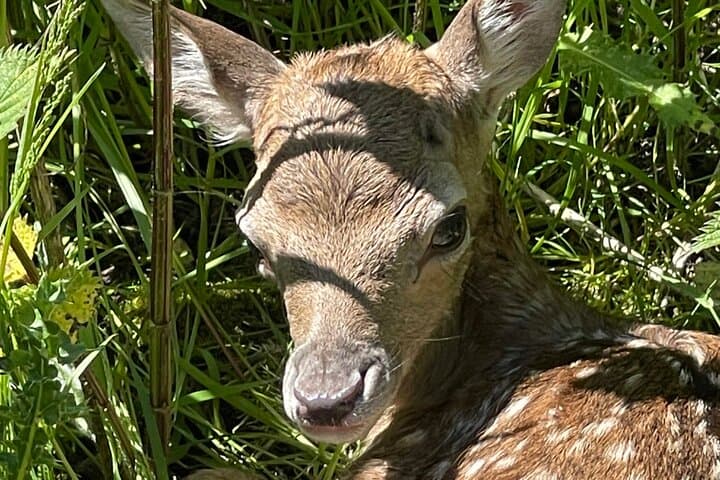
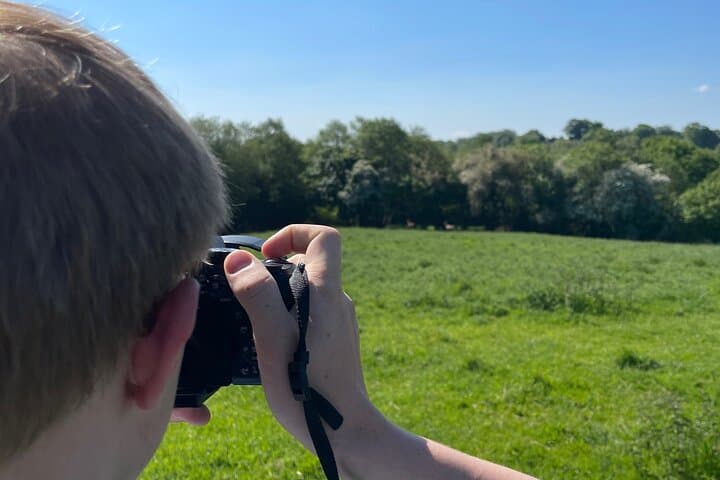
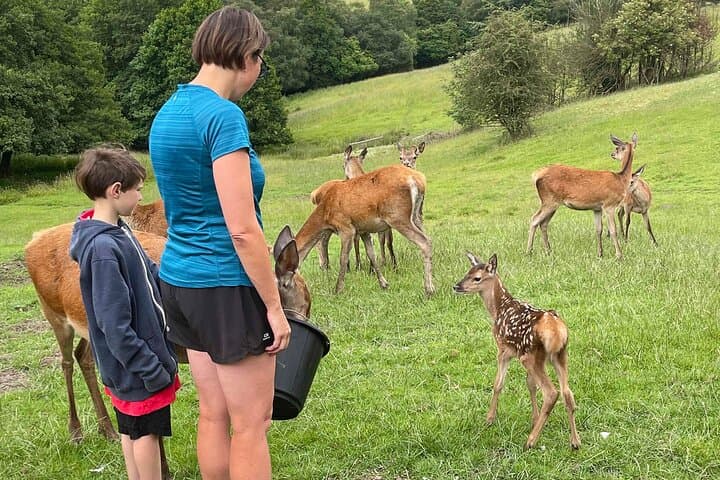
Late afternoon light threads through parkland oaks as a group falls into step behind a local guide, boots soft on damp grass and cameras ready. The deer lift their heads—curious, unhurried—while the guide explains their habits and how the herd uses the glades. This is a hands-on encounter with British wild deer focused on observation and respectful photography.
Late afternoon light threads through parkland oaks as a group falls into step behind a local guide, boots soft on damp grass and cameras ready. The deer lift their heads—curious, unhurried—while the guide explains their habits and how the herd uses the glades. This is a hands-on encounter with British wild deer focused on observation and respectful photography.
Deer parks are an old part of England’s rural landscape, some tracing back to medieval estates that managed deer for sport and sustenance. Geologically, the Leek area sits on the western edge of the Staffordshire Moorlands—gently rolling hill country, patchwork pastures and mixed woodland that create corridors for wildlife. Local culture still values small estates and community green space; the park reflects that continuity, where conservation and public access are balanced.
On the tour expect close-up looks at red and fallow deer, instruction in ethical wildlife photography, and conversation about seasonal behaviour. The terrain is grassy and uneven with shallow slopes; good waterproof shoes are recommended. Tours typically run in the afternoon and last about an hour to an hour and a half. Bring a telephoto or zoom lens, binoculars, and layers—weather shifts quickly here. Dogs and very young children may not be suitable; mobility can be limited on paths.
Practical tips: keep noise low, stay on the guide’s route, and allow the deer space to approach on their terms. Photography opportunities are best in low light; the guide times walks to increase sightings. This is a compact, immersive wildlife experience for photographers, families with older kids, and anyone keen to learn about Britain’s deer and parkland ecology.