THE ADVENTURE COLLECTIVE® · Independent discovery and booking for outdoor travel

Take a private, narrated hour-long carriage ride from the Big Red Barn through Charleston’s historic downtown. Learn about architecture, local history, and waterfront life while traveling at the city’s original pace—by horse and carriage.
Take a private, narrated hour-long carriage ride from the Big Red Barn through Charleston’s historic downtown. Learn about architecture, local history, and waterfront life while traveling at the city’s original pace—by horse and carriage.
The clip of hooves and the creak of wooden wheels set the tempo as you leave Market Street behind and roll into the old city. Mane and harness are part of the street scene; Spanish moss sways over brick sidewalks while the harbor wind tugs at your jacket. This is a slow, considered way to take in Charleston—broad facades, narrow alleys, and live oaks that have watched centuries pass.
Verified experiences and guided adventures in the surrounding area.
Operated by Palmetto Carriage Works · Charleston, South Carolina
The clip of hooves and the creak of wooden wheels set the tempo as you leave Market Street behind and roll into the old city. Mane and harness are part of the street scene; Spanish moss sways over brick sidewalks while the harbor wind tugs at your jacket. This is a slow, considered way to take in Charleston—broad facades, narrow alleys, and live oaks that have watched centuries pass.
Charleston’s downtown grew from a 17th-century port into one of America’s best-preserved historic districts. The tour follows routes that showcase colonial layout, Federal- and antebellum-era architecture, and landmarks such as Rainbow Row, St. Philip’s Church, and the City Market. Geology here is subtle: low-lying coastal plain, marshes edging the harbor that once shaped trade routes and defensive planning.
Culture is visible in painted shutters, wrought-ironwork, and placards that mark homes and gardens. Guides offer social and architectural context—stories of commerce, Gullah history, and how tides and trade forged the city’s character.
Practical notes: the private carriage departs from the Big Red Barn at 8 Guignard Street and lasts about 60 minutes, accommodating 1–4 people per carriage. Dress for the weather—sun and heat are the most common challenges in summer—and sit toward the middle for the smoothest ride. Cameras are welcome; avoid sudden movements near the horses. The experience is low-impact physically but rich in local detail, ideal for travelers who want a measured, informative view of Charleston without the rush of walking tours.
easy.
1 hour.
Minimal fitness required; participants should be able to step up into a carriage and sit for an hour
Each private carriage accommodates 1–4 people; pricing is per carriage.
Carriages require stepping up into the bench; travelers with mobility needs should contact the operator ahead to discuss options.
Tours operate in most weather; for severe conditions the operator may cancel and offer a refund if done at least 24 hours before departure per their policy.
Yes—established carriage companies follow local animal welfare practices and stable the horses at the Big Red Barn between tours.
Charleston grew as a strategic coastal port in the 17th and 18th centuries; much of the downtown streetplan and architecture reflect its commercial and cultural role through the antebellum period.
Carriage operators and the city regulate routes and stable practices to protect horses and streets; visitors can help by avoiding feeding or crowding animals and staying on paved walkways.
Palmetto Carriage Works operates guided outdoor trips and adventures with an emphasis on safety, stewardship, and memorable experiences.
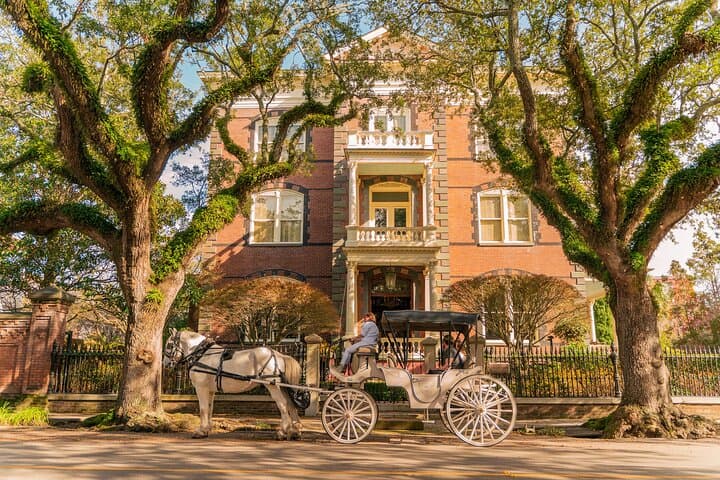
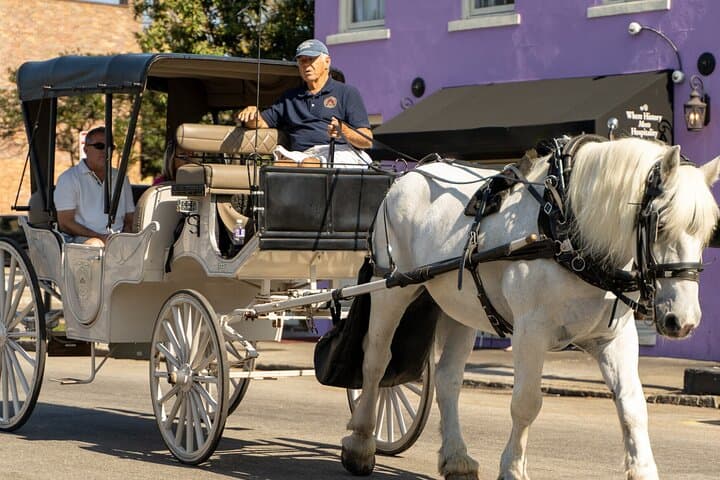
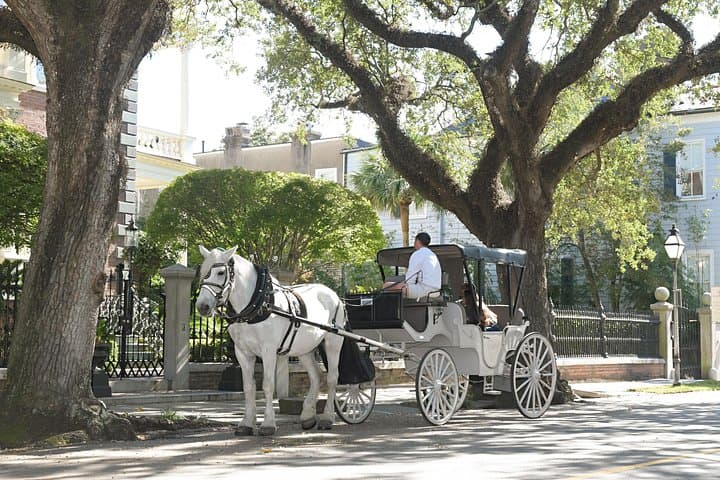
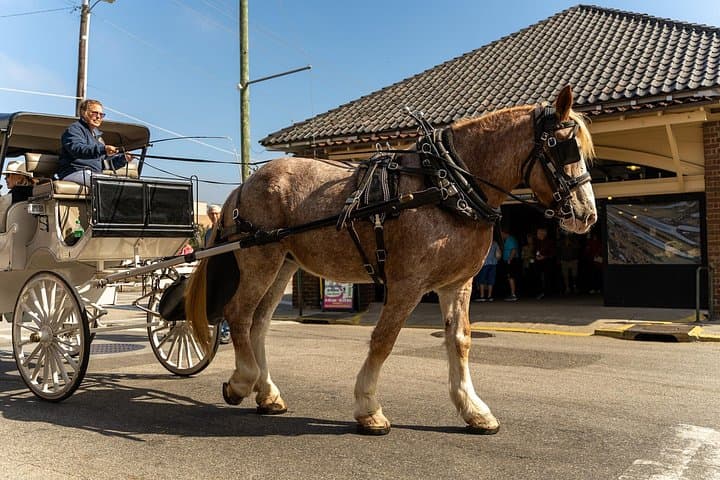
The clip of hooves and the creak of wooden wheels set the tempo as you leave Market Street behind and roll into the old city. Mane and harness are part of the street scene; Spanish moss sways over brick sidewalks while the harbor wind tugs at your jacket. This is a slow, considered way to take in Charleston—broad facades, narrow alleys, and live oaks that have watched centuries pass.
The clip of hooves and the creak of wooden wheels set the tempo as you leave Market Street behind and roll into the old city. Mane and harness are part of the street scene; Spanish moss sways over brick sidewalks while the harbor wind tugs at your jacket. This is a slow, considered way to take in Charleston—broad facades, narrow alleys, and live oaks that have watched centuries pass.
Charleston’s downtown grew from a 17th-century port into one of America’s best-preserved historic districts. The tour follows routes that showcase colonial layout, Federal- and antebellum-era architecture, and landmarks such as Rainbow Row, St. Philip’s Church, and the City Market. Geology here is subtle: low-lying coastal plain, marshes edging the harbor that once shaped trade routes and defensive planning.
Culture is visible in painted shutters, wrought-ironwork, and placards that mark homes and gardens. Guides offer social and architectural context—stories of commerce, Gullah history, and how tides and trade forged the city’s character.
Practical notes: the private carriage departs from the Big Red Barn at 8 Guignard Street and lasts about 60 minutes, accommodating 1–4 people per carriage. Dress for the weather—sun and heat are the most common challenges in summer—and sit toward the middle for the smoothest ride. Cameras are welcome; avoid sudden movements near the horses. The experience is low-impact physically but rich in local detail, ideal for travelers who want a measured, informative view of Charleston without the rush of walking tours.