THE ADVENTURE COLLECTIVE® · Independent discovery and booking for outdoor travel

Drive from Thessaloniki to a landscape of towering sandstone pillars and cliff-top monasteries on a private full-day trip to Meteora. Visit 2–3 monasteries, climb stone stairways, and take in sweeping panoramas with guided local context.
Drive from Thessaloniki to a landscape of towering sandstone pillars and cliff-top monasteries on a private full-day trip to Meteora. Visit 2–3 monasteries, climb stone stairways, and take in sweeping panoramas with guided local context.
Morning light slices across vertical sandstone; you arrive on a two-lane road that opens to a cluster of towering pillars—Meteora’s rocks rising like island cliffs from the Thessalian plain. The air carries wind off the Pindus range and the distant toll of monastery bells, and the first steps up a carved stair feel like stepping into centuries.
Verified experiences and guided adventures in the surrounding area.
Operated by De Tour Transfers · Kalambaka, Thessaly
Morning light slices across vertical sandstone; you arrive on a two-lane road that opens to a cluster of towering pillars—Meteora’s rocks rising like island cliffs from the Thessalian plain. The air carries wind off the Pindus range and the distant toll of monastery bells, and the first steps up a carved stair feel like stepping into centuries.
Geology here is blunt and ancient: conglomerate and sandstone deposited by rivers and uplifted and eroded over ~tens of millions of years to leave the fingerlike columns that define Meteora. Human history here is equally dramatic—monastic communities established cliff-top hermitages from the 11th–15th centuries; several surviving monasteries date to the 14th century and are UNESCO-protected for their frescoes, libraries and unique construction methods.
Culturally, Meteora is both active monastery and tourist site; you’ll see modest dress codes and areas reserved for worship. The drive from Thessaloniki is roughly 2.5–3 hours each way; on a private day trip you typically visit 2–3 monasteries, walk short connecting trails of 0.5–2 km, and climb stone staircases with about 100–200 steps per monastery entrance. Expect uneven cobbles, steep staircases, and panoramic overlooks where winds test your footing and patience.
Practical guidance: time your visit early or late afternoon to avoid the busiest windows, carry water and sun protection, and wear supportive shoes with good tread. Respect closures and photography rules inside chapels, and leave no trace—these are active religious sites and fragile rock formations. A private trip delivers door-to-door transport and local context, making Meteora accessible without long transfers from Thessaloniki while still requiring comfortable mobility for stairs and short hikes.
easy.
10 hours.
Suitable for most fitness levels; participants should be comfortable climbing 100–200 stone steps and walking on uneven paths.
Expect about 2.5–3 hours each way depending on traffic; most private day trips are scheduled as a 10-hour round-trip outing.
Most private day trips include time to visit external viewpoints and enter 1–2 monasteries, but individual monastery admission fees and operating hours may vary and are sometimes paid on-site.
The tour is rated easy overall, but accessing monastery entrances requires climbing 100–200 stone steps and walking on uneven surfaces—reasonable mobility is needed.
Modest clothing is required: shoulders and knees should be covered; men may be asked to remove hats, and some sites provide wraps if needed.
Meteora’s monasteries rose in the 14th–16th centuries as hermit communities sought refuge on the rocks; their frescoes and archives preserve Orthodox monastic traditions that persisted through Ottoman rule.
Foot traffic and climbing wear threaten fragile rock and vegetation; visitors should stay on marked paths, avoid graffiti, and support local conservation by following site rules.
De Tour Transfers operates guided outdoor trips and adventures with an emphasis on safety, stewardship, and memorable experiences.


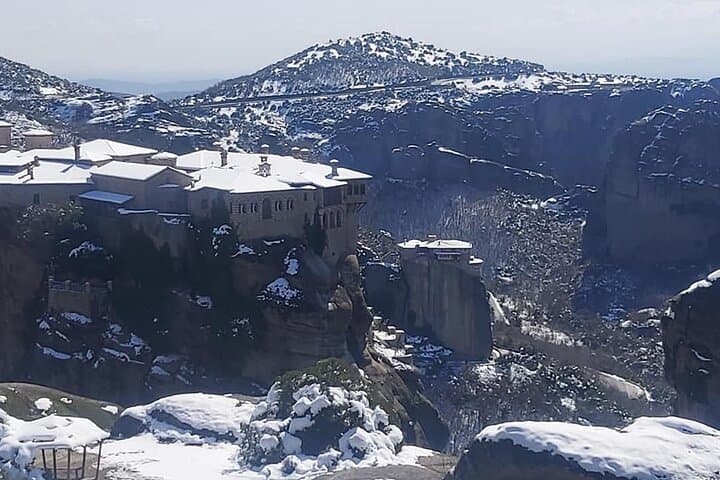

Morning light slices across vertical sandstone; you arrive on a two-lane road that opens to a cluster of towering pillars—Meteora’s rocks rising like island cliffs from the Thessalian plain. The air carries wind off the Pindus range and the distant toll of monastery bells, and the first steps up a carved stair feel like stepping into centuries.
Morning light slices across vertical sandstone; you arrive on a two-lane road that opens to a cluster of towering pillars—Meteora’s rocks rising like island cliffs from the Thessalian plain. The air carries wind off the Pindus range and the distant toll of monastery bells, and the first steps up a carved stair feel like stepping into centuries.
Geology here is blunt and ancient: conglomerate and sandstone deposited by rivers and uplifted and eroded over ~tens of millions of years to leave the fingerlike columns that define Meteora. Human history here is equally dramatic—monastic communities established cliff-top hermitages from the 11th–15th centuries; several surviving monasteries date to the 14th century and are UNESCO-protected for their frescoes, libraries and unique construction methods.
Culturally, Meteora is both active monastery and tourist site; you’ll see modest dress codes and areas reserved for worship. The drive from Thessaloniki is roughly 2.5–3 hours each way; on a private day trip you typically visit 2–3 monasteries, walk short connecting trails of 0.5–2 km, and climb stone staircases with about 100–200 steps per monastery entrance. Expect uneven cobbles, steep staircases, and panoramic overlooks where winds test your footing and patience.
Practical guidance: time your visit early or late afternoon to avoid the busiest windows, carry water and sun protection, and wear supportive shoes with good tread. Respect closures and photography rules inside chapels, and leave no trace—these are active religious sites and fragile rock formations. A private trip delivers door-to-door transport and local context, making Meteora accessible without long transfers from Thessaloniki while still requiring comfortable mobility for stairs and short hikes.