THE ADVENTURE COLLECTIVE® · Independent discovery and booking for outdoor travel

A full‑day private transfer from Agadir delivers a compact immersion in Marrakech’s medina: monuments like the Koutoubia and Bahia Palace, the painted calm of Majorelle Gardens, and the vibrant souks of Jemaa el‑Fna. Expect a long, sensory day with guided navigation through alleys and bazaars.
A full‑day private transfer from Agadir delivers a compact immersion in Marrakech’s medina: monuments like the Koutoubia and Bahia Palace, the painted calm of Majorelle Gardens, and the vibrant souks of Jemaa el‑Fna. Expect a long, sensory day with guided navigation through alleys and bazaars.
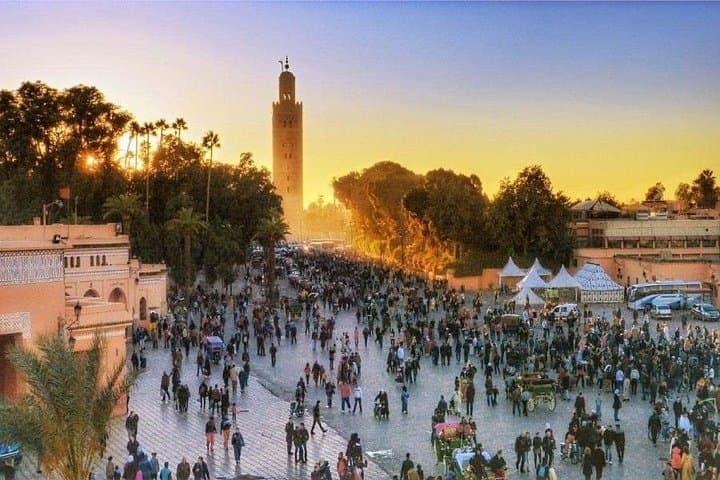
By midmorning the vehicle drops you at the rim of Marrakech’s medina and the city opens like a compact maze of stone, spice and song.
Verified experiences and guided adventures in the surrounding area.
Operated by Best Ride Tours · Marrakech, Marrakech-Safi
By midmorning the vehicle drops you at the rim of Marrakech’s medina and the city opens like a compact maze of stone, spice and song.
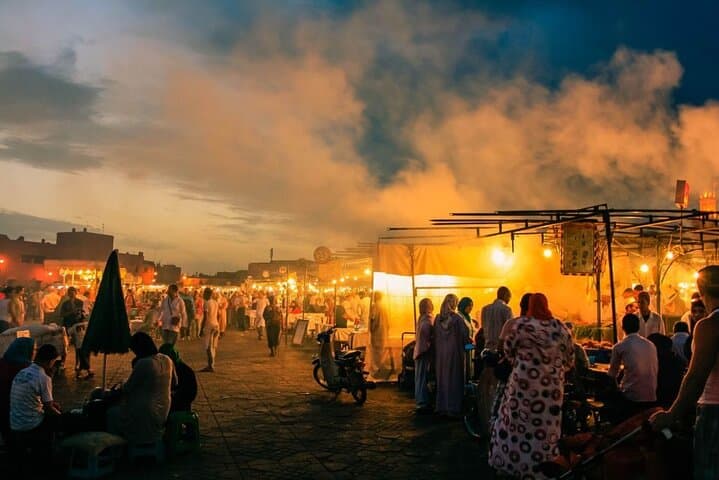
Jemaa el‑Fna pulses at the center — storytellers, acrobats and food stalls testing the senses — while the Koutoubia’s minaret keeps a steady, 12th‑century watch. The city’s ochre ramparts, carved from local clay and sand, reflect its geography: a trade crossroads on the doorstep of the High Atlas where rivers and mountain runoff once shaped agricultural terraces beyond the walls.
History is immediate here: Almohad rulers built the Koutoubia and laid out the medina’s street pattern; the Bahia Palace later layered 19th‑century domestic grandeur atop older city fabric. In the souks, generations of artisans work leather, metal and textiles in alleys that funnel color and scent into the central square.
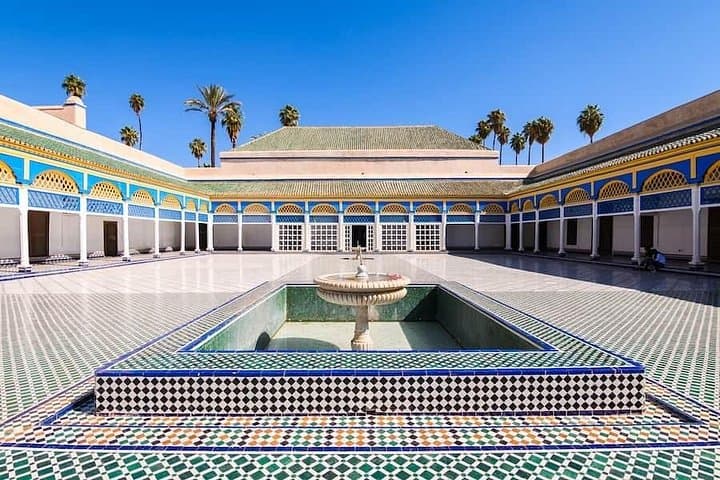
Expect fast sensory shifts — narrow alleys giving way to quiet riads, a cool tile courtyard after a hot, dusted street. Respect local customs: modest dress in religious sites, a clear yes or no when bargaining, and polite refusal to accept unsolicited photos.
Practical ground rules: start early to avoid late‑day crowds, wear supportive closed‑toe shoes for uneven paving, and carry water and sun protection. Your private guide will handle logistics and most admissions; bring small bills for market purchases and tips. Timing is long — a full 12‑hour day — but you’ll leave with a mapped route of monuments, a taste of Marrakech’s craft techniques, and practical notes for deeper exploration on foot.
easy.
12–13 hours.
Suitable for most fitness levels; expect extended periods of walking on uneven ground.
Road transfer is roughly 2.5–3 hours each way depending on traffic and stops, making this a full 12‑ to 13‑hour day.
Typical private tours include select admissions; confirm with the operator which monuments (e.g., Bahia Palace, Majorelle Gardens) are covered.
Yes — the itinerary notes it’s suitable for all fitness levels, but children should be supervised in crowded souks and busy squares.
Use Moroccan dirham for purchases; small tips for guides, drivers and service staff are customary (a few dirham to a small percentage of the service cost).
Marrakech is one of Morocco’s imperial cities, founded in the 11th century and expanded by the Almohads in the 12th century; its medina and monuments reflect layers of Berber, Islamic and later French influence.
Tourism pressure makes waste management and respectful behavior important; stick to marked paths in historic sites and avoid single‑use plastic where possible.
Best Ride Tours operates guided outdoor trips and adventures with an emphasis on safety, stewardship, and memorable experiences.
By midmorning the vehicle drops you at the rim of Marrakech’s medina and the city opens like a compact maze of stone, spice and song.
By midmorning the vehicle drops you at the rim of Marrakech’s medina and the city opens like a compact maze of stone, spice and song.
Jemaa el‑Fna pulses at the center — storytellers, acrobats and food stalls testing the senses — while the Koutoubia’s minaret keeps a steady, 12th‑century watch. The city’s ochre ramparts, carved from local clay and sand, reflect its geography: a trade crossroads on the doorstep of the High Atlas where rivers and mountain runoff once shaped agricultural terraces beyond the walls.
History is immediate here: Almohad rulers built the Koutoubia and laid out the medina’s street pattern; the Bahia Palace later layered 19th‑century domestic grandeur atop older city fabric. In the souks, generations of artisans work leather, metal and textiles in alleys that funnel color and scent into the central square.
Expect fast sensory shifts — narrow alleys giving way to quiet riads, a cool tile courtyard after a hot, dusted street. Respect local customs: modest dress in religious sites, a clear yes or no when bargaining, and polite refusal to accept unsolicited photos.
Practical ground rules: start early to avoid late‑day crowds, wear supportive closed‑toe shoes for uneven paving, and carry water and sun protection. Your private guide will handle logistics and most admissions; bring small bills for market purchases and tips. Timing is long — a full 12‑hour day — but you’ll leave with a mapped route of monuments, a taste of Marrakech’s craft techniques, and practical notes for deeper exploration on foot.