THE ADVENTURE COLLECTIVE® · Independent discovery and booking for outdoor travel

Spend a half day exploring Marken’s wooden houses and Volendam’s lively harbor with a private local guide. This four-hour rail-supported tour blends coastal history, local food, and easy walks along the Dutch shoreline.
Spend a half day exploring Marken’s wooden houses and Volendam’s lively harbor with a private local guide. This four-hour rail-supported tour blends coastal history, local food, and easy walks along the Dutch shoreline.
You step off the train and the air changes—salt-sweet and brisk, gulls drafting over narrow canals as simple wooden houses line the shore. Marken’s painted cottages sit on raised mounds called werven; their weathered boards and stilted foundations still read like a manual for living with the sea.
Verified experiences and guided adventures in the surrounding area.
Operated by Yo Tours · Volendam, North Holland
You step off the train and the air changes—salt-sweet and brisk, gulls drafting over narrow canals as simple wooden houses line the shore. Marken’s painted cottages sit on raised mounds called werven; their weathered boards and stilted foundations still read like a manual for living with the sea.
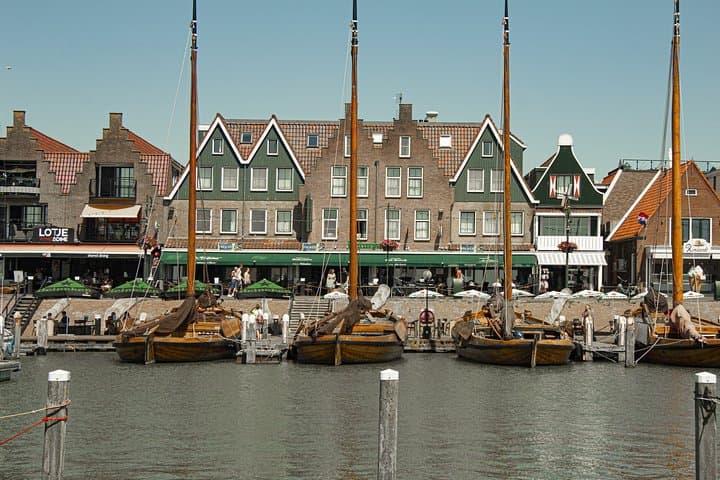
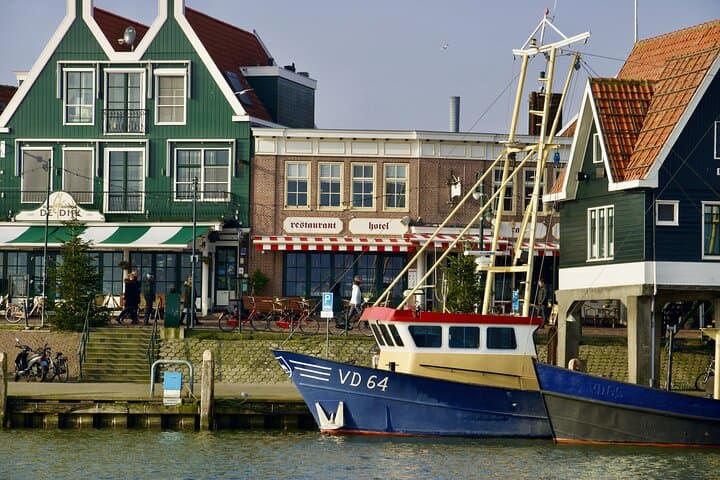
These villages are living chapters of Dutch coastal history. Marken was an island until the 19th century and residents built homes on artificial hills to outwit floods; Volendam grew as a fishing enclave whose harbor still hums with boats, fish smoke, and shuttered photo studios offering traditional dress. The surrounding landscape is low and flat, reclaimed polder and shoals where tidal currents sculpt channels and mudbanks that feed rich birdlife.
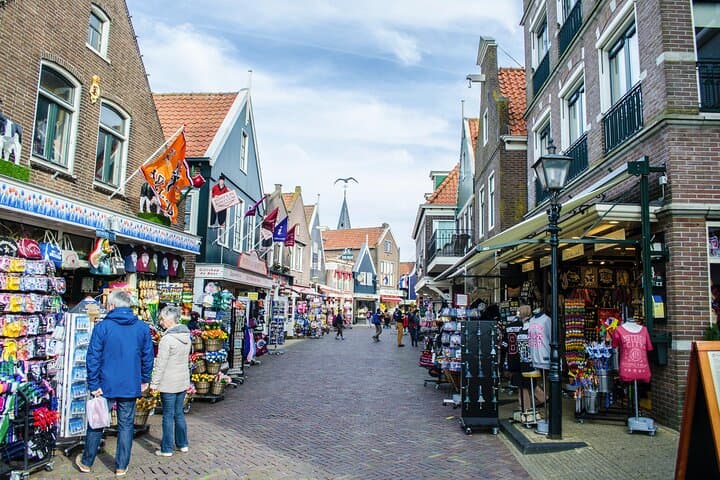
A local guide frames the tour with practical detail—why houses sit on stakes, how the Afsluitdijk reshaped the Zuiderzee, and where to taste a simple boerenkaas or fresh herring. You’ll walk cobbled lanes, cross short causeways, and pause at docks where fishing nets dry in the wind that seems to push you forward.
Plan for four hours: the itinerary balances walking with time to browse museums, try local snacks, and photograph lighthouses like Paard van Marken. Dress for changeable coastal weather, wear comfortable shoes for uneven surfaces, and bring a small bag for purchases—many shops accept cards but smaller vendors may prefer cash. Trains depart frequently from Amsterdam; meeting points typically sit by the tourist information center for a smooth start. This is an easy, grounded introduction to Holland’s maritime culture and working shoreline—accessible, informative, and quietly scenic.
easy.
4 hours.
Suitable for most fitness levels; involves short, flat walks and brief standing during commentary
Both villages are reachable by train and bus; the tour meets near Amsterdam’s tourist information center and uses public transport for transfers.
Yes—this private tour is family-friendly; infants must sit on an adult’s lap per operator policy.
No—museum admissions and optional activities such as dress photos are not included, but your guide will point out choices and prices.
The operator may cancel for bad weather with full refunds if they cancel at least 24 hours beforehand; otherwise dress for wind and rain and the guide will adapt the route.
Marken’s homes were built on werven—artificial hills—to survive tidal floods until the Afsluitdijk transformed the Zuiderzee into the IJsselmeer in the 20th century.
Coastal habitats here are sensitive; stick to paths, avoid disturbing birds on mudflats, and support local businesses to maintain traditional landscapes.
Yo Tours operates guided outdoor trips and adventures with an emphasis on safety, stewardship, and memorable experiences.

You step off the train and the air changes—salt-sweet and brisk, gulls drafting over narrow canals as simple wooden houses line the shore. Marken’s painted cottages sit on raised mounds called werven; their weathered boards and stilted foundations still read like a manual for living with the sea.
You step off the train and the air changes—salt-sweet and brisk, gulls drafting over narrow canals as simple wooden houses line the shore. Marken’s painted cottages sit on raised mounds called werven; their weathered boards and stilted foundations still read like a manual for living with the sea.
These villages are living chapters of Dutch coastal history. Marken was an island until the 19th century and residents built homes on artificial hills to outwit floods; Volendam grew as a fishing enclave whose harbor still hums with boats, fish smoke, and shuttered photo studios offering traditional dress. The surrounding landscape is low and flat, reclaimed polder and shoals where tidal currents sculpt channels and mudbanks that feed rich birdlife.
A local guide frames the tour with practical detail—why houses sit on stakes, how the Afsluitdijk reshaped the Zuiderzee, and where to taste a simple boerenkaas or fresh herring. You’ll walk cobbled lanes, cross short causeways, and pause at docks where fishing nets dry in the wind that seems to push you forward.
Plan for four hours: the itinerary balances walking with time to browse museums, try local snacks, and photograph lighthouses like Paard van Marken. Dress for changeable coastal weather, wear comfortable shoes for uneven surfaces, and bring a small bag for purchases—many shops accept cards but smaller vendors may prefer cash. Trains depart frequently from Amsterdam; meeting points typically sit by the tourist information center for a smooth start. This is an easy, grounded introduction to Holland’s maritime culture and working shoreline—accessible, informative, and quietly scenic.