THE ADVENTURE COLLECTIVE® · Independent discovery and booking for outdoor travel

Trade Prague’s crowds for a 5–6 hour private drive into Bohemia’s silver-mining heart. Explore St. Barbara’s Gothic cathedral, the Italian Court and the bone-decorated Sedlec Ossuary with a local guide.
Trade Prague’s crowds for a 5–6 hour private drive into Bohemia’s silver-mining heart. Explore St. Barbara’s Gothic cathedral, the Italian Court and the bone-decorated Sedlec Ossuary with a local guide.
Leave Prague’s historic center and let the highway push you east toward low, folded hills that remember silver. Within an hour the tiled roofs give way to a skyline of Gothic pinnacles: St. Barbara’s Cathedral rising from a miner’s town, the ossuary’s macabre artistry tucked into a quiet monastery yard.
Verified experiences and guided adventures in the surrounding area.
Operated by Happy Transfer · Kutná Hora, Central Bohemian Region
Leave Prague’s historic center and let the highway push you east toward low, folded hills that remember silver. Within an hour the tiled roofs give way to a skyline of Gothic pinnacles: St. Barbara’s Cathedral rising from a miner’s town, the ossuary’s macabre artistry tucked into a quiet monastery yard.
Kutná Hora grew wealthy on 13th–16th century silver veins; its streets, civic buildings and the Italian Court (Vlašský dvůr) still wear that moneyed geometry. St. Barbara’s Cathedral is a late Gothic showpiece—flying buttresses and stained glass that mark the town’s medieval importance—while Sedlec Ossuary condenses local religious practice and mortality into bone chandeliers and motifs created centuries after a plague and an overflowing cemetery.
Expect 5–6 hours total door-to-door from Prague, roughly 70 km each way depending on traffic. The tour is vehicle-based with a professional guide and light walking across cobbled lanes, short staircases and gentle slopes—plan for 1–3 km on foot and under 100 m of elevation change. Admissions are typically not included, and sites enforce respectful behavior (no touching displays; flash photography may be restricted in the ossuary).
Practical edge: wear comfortable, grippy shoes for cobbles, layer for variable Bohemian weather, bring a card or cash for entrance fees, and allow time for photos and a coffee in the old town. The mix of architecture, mining history and an unsettlingly creative ossuary makes this a compact cultural day that reads archaeological and human stories in stone and bone.
easy.
5–6 hours.
Suitable for travelers of most fitness levels; requires short periods of standing and 1–3 km of walking on uneven surfaces.
No—admissions are typically not included in the tour price; you’ll pay entry fees on site unless otherwise noted by the operator.
The tour lasts about 5–6 hours total, with roughly 1–1.5 hours of driving each way depending on traffic and stops.
Yes; infant seats are available for the vehicle, but note the ossuary’s displays may be unsettling for very young children and require parental discretion.
Pickup is included and most operators will accommodate central Prague hotels; specific pickup points are confirmed during booking.
Kutná Hora’s medieval wealth came from rich silver veins; the town’s civic and ecclesiastical architecture reflects its 14th–16th century importance and UNESCO designation.
High visitor numbers concentrate at fragile interiors—stay on paths, avoid touching artifacts, and follow site signage to help preserve both stonework and bone displays.
Happy Transfer operates guided outdoor trips and adventures with an emphasis on safety, stewardship, and memorable experiences.
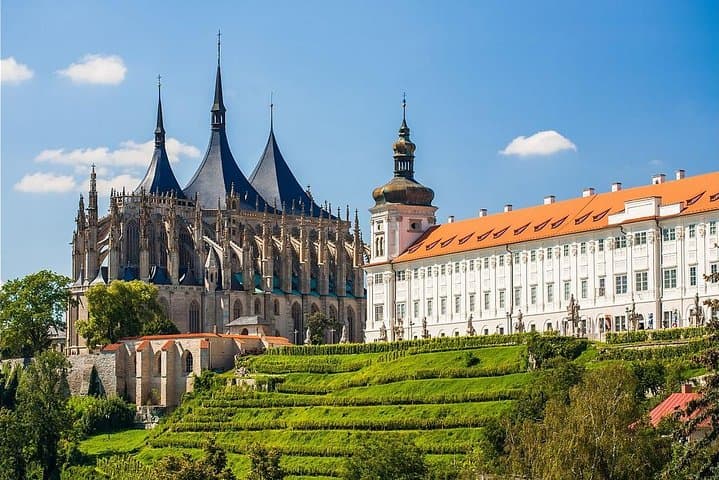
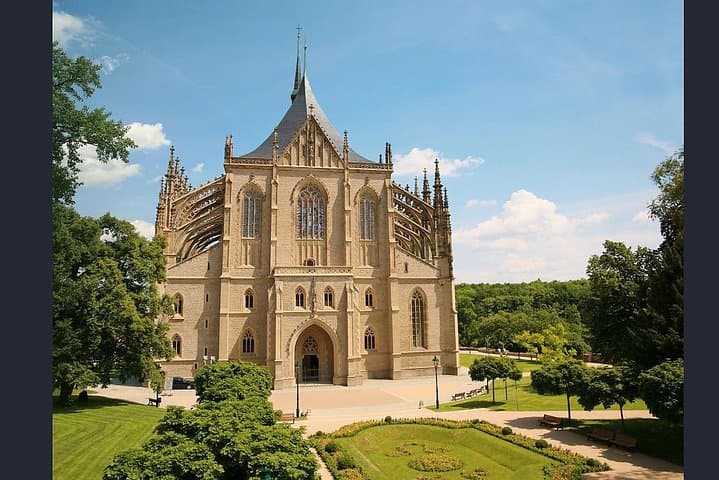
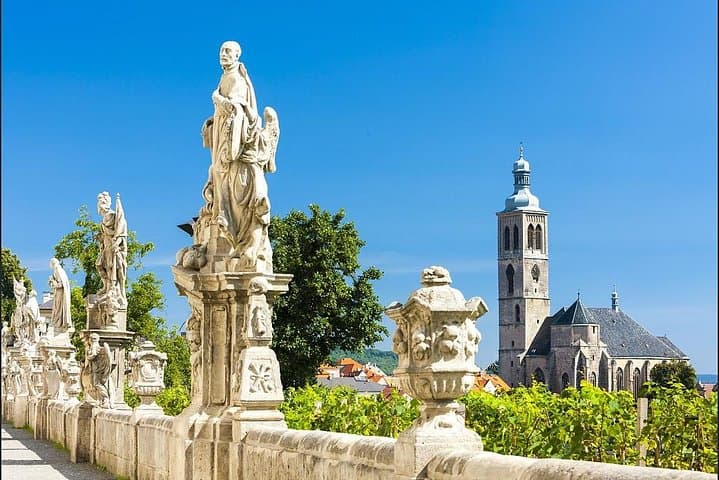
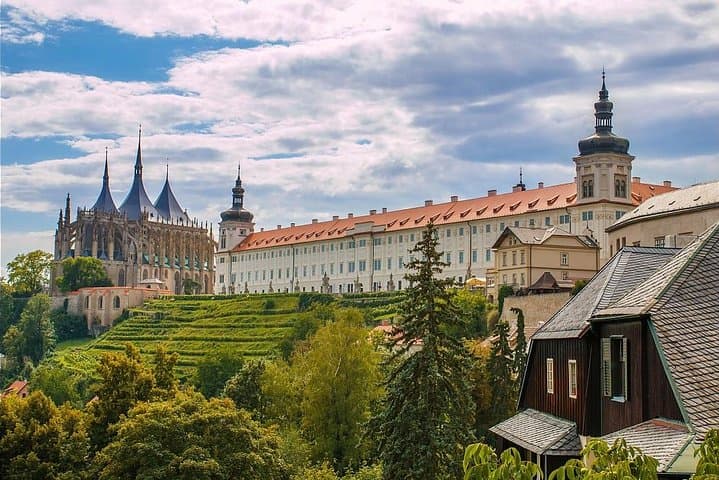
Leave Prague’s historic center and let the highway push you east toward low, folded hills that remember silver. Within an hour the tiled roofs give way to a skyline of Gothic pinnacles: St. Barbara’s Cathedral rising from a miner’s town, the ossuary’s macabre artistry tucked into a quiet monastery yard.
Leave Prague’s historic center and let the highway push you east toward low, folded hills that remember silver. Within an hour the tiled roofs give way to a skyline of Gothic pinnacles: St. Barbara’s Cathedral rising from a miner’s town, the ossuary’s macabre artistry tucked into a quiet monastery yard.
Kutná Hora grew wealthy on 13th–16th century silver veins; its streets, civic buildings and the Italian Court (Vlašský dvůr) still wear that moneyed geometry. St. Barbara’s Cathedral is a late Gothic showpiece—flying buttresses and stained glass that mark the town’s medieval importance—while Sedlec Ossuary condenses local religious practice and mortality into bone chandeliers and motifs created centuries after a plague and an overflowing cemetery.
Expect 5–6 hours total door-to-door from Prague, roughly 70 km each way depending on traffic. The tour is vehicle-based with a professional guide and light walking across cobbled lanes, short staircases and gentle slopes—plan for 1–3 km on foot and under 100 m of elevation change. Admissions are typically not included, and sites enforce respectful behavior (no touching displays; flash photography may be restricted in the ossuary).
Practical edge: wear comfortable, grippy shoes for cobbles, layer for variable Bohemian weather, bring a card or cash for entrance fees, and allow time for photos and a coffee in the old town. The mix of architecture, mining history and an unsettlingly creative ossuary makes this a compact cultural day that reads archaeological and human stories in stone and bone.