THE ADVENTURE COLLECTIVE® · Independent discovery and booking for outdoor travel

Leave Prague for a seven-hour private tour that pairs the fortified drama of Karlštejn with the landscaped residence of Konopiště. This guided day trip combines short uphill walks, medieval architecture and a late-19th-century chateau collection—perfect for travelers who want history without the logistics.
Leave Prague for a seven-hour private tour that pairs the fortified drama of Karlštejn with the landscaped residence of Konopiště. This guided day trip combines short uphill walks, medieval architecture and a late-19th-century chateau collection—perfect for travelers who want history without the logistics.
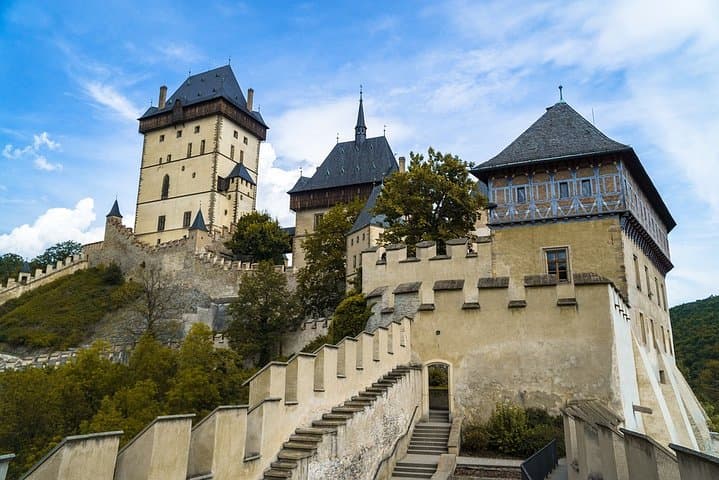
The road slides out of Prague and into a green geography of low hills and mixed forest; the guide points out farmland and a river as the car threads toward a compact medieval hill crowned by stone. At Karlštejn the castle perches above the valley—a sequence of gatehouses, towers and steep stairways that demand steady steps and attention to breath. The forest around it seems to lean in, watching visitors trace the path once used to secure royal regalia.
Verified experiences and guided adventures in the surrounding area.
Operated by REMAZ TOURS GmbH · Prague, Prague
The road slides out of Prague and into a green geography of low hills and mixed forest; the guide points out farmland and a river as the car threads toward a compact medieval hill crowned by stone. At Karlštejn the castle perches above the valley—a sequence of gatehouses, towers and steep stairways that demand steady steps and attention to breath. The forest around it seems to lean in, watching visitors trace the path once used to secure royal regalia.
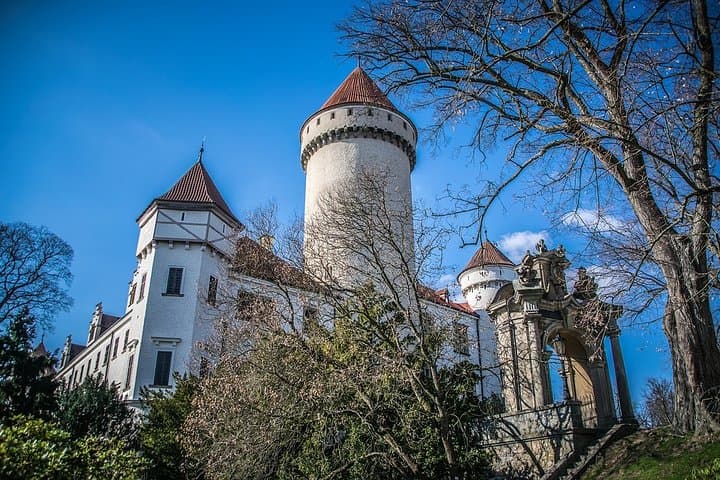
Karlštejn was founded by Charles IV in 1348 to hold the crown jewels and imperial archives: its keep and Chapel of the Holy Cross still convey guarded ritual and medieval engineering. Konopiště (Konopiste) sits in a gentler landscape—rebuilt and refitted through centuries and notably remodeled by Archduke Franz Ferdinand into a residence filled with hunting trophies, gardens and a notable weapons collection. Geologically this part of Bohemia sits within the older Bohemian Massif; you’ll move between rugged limestone-tinged outcrops and soft, cultivated parkland.
Expect a mix of short uphill walks, cobbled courtyards and indoor rooms if you purchase admissions. The private vehicle gives flexibility, but entrance fees and lunch are typically extra; both castles are closed on Mondays (viewable from outside only). Practicalities: wear grippy shoes for steps, carry a rain shell and a reusable water bottle, keep local currency or card ready for tickets and small cafes, and plan for roughly a 7-hour window out of Prague. The day’s rhythm alternates the climb-and-stop of Karlštejn with the more domestic, museum-like feel of Konopiště—history, landscape and the satisfying cadence of travel by car between two distinct eras of Czech heritage.
moderate.
7 hours.
Moderate fitness—able to walk uphill sections, climb castle steps and stand for guided explanations.
No—entrance fees to Karlštejn and Konopiště are not included in the tour price; bring cash or card to pay on site.
The tour duration is approximately 7 hours from pickup in Prague to return; exact times vary with traffic.
The vehicle transfer is wheelchair accessible, but interior access at historic castles is limited by stairs—please check specific accessibility needs with the operator ahead of booking.
Each traveler is allowed one suitcase and one carry-on; oversized items like bikes or golf clubs may be restricted—confirm with the operator before travel.
Karlštejn was founded by Charles IV in 1348 as a secure depository for Crown Jewels; Konopiště later became the renovated residence of Archduke Franz Ferdinand, whose collections shaped the current museum rooms.
Both sites manage visitor flows to protect fragile interiors and surrounding woodlands—stick to marked paths and avoid touching historic surfaces to reduce wear.
REMAZ TOURS GmbH operates guided outdoor trips and adventures with an emphasis on safety, stewardship, and memorable experiences.
The road slides out of Prague and into a green geography of low hills and mixed forest; the guide points out farmland and a river as the car threads toward a compact medieval hill crowned by stone. At Karlštejn the castle perches above the valley—a sequence of gatehouses, towers and steep stairways that demand steady steps and attention to breath. The forest around it seems to lean in, watching visitors trace the path once used to secure royal regalia.
The road slides out of Prague and into a green geography of low hills and mixed forest; the guide points out farmland and a river as the car threads toward a compact medieval hill crowned by stone. At Karlštejn the castle perches above the valley—a sequence of gatehouses, towers and steep stairways that demand steady steps and attention to breath. The forest around it seems to lean in, watching visitors trace the path once used to secure royal regalia.
Karlštejn was founded by Charles IV in 1348 to hold the crown jewels and imperial archives: its keep and Chapel of the Holy Cross still convey guarded ritual and medieval engineering. Konopiště (Konopiste) sits in a gentler landscape—rebuilt and refitted through centuries and notably remodeled by Archduke Franz Ferdinand into a residence filled with hunting trophies, gardens and a notable weapons collection. Geologically this part of Bohemia sits within the older Bohemian Massif; you’ll move between rugged limestone-tinged outcrops and soft, cultivated parkland.
Expect a mix of short uphill walks, cobbled courtyards and indoor rooms if you purchase admissions. The private vehicle gives flexibility, but entrance fees and lunch are typically extra; both castles are closed on Mondays (viewable from outside only). Practicalities: wear grippy shoes for steps, carry a rain shell and a reusable water bottle, keep local currency or card ready for tickets and small cafes, and plan for roughly a 7-hour window out of Prague. The day’s rhythm alternates the climb-and-stop of Karlštejn with the more domestic, museum-like feel of Konopiště—history, landscape and the satisfying cadence of travel by car between two distinct eras of Czech heritage.