THE ADVENTURE COLLECTIVE® · Independent discovery and booking for outdoor travel

Spend a full day exploring Egypt’s major necropolises—Giza, Saqqara, Memphis and Dahshur—on a private tour from Cairo. This itinerary pairs close-up views of pyramids and the Sphinx with local crafts and practical guidance for navigating desert heat and uneven terrain.
Spend a full day exploring Egypt’s major necropolises—Giza, Saqqara, Memphis and Dahshur—on a private tour from Cairo. This itinerary pairs close-up views of pyramids and the Sphinx with local crafts and practical guidance for navigating desert heat and uneven terrain.
Morning light slices across the Sahara as your driver eases out of Cairo; within minutes the plateau of Giza rises like an ancient stage, stone giants watching the city's slow bustle. You’ll stand close enough to feel the thermal breath of the desert and hear the wind shape sand against tombs that have kept silence for millennia.
Verified experiences and guided adventures in the surrounding area.
Operated by Emo Tours Egypt · Cairo, Giza Governorate
Morning light slices across the Sahara as your driver eases out of Cairo; within minutes the plateau of Giza rises like an ancient stage, stone giants watching the city's slow bustle. You’ll stand close enough to feel the thermal breath of the desert and hear the wind shape sand against tombs that have kept silence for millennia.
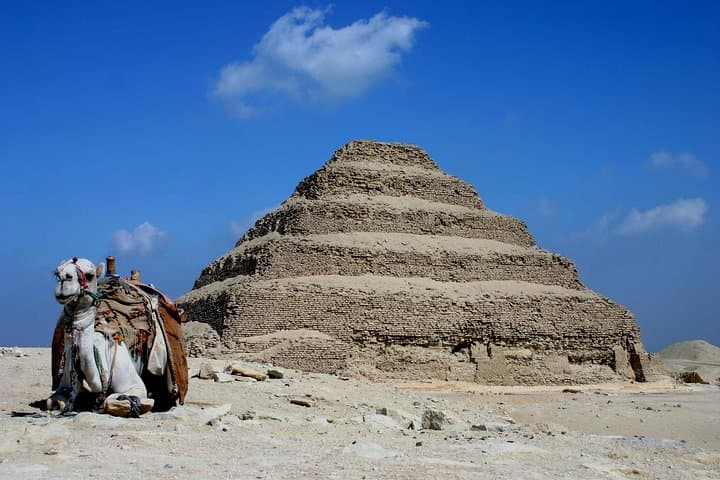
The route threads through layers of Egyptian history: the Fourth Dynasty giants at Giza, the funerary architecture experiments at Saqqara’s Step Pyramid, the formal ruins of Memphis with its fallen colossi, and Dahshur’s geometric experiments—the Bent and Red Pyramids—where builders recalibrated angle and ambition. Geology here is simple and stark: limestone and desert packing preserved carved blocks and funerary complexes, while the Nile’s ancient floodplain once fed the cities that supported these royal works.
Local culture remains tactile—vendors selling papyrus and perfumes, artisans in Memphis with handwoven carpets—reminders that this living region still trades in craft and story. Guides translate inscriptions into context; they point out Pyramid Texts and explain burial rites and mortuary temples.
Practical guidance: expect a full, 9-hour day with moderate walking on uneven stone, loose sand and paved museum paths. Wear sun-protective clothing, sturdy shoes and bring a refillable water bottle; mornings are cooler, afternoons can be intensely hot. Entrance fees for core areas are generally covered but special tomb access or camel rides are often extra. Plan for hotel pickup, comfortable transport, and early starts to avoid midday heat—the ruins are best seen when light sculpts their faces.
easy.
9 hours.
Suitable for most travelers who can manage several hours of walking on uneven surfaces; minimal climbs but some standing.
Basic entry fees for the main areas are included according to the itinerary, but special tombs, pyramid interior access and extras (e.g., camel rides) may require additional tickets at the site.
Camel rides are typically offered by local vendors at Giza and are not included by default; they can be arranged on-site for an extra fee.
The tour involves uneven surfaces and some climbing; the provider notes it is not recommended for travelers with spinal injuries or pregnancy—discuss concerns during booking.
Yes—private hotel pickup and drop-off in Cairo/Giza is included in the tour inclusions.
This circuit traces Egypt’s Old Kingdom and earlier: Saqqara’s Step Pyramid marks the transition from mastaba tombs to pyramids, while Dahshur reveals experimentation that led to Giza’s perfected forms.
High visitor numbers put pressure on fragile stone and painted surfaces; stick to designated paths, avoid touching reliefs and support licensed guides who practice sustainable visitation.
Emo Tours Egypt operates guided outdoor trips and adventures with an emphasis on safety, stewardship, and memorable experiences.


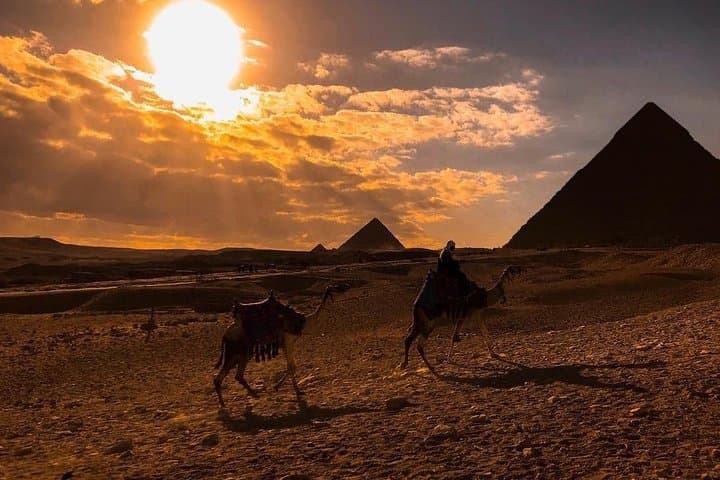
Morning light slices across the Sahara as your driver eases out of Cairo; within minutes the plateau of Giza rises like an ancient stage, stone giants watching the city's slow bustle. You’ll stand close enough to feel the thermal breath of the desert and hear the wind shape sand against tombs that have kept silence for millennia.
Morning light slices across the Sahara as your driver eases out of Cairo; within minutes the plateau of Giza rises like an ancient stage, stone giants watching the city's slow bustle. You’ll stand close enough to feel the thermal breath of the desert and hear the wind shape sand against tombs that have kept silence for millennia.
The route threads through layers of Egyptian history: the Fourth Dynasty giants at Giza, the funerary architecture experiments at Saqqara’s Step Pyramid, the formal ruins of Memphis with its fallen colossi, and Dahshur’s geometric experiments—the Bent and Red Pyramids—where builders recalibrated angle and ambition. Geology here is simple and stark: limestone and desert packing preserved carved blocks and funerary complexes, while the Nile’s ancient floodplain once fed the cities that supported these royal works.
Local culture remains tactile—vendors selling papyrus and perfumes, artisans in Memphis with handwoven carpets—reminders that this living region still trades in craft and story. Guides translate inscriptions into context; they point out Pyramid Texts and explain burial rites and mortuary temples.
Practical guidance: expect a full, 9-hour day with moderate walking on uneven stone, loose sand and paved museum paths. Wear sun-protective clothing, sturdy shoes and bring a refillable water bottle; mornings are cooler, afternoons can be intensely hot. Entrance fees for core areas are generally covered but special tomb access or camel rides are often extra. Plan for hotel pickup, comfortable transport, and early starts to avoid midday heat—the ruins are best seen when light sculpts their faces.