THE ADVENTURE COLLECTIVE® · Independent discovery and booking for outdoor travel

A full-day private tour that takes you into the ruined capital of Emperor Akbar, where monumental gateways, carved halls and a celebrated Sufi shrine reveal 16th‑century Mughal ambition. Practical tips on timing, dress and photography help you make the most of the visit.
A full-day private tour that takes you into the ruined capital of Emperor Akbar, where monumental gateways, carved halls and a celebrated Sufi shrine reveal 16th‑century Mughal ambition. Practical tips on timing, dress and photography help you make the most of the visit.
Dust kicks up from the road as the car pulls off the highway and the red sandstone walls of Fatehpur Sikri resolve out of the heat haze.
Verified experiences and guided adventures in the surrounding area.
Operated by Rosa Travel · Fatehpur Sikri, Uttar Pradesh
Dust kicks up from the road as the car pulls off the highway and the red sandstone walls of Fatehpur Sikri resolve out of the heat haze.
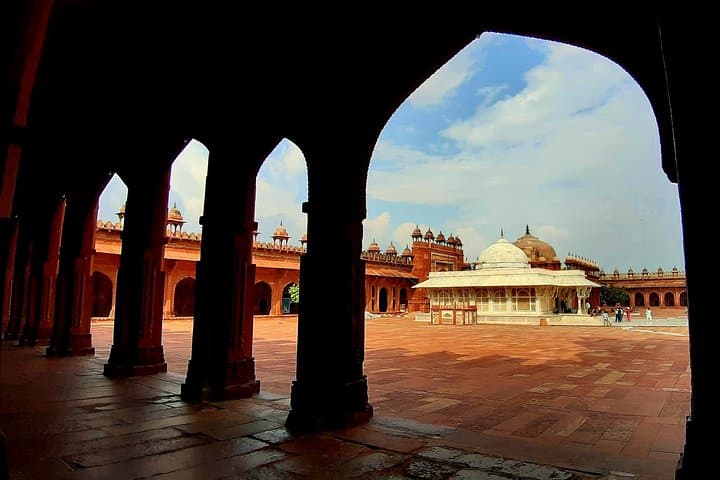
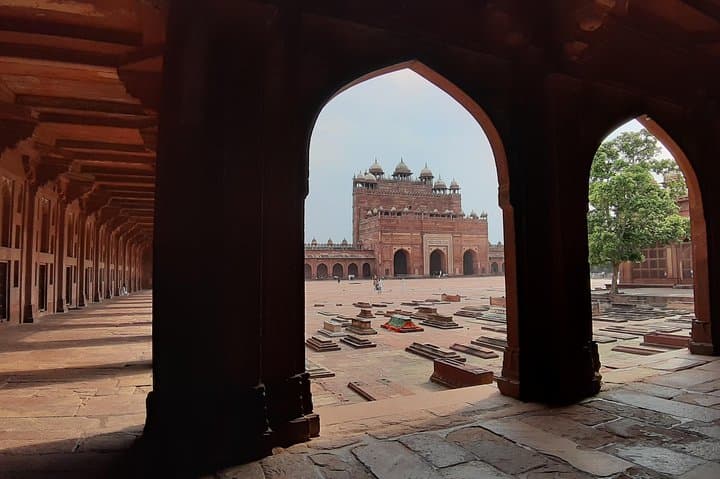
Walk under the Buland Darwaza and the scale of 16th‑century Mughal ambition becomes immediate: an imposing gateway that still asks visitors to pause. The site opens into a sequence of courtyards, halls and a mosque where carved stone screens throw patterned shade across worn steps.
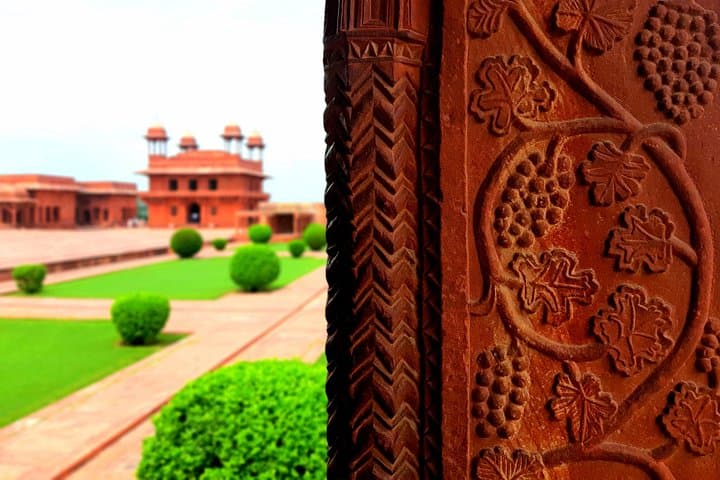
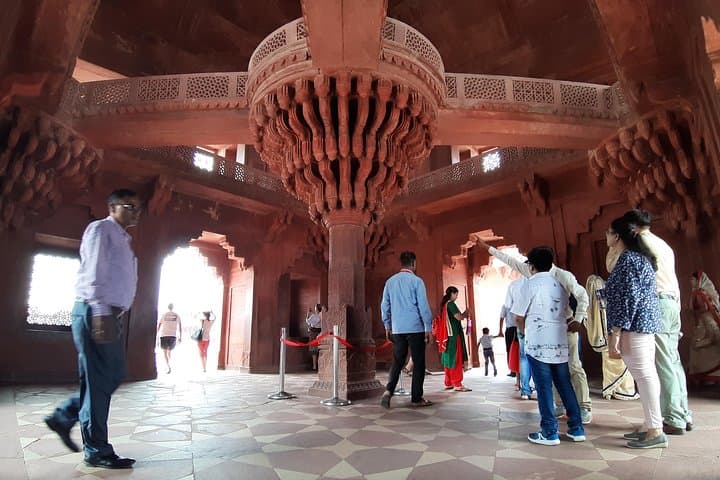
Fatehpur Sikri was built by Emperor Akbar between 1571 and 1585 as a political and spiritual center; its palaces, the Diwan‑i‑Khas and the shrine of Sheikh Salim Chishti reflect Mughal and Persian influences carved in red sandstone. Geologically, the complex uses local quarried stone that absorbs heat by day and cools quickly after sunset, shaping how visitors experience the sun and shadow here.
Local culture remains evident: the shrine draws pilgrims, vendors sell chilled lassi nearby, and peacocks and macaques move through ruined corridors like local residents reclaiming public space.
Practical guidance: expect 6–7 hours round trip from Agra or Delhi when transfers and on‑site time are included. Wear sturdy shoes for uneven stone floors, dress respectfully for mosque areas, and carry sun protection and water — the plain is exposed and hot for much of the year. Guided, private tours generally include entrance fees, lunch and transport; pick a morning slot to avoid the worst heat and to catch the best light for photography. Move deliberately: pathways are finite and conservation rules encourage staying on marked routes. With a compact itinerary and steady pace, Fatehpur Sikri rewards both curiosity and practical planning.
moderate.
6–7 hours.
Moderate fitness — able to walk several kilometers on uneven stone and climb short flights of stairs without difficulty.
Yes — this private, all‑inclusive tour typically covers the Fatehpur Sikri monument entrance fee as part of the package.
Expect about 3–4 hours on site within a 6–7 hour total tour that includes transport and lunch.
Parts of the complex are wheelchair accessible and transportation options can accommodate mobility needs, but some areas include steps and uneven surfaces.
October–March offers cooler temperatures and clearer skies; avoid peak summer months when heat can be intense.
Built by Akbar in the late 16th century as a short‑lived capital and later abandoned, Fatehpur Sikri preserves Mughal court architecture and the revered shrine of Sheikh Salim Chishti.
A UNESCO World Heritage Site, the complex is managed to balance access with preservation; visitors should stick to marked paths, avoid climbing on monuments and minimize single‑use plastics.
Rosa Travel operates guided outdoor trips and adventures with an emphasis on safety, stewardship, and memorable experiences.
Dust kicks up from the road as the car pulls off the highway and the red sandstone walls of Fatehpur Sikri resolve out of the heat haze.
Dust kicks up from the road as the car pulls off the highway and the red sandstone walls of Fatehpur Sikri resolve out of the heat haze.
Walk under the Buland Darwaza and the scale of 16th‑century Mughal ambition becomes immediate: an imposing gateway that still asks visitors to pause. The site opens into a sequence of courtyards, halls and a mosque where carved stone screens throw patterned shade across worn steps.
Fatehpur Sikri was built by Emperor Akbar between 1571 and 1585 as a political and spiritual center; its palaces, the Diwan‑i‑Khas and the shrine of Sheikh Salim Chishti reflect Mughal and Persian influences carved in red sandstone. Geologically, the complex uses local quarried stone that absorbs heat by day and cools quickly after sunset, shaping how visitors experience the sun and shadow here.
Local culture remains evident: the shrine draws pilgrims, vendors sell chilled lassi nearby, and peacocks and macaques move through ruined corridors like local residents reclaiming public space.
Practical guidance: expect 6–7 hours round trip from Agra or Delhi when transfers and on‑site time are included. Wear sturdy shoes for uneven stone floors, dress respectfully for mosque areas, and carry sun protection and water — the plain is exposed and hot for much of the year. Guided, private tours generally include entrance fees, lunch and transport; pick a morning slot to avoid the worst heat and to catch the best light for photography. Move deliberately: pathways are finite and conservation rules encourage staying on marked routes. With a compact itinerary and steady pace, Fatehpur Sikri rewards both curiosity and practical planning.