THE ADVENTURE COLLECTIVE® · Independent discovery and booking for outdoor travel

A private day trip from Luxor that pairs the royal reliefs of Abydos with the Ptolemaic artistry of Dendera. Travel with an Egyptologist to read inscriptions, explore chapels and photograph rarely seen details off the usual tourist loop.
A private day trip from Luxor that pairs the royal reliefs of Abydos with the Ptolemaic artistry of Dendera. Travel with an Egyptologist to read inscriptions, explore chapels and photograph rarely seen details off the usual tourist loop.
The morning air out of Luxor carries dust, diesel and the low chatter of villages as the road unspools northward toward Abydos. By mid-morning the temple walls of Seti I rise from the flat floodplain—a blocky, limestone complex whose carved reliefs pull visitors close enough to read the ancient graffiti of priests and pilgrims.
Verified experiences and guided adventures in the surrounding area.
Operated by Egypt Visits · Luxor, Luxor Governorate
The morning air out of Luxor carries dust, diesel and the low chatter of villages as the road unspools northward toward Abydos. By mid-morning the temple walls of Seti I rise from the flat floodplain—a blocky, limestone complex whose carved reliefs pull visitors close enough to read the ancient graffiti of priests and pilgrims.
Abydos sits on a long-lived sacred axis: a royal necropolis and pilgrimage stop tied to early dynastic kings and later pharaohs who sought continuity with the past. Geologically the route follows the Nile’s alluvial plain; thin soils and exposed limestone bedrock keep sites remarkably preserved but exposed to wind and sun. Dendera arrives later in the day with a different voice: a late Ptolemaic temple to Hathor where painted ceilings, astronomical reliefs and intact column capitals recall a living cult rather than merely a ruined monument.
On this private day trip, an Egyptologist frames stories—royal epithets, the curious reliefs of Seti’s battle titles, and Dendera’s famed zodiac—while you move between open-air courts and shadowed chapels. Expect long, flat walks on compacted dirt, stepped ramps, and many photo stops.
Practical note: start early, bring sun protection and cash for small-site vendors and tips. Pace your visits—temperatures climb sharply by midday—drink water often and wear closed shoes to navigate sand-blown thresholds. The route rewards those who come ready to look closely at inscriptions, to listen for history in the uneven grooves of stone, and to measure time by light on ancient reliefs rather than by a watch.
easy.
10–12 hours.
Suitable for most fitness levels; requires extended standing and walking on uneven ground.
Expect roughly 2–3 hours each way by road depending on traffic and stop length; the full day typically runs 10–12 hours including site time.
This private tour description notes transportation and guide; verify whether national site entrance fees are included when booking.
Yes—paths are relatively flat but there are uneven surfaces and some short steps; the operator lists the trip as physical_easy and provides hotel pickup/drop-off.
Photography is generally permitted at both sites, though flash may be discouraged in painted interiors; follow onsite signage and guide instructions.
Abydos is one of Egypt’s oldest cult centers associated with early dynastic kings and Seti I’s temple; Dendera was an active Ptolemaic and Roman temple complex dedicated to Hathor, retaining well-preserved reliefs and a zodiac scene.
Sites are vulnerable to wind erosion and visitor wear; follow paths, avoid touching reliefs and support guides and local conservation fees when offered.
Egypt Visits operates guided outdoor trips and adventures with an emphasis on safety, stewardship, and memorable experiences.

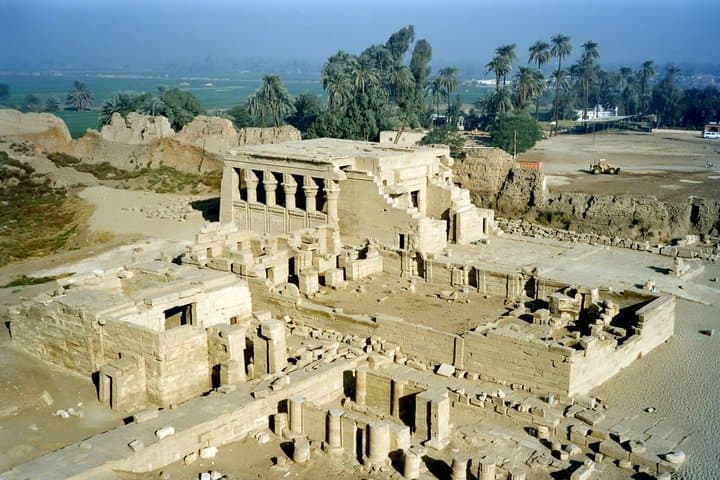
The morning air out of Luxor carries dust, diesel and the low chatter of villages as the road unspools northward toward Abydos. By mid-morning the temple walls of Seti I rise from the flat floodplain—a blocky, limestone complex whose carved reliefs pull visitors close enough to read the ancient graffiti of priests and pilgrims.
The morning air out of Luxor carries dust, diesel and the low chatter of villages as the road unspools northward toward Abydos. By mid-morning the temple walls of Seti I rise from the flat floodplain—a blocky, limestone complex whose carved reliefs pull visitors close enough to read the ancient graffiti of priests and pilgrims.
Abydos sits on a long-lived sacred axis: a royal necropolis and pilgrimage stop tied to early dynastic kings and later pharaohs who sought continuity with the past. Geologically the route follows the Nile’s alluvial plain; thin soils and exposed limestone bedrock keep sites remarkably preserved but exposed to wind and sun. Dendera arrives later in the day with a different voice: a late Ptolemaic temple to Hathor where painted ceilings, astronomical reliefs and intact column capitals recall a living cult rather than merely a ruined monument.
On this private day trip, an Egyptologist frames stories—royal epithets, the curious reliefs of Seti’s battle titles, and Dendera’s famed zodiac—while you move between open-air courts and shadowed chapels. Expect long, flat walks on compacted dirt, stepped ramps, and many photo stops.
Practical note: start early, bring sun protection and cash for small-site vendors and tips. Pace your visits—temperatures climb sharply by midday—drink water often and wear closed shoes to navigate sand-blown thresholds. The route rewards those who come ready to look closely at inscriptions, to listen for history in the uneven grooves of stone, and to measure time by light on ancient reliefs rather than by a watch.