THE ADVENTURE COLLECTIVE® · Independent discovery and booking for outdoor travel

Travel north from Luxor for a day spent among two very different Egyptian temples—Abydos’s intimate, limestone reliefs and Dendara’s Ptolemaic colonnades dedicated to Hathor. Expect a long day, expert interpretation, and close-up encounters with millennia-old art.
Travel north from Luxor for a day spent among two very different Egyptian temples—Abydos’s intimate, limestone reliefs and Dendara’s Ptolemaic colonnades dedicated to Hathor. Expect a long day, expert interpretation, and close-up encounters with millennia-old art.
The van slips away from Luxor at first light, palms and small mud-brick villages sliding past as the Nile’s edge loosens into open desert. By midmorning the road narrows and the landscape takes on the quieter tones of antiquity—flat limestone plains, a horizon punctuated by temple pylons.
Verified experiences and guided adventures in the surrounding area.
Operated by Nice tours · Luxor, Luxor Governorate
The van slips away from Luxor at first light, palms and small mud-brick villages sliding past as the Nile’s edge loosens into open desert. By midmorning the road narrows and the landscape takes on the quieter tones of antiquity—flat limestone plains, a horizon punctuated by temple pylons.
Abydos arrives first: a compact complex of pale limestone carved with deep-set reliefs. Seti I’s temple carries the weight of dynastic memory—intimate processions of kings and the famous royal list etched into stone—while the layered construction gives the site a stepped quality under the sun.
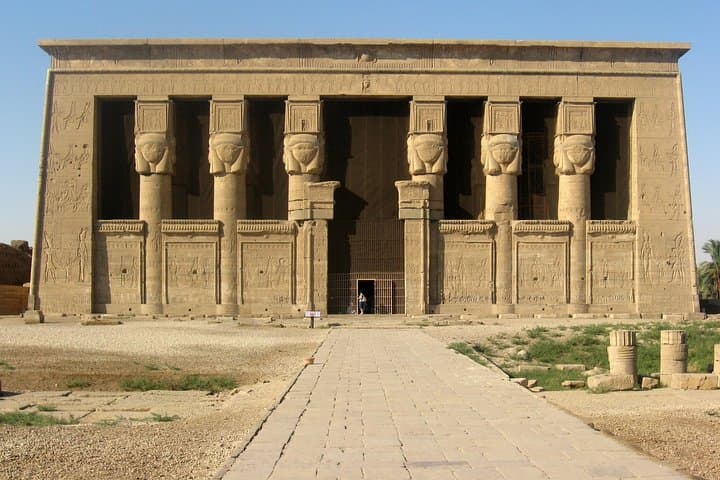
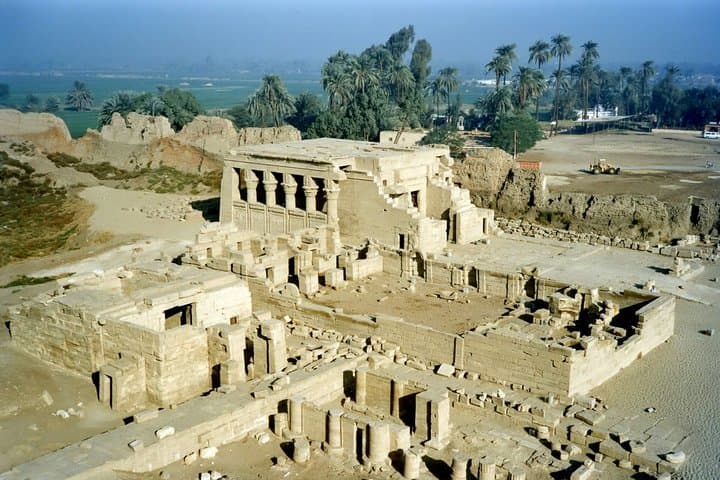
Dendara (Dendara) sits closer to the fertile riverbank and reads differently: later, Ptolemaic stone dressed with Greco-Egyptian motifs and the inviting colonnade of Hathor’s sanctuary. The famed zodiac ceiling and the painted chapel fragments reward slow inspection; look up as often as you look across.
Geology here is straightforward—river-borne silt meets Eocene limestone—yet the cultural layering is complex: Old Kingdom foundations beneath Ptolemaic façades, Roman repairs, and modern conservation work. Local guides trace myths of gods and explain iconography as villagers continue traditional crafts nearby.
Practical notes: expect a long day—early pickup and significant drive time—so bring sun protection, comfortable low-profile walking shoes, and cash for on-site fees or refreshments. Respect restricted areas: do not touch painted reliefs and follow your Egyptologist’s route. Photography is usually allowed; use non-invasive settings and avoid tripods where signs forbid them. With a patient pace this trip delivers concentrated encounters with two very different faces of ancient Egypt.
easy.
10 hours.
Light walking on mostly flat temple grounds with some steps; suitable for most fitness levels
The listing marks admission as not applicable; verify with the operator before booking—many private tours require site entrance fees paid on arrival.
Expect roughly 1–2 hours at Abydos and 1–2 hours at Dendara, with the remainder of the day used for travel and commentary from your Egyptologist.
The tour notes stroller accessibility for small children, but some stone surfaces and steps may require assistance from adults.
Photography is generally allowed at both sites, but follow local signs and guide instructions—avoid flash or tripods where prohibited.
Abydos preserves ritual and king-list reliefs from Seti I and earlier dynasties, while Dendara’s surviving structures date largely to the Ptolemaic period and honor the goddess Hathor.
Both sites face erosion from wind and visitor impact; stay on marked paths, avoid touching reliefs, and support local conservation by following guide directions.
Nice tours operates guided outdoor trips and adventures with an emphasis on safety, stewardship, and memorable experiences.
The van slips away from Luxor at first light, palms and small mud-brick villages sliding past as the Nile’s edge loosens into open desert. By midmorning the road narrows and the landscape takes on the quieter tones of antiquity—flat limestone plains, a horizon punctuated by temple pylons.
The van slips away from Luxor at first light, palms and small mud-brick villages sliding past as the Nile’s edge loosens into open desert. By midmorning the road narrows and the landscape takes on the quieter tones of antiquity—flat limestone plains, a horizon punctuated by temple pylons.
Abydos arrives first: a compact complex of pale limestone carved with deep-set reliefs. Seti I’s temple carries the weight of dynastic memory—intimate processions of kings and the famous royal list etched into stone—while the layered construction gives the site a stepped quality under the sun.
Dendara (Dendara) sits closer to the fertile riverbank and reads differently: later, Ptolemaic stone dressed with Greco-Egyptian motifs and the inviting colonnade of Hathor’s sanctuary. The famed zodiac ceiling and the painted chapel fragments reward slow inspection; look up as often as you look across.
Geology here is straightforward—river-borne silt meets Eocene limestone—yet the cultural layering is complex: Old Kingdom foundations beneath Ptolemaic façades, Roman repairs, and modern conservation work. Local guides trace myths of gods and explain iconography as villagers continue traditional crafts nearby.
Practical notes: expect a long day—early pickup and significant drive time—so bring sun protection, comfortable low-profile walking shoes, and cash for on-site fees or refreshments. Respect restricted areas: do not touch painted reliefs and follow your Egyptologist’s route. Photography is usually allowed; use non-invasive settings and avoid tripods where signs forbid them. With a patient pace this trip delivers concentrated encounters with two very different faces of ancient Egypt.