THE ADVENTURE COLLECTIVE® · Independent discovery and booking for outdoor travel

Spend a day in the UNESCO-listed Český Krumlov with a private guide from Prague. Explore castle courtyards, winding Latrán streets, and riverside cafés with tailored commentary and two hours to explore on your own.
Spend a day in the UNESCO-listed Český Krumlov with a private guide from Prague. Explore castle courtyards, winding Latrán streets, and riverside cafés with tailored commentary and two hours to explore on your own.
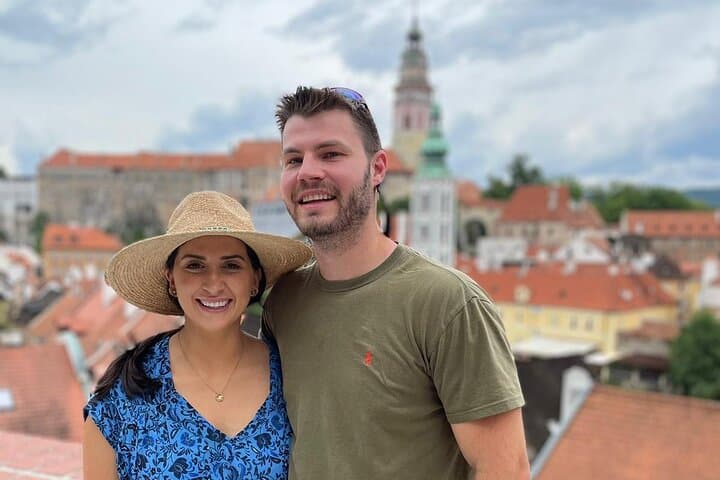
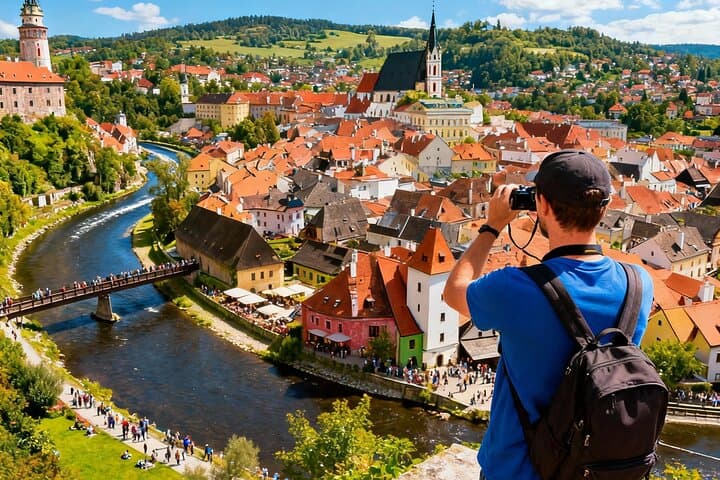
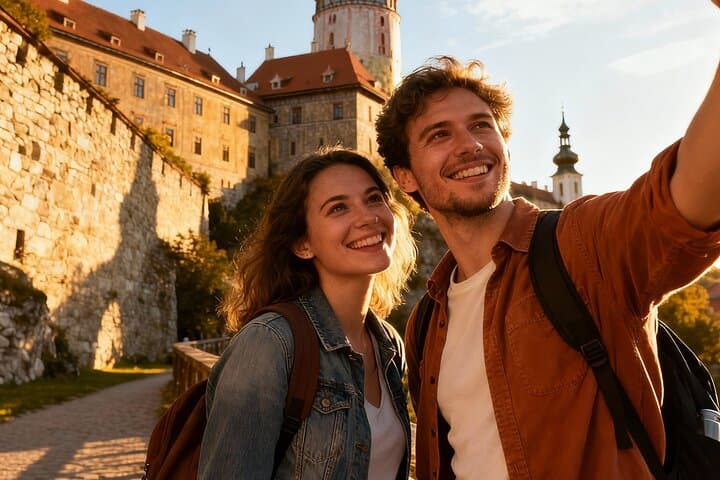
You arrive as the Vltava threads through a bowl of terracotta roofs, the river daring you to follow its slow curves toward the castle. A local guide leads the group off the main square, past baroque façades and cobbled alleys where history sits plain on the stones.
Verified experiences and guided adventures in the surrounding area.
Operated by Michal Pohl · Český Krumlov, South Bohemian Region
You arrive as the Vltava threads through a bowl of terracotta roofs, the river daring you to follow its slow curves toward the castle. A local guide leads the group off the main square, past baroque façades and cobbled alleys where history sits plain on the stones.
Český Krumlov’s core grew around a 13th-century castle complex dominated by Rosenberg and later Eggenberg patrons; its layered architecture—Gothic church spires, Renaissance arcades, Baroque gardens—reflects centuries of shifting power and taste. The castle hill is built on older moldings of Palaeozoic sedimentary rock; the town’s topography and the meandering river shaped both defensive lines and riverside craft traditions. Local culture still mixes artisan workshops, small breweries, and seasonal festivals celebrating music and puppetry.
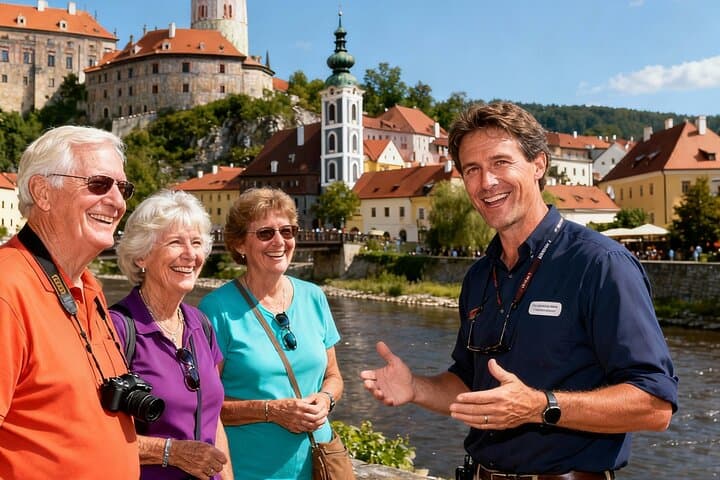
On a private full-day tour from Prague, expect a paced walk through five castle courtyards, a climb to the castle theatre viewpoint, time in the Latrán quarter for craft shops, and two hours of independent exploration for lunch or museum visits. The guide will tailor stops—pointing out the White Lady legend, the castle’s bear moat, and photo vantage points.
Practical notes: wear sturdy shoes for uneven cobbles and stairs, carry water and a light rain layer (weather shifts quickly), and plan for 8–9 hours including transport. Midweek mornings are quieter; summer brings peak visitors. Cash is useful for small cafés and markets. Respect restricted areas in historic buildings and follow your guide’s timing to make the most of a private, flexible day in this UNESCO town.
easy.
8–9 hours.
Suitable for most fitness levels; involves several short climbs and standing during the walking tour.
The full experience including transport typically runs about 8–9 hours (roughly 2.5–3 hours each way by private vehicle, depending on traffic).
This private tour covers guided walking and viewpoints; entrance fees to specific castle interiors or museums are usually not included—confirm with your provider before booking.
Transport options are wheelchair accessible, and much of the guided route is adaptable, but some castle courtyards and viewpoints involve steps—notify the operator of mobility needs ahead of time.
Local currency is the Czech koruna (CZK); many vendors accept cards in town, but small shops may prefer cash. Guides typically speak English; confirm language preference at booking.
The town expanded around a 13th-century castle under Rosenberg rule; its preserved medieval core earned UNESCO status in 1992 for its urban ensemble and architecture.
High visitor numbers can stress narrow streets and fragile interiors—support local businesses, follow marked paths, and avoid touching historic surfaces.
Michal Pohl operates guided outdoor trips and adventures with an emphasis on safety, stewardship, and memorable experiences.
You arrive as the Vltava threads through a bowl of terracotta roofs, the river daring you to follow its slow curves toward the castle. A local guide leads the group off the main square, past baroque façades and cobbled alleys where history sits plain on the stones.
You arrive as the Vltava threads through a bowl of terracotta roofs, the river daring you to follow its slow curves toward the castle. A local guide leads the group off the main square, past baroque façades and cobbled alleys where history sits plain on the stones.
Český Krumlov’s core grew around a 13th-century castle complex dominated by Rosenberg and later Eggenberg patrons; its layered architecture—Gothic church spires, Renaissance arcades, Baroque gardens—reflects centuries of shifting power and taste. The castle hill is built on older moldings of Palaeozoic sedimentary rock; the town’s topography and the meandering river shaped both defensive lines and riverside craft traditions. Local culture still mixes artisan workshops, small breweries, and seasonal festivals celebrating music and puppetry.
On a private full-day tour from Prague, expect a paced walk through five castle courtyards, a climb to the castle theatre viewpoint, time in the Latrán quarter for craft shops, and two hours of independent exploration for lunch or museum visits. The guide will tailor stops—pointing out the White Lady legend, the castle’s bear moat, and photo vantage points.
Practical notes: wear sturdy shoes for uneven cobbles and stairs, carry water and a light rain layer (weather shifts quickly), and plan for 8–9 hours including transport. Midweek mornings are quieter; summer brings peak visitors. Cash is useful for small cafés and markets. Respect restricted areas in historic buildings and follow your guide’s timing to make the most of a private, flexible day in this UNESCO town.