THE ADVENTURE COLLECTIVE® · Independent discovery and booking for outdoor travel

Travel from Siem Reap to Battambang in a private day trip that pairs rural Khmer life with dramatic sites: Bamboo Train sidings, a hillside Angkorian temple, and Phnom Sampov’s famous bat emergence. Expect several short climbs, local markets, and 8–10 hours on the road.
Travel from Siem Reap to Battambang in a private day trip that pairs rural Khmer life with dramatic sites: Bamboo Train sidings, a hillside Angkorian temple, and Phnom Sampov’s famous bat emergence. Expect several short climbs, local markets, and 8–10 hours on the road.
The day begins before sunrise in Siem Reap, as a private vehicle eases onto a road framed by flooded rice fields. By mid-morning the landscape shifts: small villages, weathered colonial facades, and the slow roll of low limestone hills that guard Battambang province.
Verified experiences and guided adventures in the surrounding area.
Operated by Tour Guide-Siem Reap · Battambang, Battambang Province
The day begins before sunrise in Siem Reap, as a private vehicle eases onto a road framed by flooded rice fields. By mid-morning the landscape shifts: small villages, weathered colonial facades, and the slow roll of low limestone hills that guard Battambang province.
Battambang is Cambodia’s agricultural heart, a place shaped by the Mekong’s seasonal rhythms and a colonial era visible in the town’s shuttered villas. Geologically the region is soft sandstone and limestone; caves like Phnom Sampov have hollowed out over millennia to shelter bats and chapels alike. At the hilltop, Banan Temple perches on a stony rise—an Angkorian-era brick complex reached by a steep climb of several hundred steps, offering panoramic views of patchwork rice paddies.
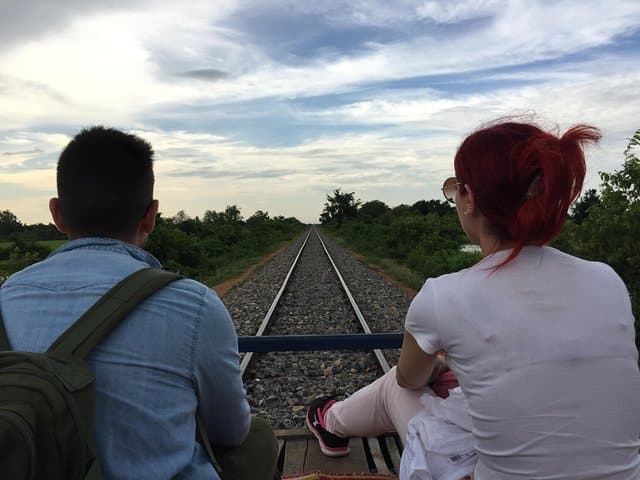
Culturally the area lives between rice harvests and market days: you’ll pass orange groves and simple pagodas where locals pause for alms. The Bamboo Train skitters along narrow rails—a local, improvisational ride that reveals rural logistics and the wry ingenuity of village life.
Practical guidance: expect 8–10 hours including round-trip drive from Siem Reap (roughly 2–3 hours each way). Terrain varies from paved highway to uneven temple steps and village tracks—sturdy shoes and sun protection matter. If you aim for the bat emergence at dusk at Phnom Sampov, plan timing carefully; the colony’s mass exit is weather-dependent and best observed with a local guide who knows the path and respects quiet viewing.
Bring water, small local currency for market stops, and a readiness for short climbs and photo stops—the day balances cultural history, quick hikes, and memorable wildlife moments.
easy.
8–10 hours.
Suitable for travelers with light to moderate fitness; includes short climbs and walking on uneven ground.
Expect roughly 2–3 hours each way by private vehicle depending on traffic and road conditions; the full excursion typically lasts 8–10 hours.
The bat flight is seasonal and weather-dependent; guides can time visits for dusk but sightings are not guaranteed and can vary nightly.
The Bamboo Train runs as a local experience subject to maintenance and local regulations; availability can change, so confirm with your operator before travel.
Short walks and steps are required, so it’s generally family-friendly but not ideal for travelers with serious mobility limitations; infant seats are sometimes available for vehicle travel.
Battambang grew into a regional rice hub under both Khmer and later French colonial influence; its hilltop temples date to the Angkorian era.
Phnom Sampov’s bat colony is sensitive to disturbance—visitors should keep noise low and follow guide directions; support local guides and respect temple donation practices to benefit community conservation.
Tour Guide-Siem Reap operates guided outdoor trips and adventures with an emphasis on safety, stewardship, and memorable experiences.


The day begins before sunrise in Siem Reap, as a private vehicle eases onto a road framed by flooded rice fields. By mid-morning the landscape shifts: small villages, weathered colonial facades, and the slow roll of low limestone hills that guard Battambang province.
The day begins before sunrise in Siem Reap, as a private vehicle eases onto a road framed by flooded rice fields. By mid-morning the landscape shifts: small villages, weathered colonial facades, and the slow roll of low limestone hills that guard Battambang province.
Battambang is Cambodia’s agricultural heart, a place shaped by the Mekong’s seasonal rhythms and a colonial era visible in the town’s shuttered villas. Geologically the region is soft sandstone and limestone; caves like Phnom Sampov have hollowed out over millennia to shelter bats and chapels alike. At the hilltop, Banan Temple perches on a stony rise—an Angkorian-era brick complex reached by a steep climb of several hundred steps, offering panoramic views of patchwork rice paddies.
Culturally the area lives between rice harvests and market days: you’ll pass orange groves and simple pagodas where locals pause for alms. The Bamboo Train skitters along narrow rails—a local, improvisational ride that reveals rural logistics and the wry ingenuity of village life.
Practical guidance: expect 8–10 hours including round-trip drive from Siem Reap (roughly 2–3 hours each way). Terrain varies from paved highway to uneven temple steps and village tracks—sturdy shoes and sun protection matter. If you aim for the bat emergence at dusk at Phnom Sampov, plan timing carefully; the colony’s mass exit is weather-dependent and best observed with a local guide who knows the path and respects quiet viewing.
Bring water, small local currency for market stops, and a readiness for short climbs and photo stops—the day balances cultural history, quick hikes, and memorable wildlife moments.