THE ADVENTURE COLLECTIVE® · Independent discovery and booking for outdoor travel

Spend a private day from Siem Reap visiting the pink sandstone carvings of Banteay Srei, the early capital ruins of the Rolous Group, and the stilted village of Kompong Phluk on Tonle Sap. This 5–8 hour tour mixes temple archaeology with a seasonal boat experience on Cambodia’s great lake.
Spend a private day from Siem Reap visiting the pink sandstone carvings of Banteay Srei, the early capital ruins of the Rolous Group, and the stilted village of Kompong Phluk on Tonle Sap. This 5–8 hour tour mixes temple archaeology with a seasonal boat experience on Cambodia’s great lake.
Morning light spills across cracked pink sandstone as you step into Banteay Srei, the small 10th‑century shrine whose intricate bas‑reliefs seem carved by a craftsman with a storyteller’s touch. It’s a compact site—delicate friezes and floral carvings that stand apart from Angkor’s larger monuments.
Verified experiences and guided adventures in the surrounding area.
Operated by Tour Guide-Siem Reap · Siem Reap, Siem Reap Province
Morning light spills across cracked pink sandstone as you step into Banteay Srei, the small 10th‑century shrine whose intricate bas‑reliefs seem carved by a craftsman with a storyteller’s touch. It’s a compact site—delicate friezes and floral carvings that stand apart from Angkor’s larger monuments.
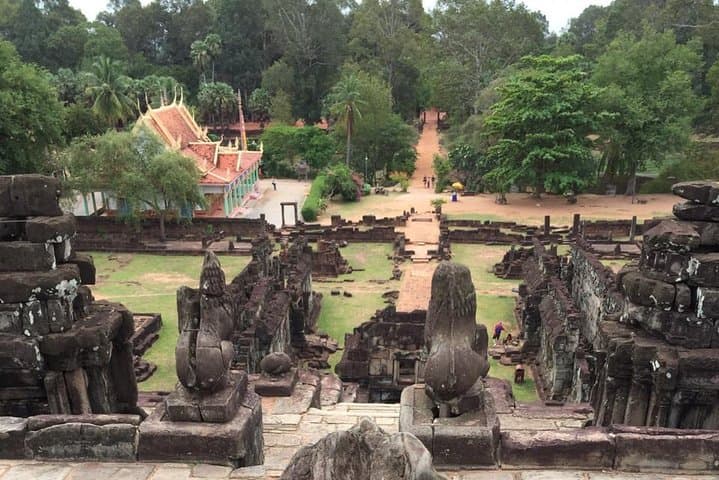
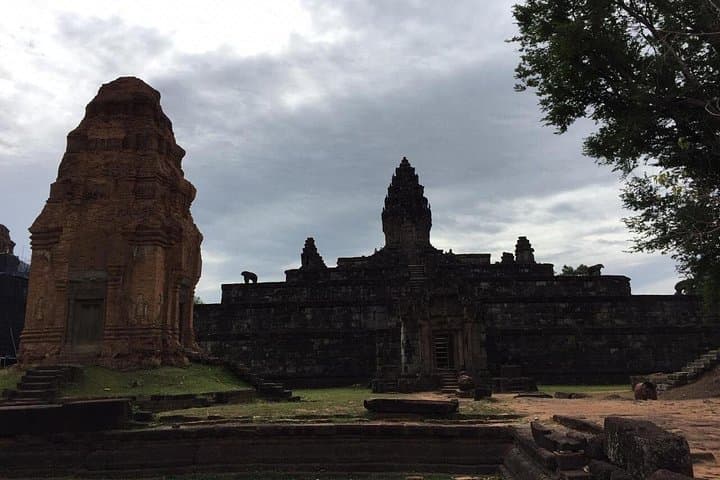
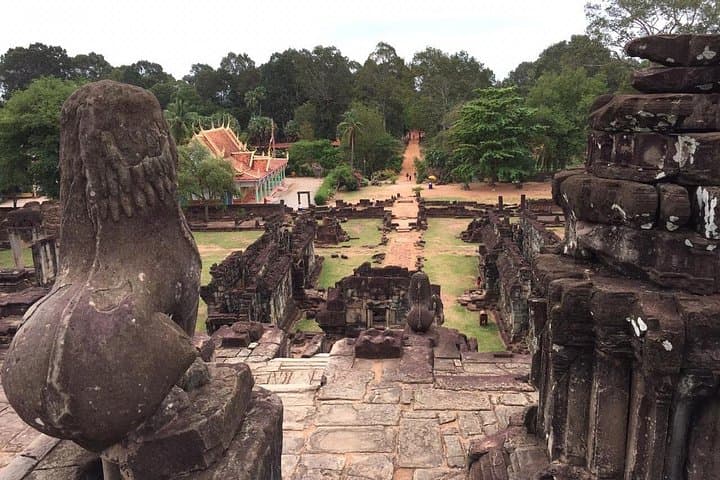
From there the road bends toward the Rolous Group, the early Angkorian capital where pyramidal Bakong, Preah Ko and Lolei mark the dawn of Khmer statecraft. Stones here are thicker, forms more monumental; the earth remembers an early city ringed by moats still holding water.
By afternoon the trip shifts to water: Kompong Phluk, a stilt village on Tonle Sap where houses rise like wooden lungs with the lake. During the wet season the floodplain swallows roads and the Flooded Forest opens by boat—mangrove trunks daring you to glide past and watch the local rhythms of fishing and rice storage adapt to the lake’s pulse.
History here is visible in architecture and everyday life: Hindu foundations layered beneath Buddhist restorations, 9th–10th century stones repurposed for modern homes, and communities shaped by the annual swell of Tonle Sap.
Practical notes: plan for a 5–8 hour private day tour from Siem Reap, bring sun protection and insect repellent, and wear clothing that covers shoulders and knees for temple visits. If you go during the wet season (May–Oct) expect higher water levels and boat access to the flooded forest; in the dry season the village is more exposed and walkable. A local guide handles passes and logistics—use them to move efficiently between sites and to read the layered history beneath the stone.
easy.
5–8 hours.
Light activity—short walks on uneven ground and boarding a small boat; suitable for most fitness levels.
Yes—Banteay Srei and many Angkor sites require an Angkor Archaeological Park pass; guides or tour operators typically arrange purchase on your behalf if it’s not already included.
No—the Flooded Forest is dependent on water levels: best experienced in the wet season (May–Oct) when boat channels run through the trees; in the dry season boats may be limited and more walking is required.
The tour is family‑friendly and marked as wheelchair accessible for some transfer portions, but expect uneven terrain at temples and stilted walkways—check with the operator about specific mobility needs and vehicle arrangements.
Modest clothing covering shoulders and knees is required at sacred sites; lightweight fabrics are recommended for heat, and non‑slip footwear helps on stone steps and wet docks.
Banteay Srei dates to the late 10th century and is notable for its pink sandstone carvings; the Rolous Group preserves earlier 9th‑century Angkorian architecture when the Khmer capital first centralized.
Tonle Sap is an ecological hotspot whose seasonal inundation supports fisheries and rice production—visitors should avoid single‑use plastics and follow local guidance to minimize disturbance to wildlife and village life.
Tour Guide-Siem Reap operates guided outdoor trips and adventures with an emphasis on safety, stewardship, and memorable experiences.
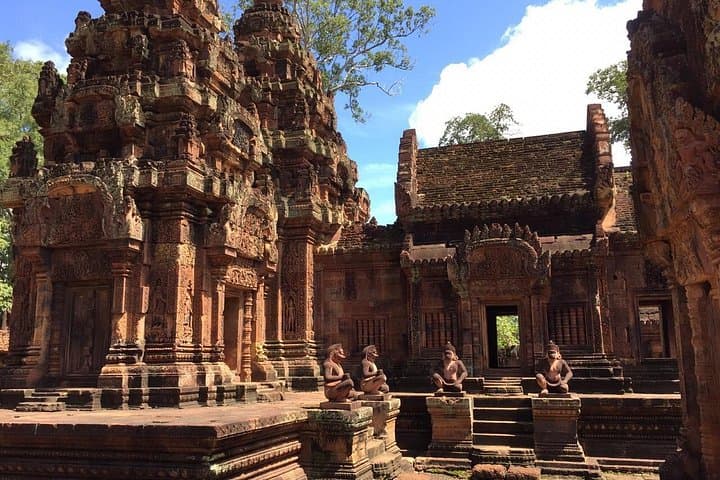
Morning light spills across cracked pink sandstone as you step into Banteay Srei, the small 10th‑century shrine whose intricate bas‑reliefs seem carved by a craftsman with a storyteller’s touch. It’s a compact site—delicate friezes and floral carvings that stand apart from Angkor’s larger monuments.
Morning light spills across cracked pink sandstone as you step into Banteay Srei, the small 10th‑century shrine whose intricate bas‑reliefs seem carved by a craftsman with a storyteller’s touch. It’s a compact site—delicate friezes and floral carvings that stand apart from Angkor’s larger monuments.
From there the road bends toward the Rolous Group, the early Angkorian capital where pyramidal Bakong, Preah Ko and Lolei mark the dawn of Khmer statecraft. Stones here are thicker, forms more monumental; the earth remembers an early city ringed by moats still holding water.
By afternoon the trip shifts to water: Kompong Phluk, a stilt village on Tonle Sap where houses rise like wooden lungs with the lake. During the wet season the floodplain swallows roads and the Flooded Forest opens by boat—mangrove trunks daring you to glide past and watch the local rhythms of fishing and rice storage adapt to the lake’s pulse.
History here is visible in architecture and everyday life: Hindu foundations layered beneath Buddhist restorations, 9th–10th century stones repurposed for modern homes, and communities shaped by the annual swell of Tonle Sap.
Practical notes: plan for a 5–8 hour private day tour from Siem Reap, bring sun protection and insect repellent, and wear clothing that covers shoulders and knees for temple visits. If you go during the wet season (May–Oct) expect higher water levels and boat access to the flooded forest; in the dry season the village is more exposed and walkable. A local guide handles passes and logistics—use them to move efficiently between sites and to read the layered history beneath the stone.