THE ADVENTURE COLLECTIVE® · Independent discovery and booking for outdoor travel

Make an early start from New Delhi for a focused day exploring two UNESCO World Heritage sites: the Taj Mahal and Agra Fort. This private tour pairs an expert guide with air-conditioned transfers to compress centuries of Mughal history into a single, accessible day trip.
Make an early start from New Delhi for a focused day exploring two UNESCO World Heritage sites: the Taj Mahal and Agra Fort. This private tour pairs an expert guide with air-conditioned transfers to compress centuries of Mughal history into a single, accessible day trip.
You step into pale morning light as the air-conditioned car hums toward the Yamuna; fields thin into the sudden white sweep of marble that draws the eye and slows the breath. The Taj Mahal rises like a crafted horizon, its surfaces catching the sun and the detail pulling you closer. By mid-morning you move from the mausoleum's measured symmetry to the red sandstone ramparts of Agra Fort, where rooms and courtyards reveal Mughal politics written in stone.
Verified experiences and guided adventures in the surrounding area.
Operated by Deejohn Holidays India Tours · Agra, Uttar Pradesh
You step into pale morning light as the air-conditioned car hums toward the Yamuna; fields thin into the sudden white sweep of marble that draws the eye and slows the breath. The Taj Mahal rises like a crafted horizon, its surfaces catching the sun and the detail pulling you closer. By mid-morning you move from the mausoleum's measured symmetry to the red sandstone ramparts of Agra Fort, where rooms and courtyards reveal Mughal politics written in stone.
Built during the 16th and 17th centuries, these sites trace Mughal ambitions, Persian design, and local artisan traditions—Taj's pietra dura inlay evolved from earlier tombs such as Itmad-ud-Daulah, the so-called Baby Taj across the river. Geologically, the region sits on alluvial plains fed by the Yamuna; low relief makes the monuments dominant features on the landscape. Culturally, Agra has been a crossroads for craftspeople—stone workers, inlayers, and weavers—whose techniques survive in markets around the fort.
Practically, this private day trip starts early from Delhi with an approximate 3.5–4 hour drive each way depending on traffic. Expect 14–15 hours overall including guide-led visits, a restaurant lunch, and monument fees if included. Wear comfortable shoes for walking on uneven marble and sandstone, carry sun protection and water, and budget time for security lines; some interiors require shoes removed or a shoe-cover. Photography is allowed at the Taj but check restricted zones, and be mindful of modest dress in religiously significant areas. With a private guide and pickup from Delhi, this itinerary compresses the region's layered history into a single, carefully paced day.
easy.
14–15 hours.
Suitable for most fitness levels; requires standing and walking up to a few kilometers on flat and stepped surfaces.
Expect roughly 3.5–4 hours each way by car depending on traffic and the chosen route.
This tour lists monument fees as included if that booking option is selected—confirm at checkout or with your operator.
The itinerary is physically easy, but it involves long vehicle time and some walking; check health advisories for travelers with cardiac or mobility issues.
Photography is generally permitted in many outdoor areas; interior and specific zones may have restrictions—follow the guide's instructions.
Agra served as a Mughal capital and an artistic hub in the 16th–17th centuries; the Taj was completed in 1653 as a funerary monument by Shah Jahan.
Conservation efforts target air pollution and stone erosion affecting marble surfaces; visitors are urged to avoid littering and comply with site rules to limit wear.
Deejohn Holidays India Tours operates guided outdoor trips and adventures with an emphasis on safety, stewardship, and memorable experiences.
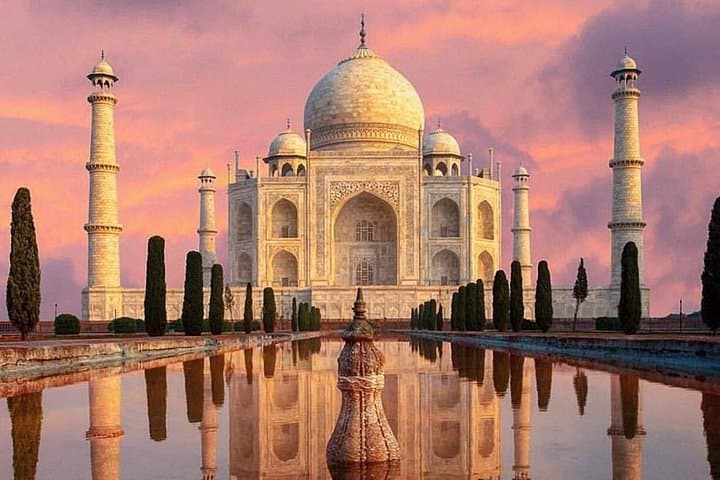
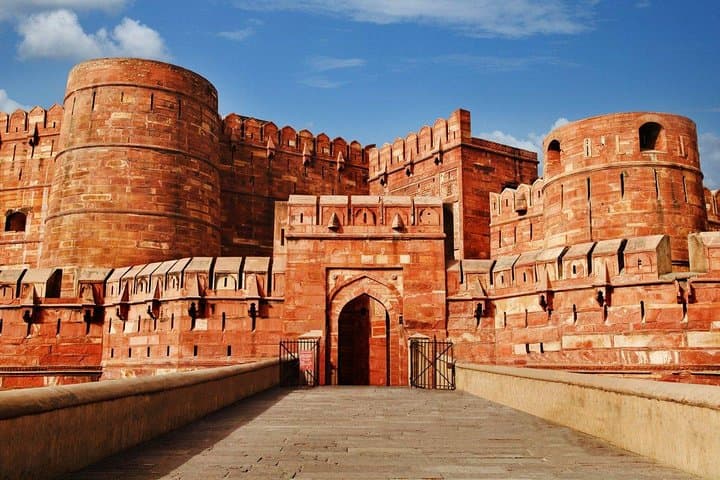
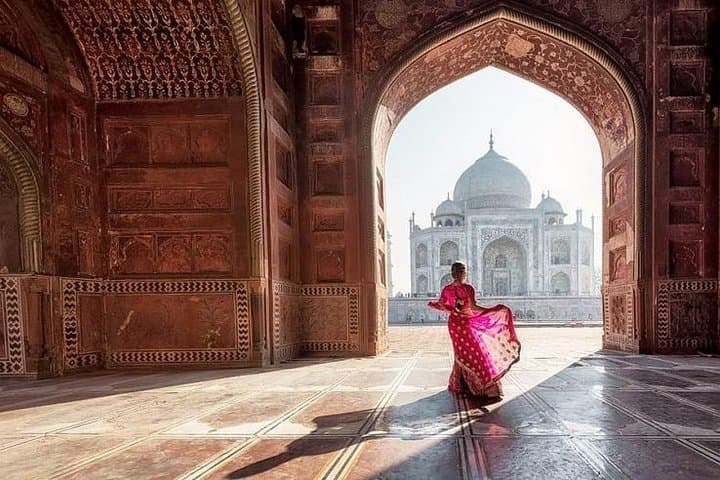
You step into pale morning light as the air-conditioned car hums toward the Yamuna; fields thin into the sudden white sweep of marble that draws the eye and slows the breath. The Taj Mahal rises like a crafted horizon, its surfaces catching the sun and the detail pulling you closer. By mid-morning you move from the mausoleum's measured symmetry to the red sandstone ramparts of Agra Fort, where rooms and courtyards reveal Mughal politics written in stone.
You step into pale morning light as the air-conditioned car hums toward the Yamuna; fields thin into the sudden white sweep of marble that draws the eye and slows the breath. The Taj Mahal rises like a crafted horizon, its surfaces catching the sun and the detail pulling you closer. By mid-morning you move from the mausoleum's measured symmetry to the red sandstone ramparts of Agra Fort, where rooms and courtyards reveal Mughal politics written in stone.
Built during the 16th and 17th centuries, these sites trace Mughal ambitions, Persian design, and local artisan traditions—Taj's pietra dura inlay evolved from earlier tombs such as Itmad-ud-Daulah, the so-called Baby Taj across the river. Geologically, the region sits on alluvial plains fed by the Yamuna; low relief makes the monuments dominant features on the landscape. Culturally, Agra has been a crossroads for craftspeople—stone workers, inlayers, and weavers—whose techniques survive in markets around the fort.
Practically, this private day trip starts early from Delhi with an approximate 3.5–4 hour drive each way depending on traffic. Expect 14–15 hours overall including guide-led visits, a restaurant lunch, and monument fees if included. Wear comfortable shoes for walking on uneven marble and sandstone, carry sun protection and water, and budget time for security lines; some interiors require shoes removed or a shoe-cover. Photography is allowed at the Taj but check restricted zones, and be mindful of modest dress in religiously significant areas. With a private guide and pickup from Delhi, this itinerary compresses the region's layered history into a single, carefully paced day.