THE ADVENTURE COLLECTIVE® · Independent discovery and booking for outdoor travel

Make the long southbound road from Aswan count: a private car day trip to Abu Simbel delivers close-up access to Ramesses II’s temples, transported from ruin to safety during the 1960s Nile resettlement. Read on for what to expect, timing, and essential tips.
Make the long southbound road from Aswan count: a private car day trip to Abu Simbel delivers close-up access to Ramesses II’s temples, transported from ruin to safety during the 1960s Nile resettlement. Read on for what to expect, timing, and essential tips.
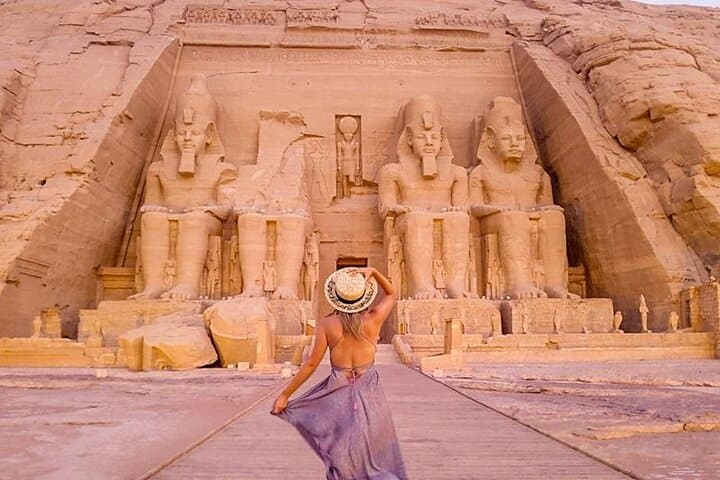
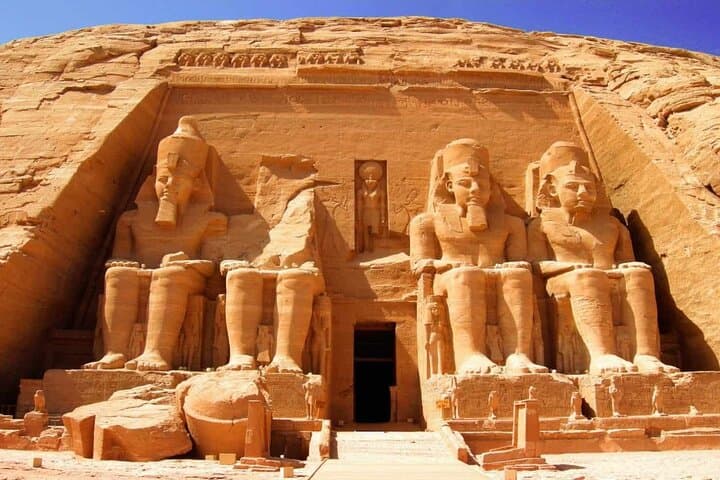
Sunlight slices across the arid plain as the road south unspools toward the silhouette of colossal seated figures — Abu Simbel announces itself long before the first carvings are visible. The drive from Aswan is steady, the landscape shifting from Nile palms to the ochre, stony sweep of the Nubian desert, and arriving feels like stepping into a chapter of pharaonic ambition made solid.
Verified experiences and guided adventures in the surrounding area.
Operated by Travelino Egypt · Abu Simbel, Aswan Governorate
Sunlight slices across the arid plain as the road south unspools toward the silhouette of colossal seated figures — Abu Simbel announces itself long before the first carvings are visible. The drive from Aswan is steady, the landscape shifting from Nile palms to the ochre, stony sweep of the Nubian desert, and arriving feels like stepping into a chapter of pharaonic ambition made solid.
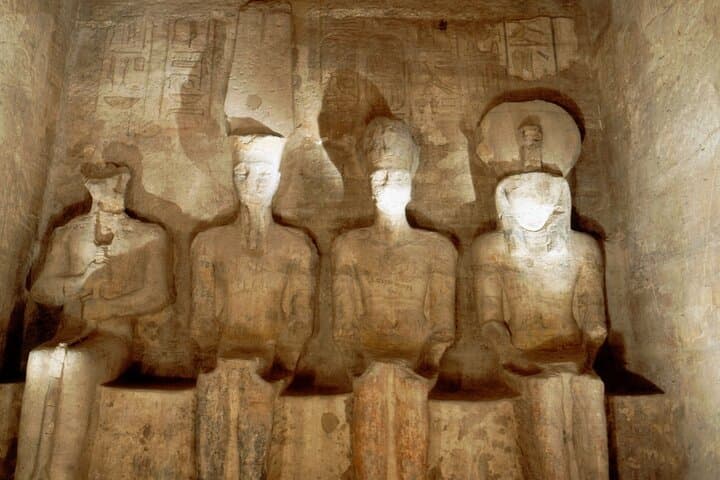
Carved during the reign of Ramesses II in the 13th century BCE, the two temples at Abu Simbel — the great temple to Ramesses and the smaller temple to Nefertari — were moved stone-by-stone in the 1960s to avoid submersion by Lake Nasser, a modern engineering rescue recognized by UNESCO. Geologically, the site sits on sedimentary rock above the lake; culturally, it marks Egypt’s long reach into Nubia and the visual power of royal propaganda.
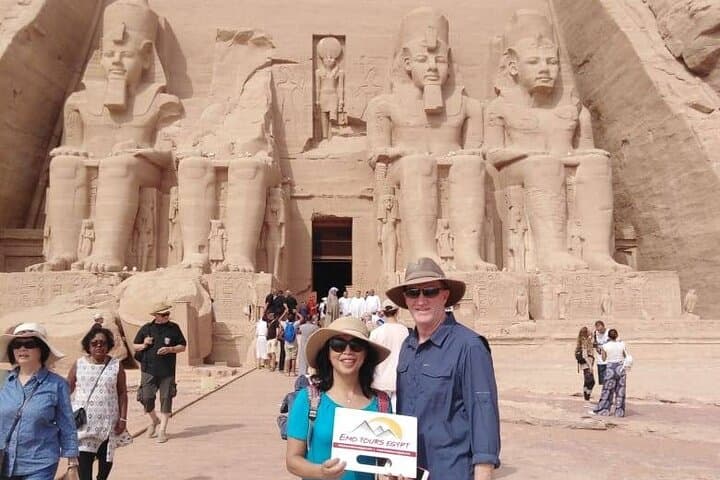
A private car tour compresses centuries into a single, manageable day: hotel pickup in Aswan, roughly a 3–4 hour drive each way, guided exploration, and time for photos and reflection. Expect short, paved walks across flat, exposed terrain; limited shade and intense sun during mid-day.
Practicalities matter: carry your passport and entrance fee in cash, wear sun protection and sturdy shoes, and schedule the trip early or late in the day to avoid peak heat. Respect signage and barriers — the stones have already been moved once; don’t risk damaging them again. With a clear plan and modest fitness, this private transfer turns a long route into a focused, unforgettable encounter with ancient Egypt.
easy.
9 hours.
Minimal fitness required — mainly extended sitting and short, flat walks at the site
Expect about 3 to 4 hours each way by private car depending on road conditions and stops, making this a full-day excursion.
Entrance fees may be included depending on the tour option; confirm with the operator and bring cash if they are not included.
There are paved areas and short walks, but the site has uneven surfaces and limited shade; contact the operator for specific accessibility arrangements.
Early morning or late afternoon visits avoid the strongest heat and provide softer light for photography.
The twin temples were carved under Ramesses II (c. 13th century BCE) and scientifically relocated in the 1960s to save them from the rising waters of Lake Nasser caused by the Aswan High Dam.
The relocation was a major conservation effort; current concerns focus on visitor impact and preserving fragile reliefs—stay on marked paths and avoid touching carvings.
Travelino Egypt operates guided outdoor trips and adventures with an emphasis on safety, stewardship, and memorable experiences.
Sunlight slices across the arid plain as the road south unspools toward the silhouette of colossal seated figures — Abu Simbel announces itself long before the first carvings are visible. The drive from Aswan is steady, the landscape shifting from Nile palms to the ochre, stony sweep of the Nubian desert, and arriving feels like stepping into a chapter of pharaonic ambition made solid.
Sunlight slices across the arid plain as the road south unspools toward the silhouette of colossal seated figures — Abu Simbel announces itself long before the first carvings are visible. The drive from Aswan is steady, the landscape shifting from Nile palms to the ochre, stony sweep of the Nubian desert, and arriving feels like stepping into a chapter of pharaonic ambition made solid.
Carved during the reign of Ramesses II in the 13th century BCE, the two temples at Abu Simbel — the great temple to Ramesses and the smaller temple to Nefertari — were moved stone-by-stone in the 1960s to avoid submersion by Lake Nasser, a modern engineering rescue recognized by UNESCO. Geologically, the site sits on sedimentary rock above the lake; culturally, it marks Egypt’s long reach into Nubia and the visual power of royal propaganda.
A private car tour compresses centuries into a single, manageable day: hotel pickup in Aswan, roughly a 3–4 hour drive each way, guided exploration, and time for photos and reflection. Expect short, paved walks across flat, exposed terrain; limited shade and intense sun during mid-day.
Practicalities matter: carry your passport and entrance fee in cash, wear sun protection and sturdy shoes, and schedule the trip early or late in the day to avoid peak heat. Respect signage and barriers — the stones have already been moved once; don’t risk damaging them again. With a clear plan and modest fitness, this private transfer turns a long route into a focused, unforgettable encounter with ancient Egypt.