THE ADVENTURE COLLECTIVE® · Independent discovery and booking for outdoor travel

Leave Marrakech for a full-day circuit through the Atlas Mountains, Agafay Desert and Berber villages. Expect short guided hikes, a camel ride, a home-cooked lunch with a Berber family, and wide, photo-ready landscapes.
Leave Marrakech for a full-day circuit through the Atlas Mountains, Agafay Desert and Berber villages. Expect short guided hikes, a camel ride, a home-cooked lunch with a Berber family, and wide, photo-ready landscapes.
You step out of Marrakech's afternoon heat into a car that hums toward the High Atlas; the city shrinks behind ochre walls and the road opens into stony plains and terraced slopes.
Verified experiences and guided adventures in the surrounding area.
Operated by Trips From Marrakech · Marrakech, Marrakech-Safi
You step out of Marrakech's afternoon heat into a car that hums toward the High Atlas; the city shrinks behind ochre walls and the road opens into stony plains and terraced slopes.
The route threads through the Kik Plateau and down into valleys where river gullies cut white lines through red earth. Geologically, the High Atlas is young and uplifted — jagged ridgelines of limestone and schist push into sky, feeding the small streams that carve the valleys you'll walk.
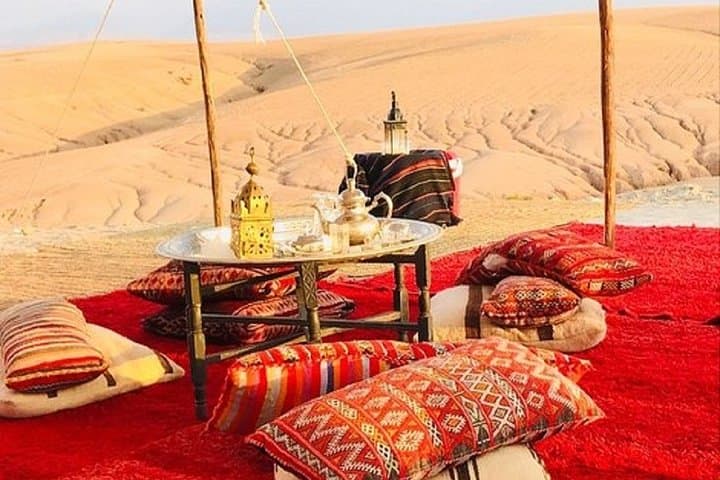
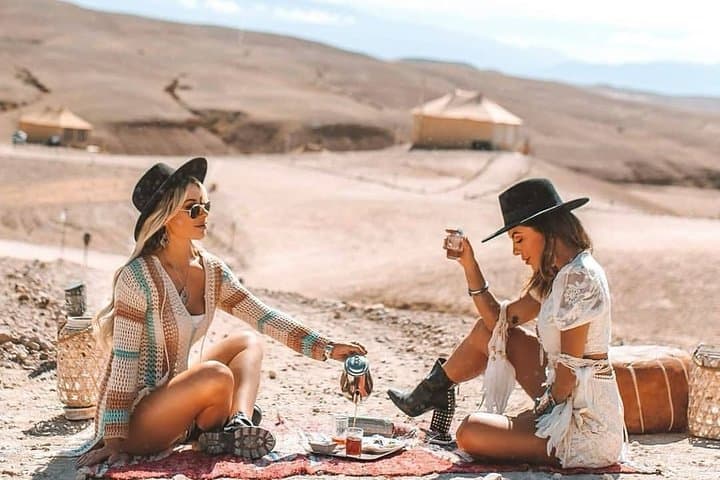
Local culture centers on Amazigh (Berber) life: mud-brick villages, terraced fields, and communal tea rituals. In villages such as Tinirt and Imlil, families still cook tajine over wood fires and invite visitors for straightforward home-cooked lunch and conversation.
The day mixes short guided hikes to waterfall areas, a 30-minute camel ride on the Kik/Agafay fringes, and village visits — a compact cross-section of mountain and desert landscapes in one day.
Practical guidance: start early, bring layered clothing for cool mountain mornings and warm lowlands, and carry 1–2 liters of water. Trails are unpaved and can be rocky or slick after rain; good walking shoes and trekking poles help. Your guide handles local logistics, but tipping, respectful dress in villages, and carrying small change for tea or market purchases are expected.
Timing your visit for spring or fall gives milder temperatures and greener valleys; summer brings heat on the plains, and winter can be snowy at higher elevations, so plan accordingly.
moderate.
6–7 hours.
Suitable for travelers with light to moderate fitness; consists of short hikes, walking on uneven ground, and a brief camel ride.
No technical experience is required; hikes are guided, relatively short, and suitable for most fitness levels, though trails can be uneven.
Yes — a traditional lunch with a Berber family is included, typically soup, salad, tajine, couscous and fruit.
Guides typically speak Arabic, Amazigh, and English; French is also commonly spoken in the region.
Camel rides on this tour are short (about 30 minutes) and designed as a relaxed experience on flat terrain, not a long caravan crossing.
The High Atlas has been inhabited by Amazigh communities for millennia; many villages preserve traditional agricultural techniques and oral histories.
Water is scarce; stick to marked paths, avoid single-use plastics when possible, and support local families by buying food or handicrafts directly.
Trips From Marrakech operates guided outdoor trips and adventures with an emphasis on safety, stewardship, and memorable experiences.


You step out of Marrakech's afternoon heat into a car that hums toward the High Atlas; the city shrinks behind ochre walls and the road opens into stony plains and terraced slopes.
You step out of Marrakech's afternoon heat into a car that hums toward the High Atlas; the city shrinks behind ochre walls and the road opens into stony plains and terraced slopes.
The route threads through the Kik Plateau and down into valleys where river gullies cut white lines through red earth. Geologically, the High Atlas is young and uplifted — jagged ridgelines of limestone and schist push into sky, feeding the small streams that carve the valleys you'll walk.
Local culture centers on Amazigh (Berber) life: mud-brick villages, terraced fields, and communal tea rituals. In villages such as Tinirt and Imlil, families still cook tajine over wood fires and invite visitors for straightforward home-cooked lunch and conversation.
The day mixes short guided hikes to waterfall areas, a 30-minute camel ride on the Kik/Agafay fringes, and village visits — a compact cross-section of mountain and desert landscapes in one day.
Practical guidance: start early, bring layered clothing for cool mountain mornings and warm lowlands, and carry 1–2 liters of water. Trails are unpaved and can be rocky or slick after rain; good walking shoes and trekking poles help. Your guide handles local logistics, but tipping, respectful dress in villages, and carrying small change for tea or market purchases are expected.
Timing your visit for spring or fall gives milder temperatures and greener valleys; summer brings heat on the plains, and winter can be snowy at higher elevations, so plan accordingly.