THE ADVENTURE COLLECTIVE® · Independent discovery and booking for outdoor travel

Escape Tokyo for a private day trip to Hitachi Seaside Park and walk over rolling hills of nemophila in spring or ruby kochia in autumn. This car tour gives you flexibility to catch peak blooms, ocean views, and accessible walking routes.
Escape Tokyo for a private day trip to Hitachi Seaside Park and walk over rolling hills of nemophila in spring or ruby kochia in autumn. This car tour gives you flexibility to catch peak blooms, ocean views, and accessible walking routes.
You step out of a private car and the ocean breeze meets a hillside painted blue — millions of baby blue nemophila rippling across Miharashi Hill, a color so uniform it reads like a living fabric against the Pacific.
Verified experiences and guided adventures in the surrounding area.
Operated by MY Travel Consulting · Hitachinaka, Ibaraki
You step out of a private car and the ocean breeze meets a hillside painted blue — millions of baby blue nemophila rippling across Miharashi Hill, a color so uniform it reads like a living fabric against the Pacific.
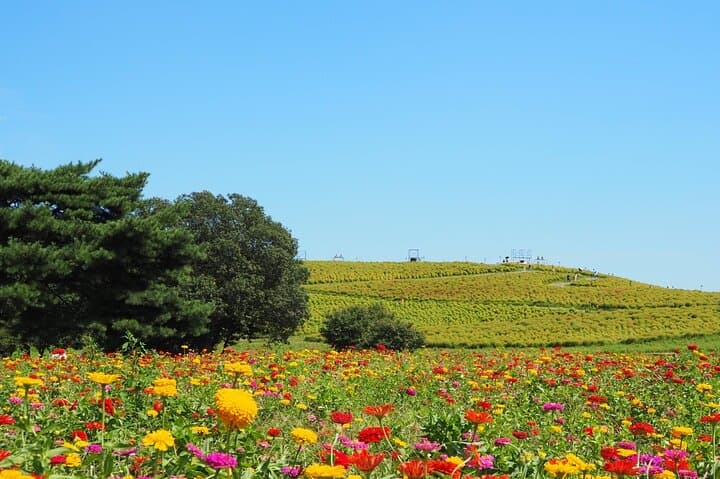
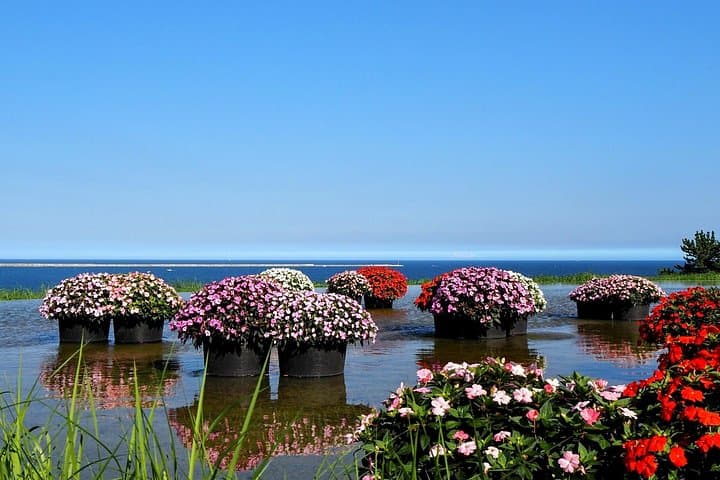
Hitachi Seaside Park on Ibaraki’s coast is built around seasonal displays: spring’s nemophila, autumn’s fiery kochia, and a steady rotation of tulips, roses and cosmos the rest of the year. The park opened in the late 20th century as a regional green space and now occupies reclaimed coastal terrain that drops gently toward the sea; rolling lawns and paved paths make it accessible while low dunes and wind-shaped grasses hint at the site’s maritime geology.
Local culture leans toward festival-style flower viewing—arrive when blooms peak and you’ll find families, photographers and cyclists moving at a polite, observant pace. Coffee kiosks and viewing platforms cater to quick rests; picnic lawns invite longer pauses.
Practical guide: the private car option turns a 2–3 hour rail trip into a flexible 8-hour outing—use it to arrive at sunrise for soft light and avoid midday crowds. Expect paved and compacted gravel trails with short, scenic climbs (Miharashi Hill is modest but repeated walking adds up). Wear comfortable shoes, layer against coastal wind, carry water and sunscreen, and reserve enough time for photography and a relaxed lunch. If you visit in April or October, book early: bloom windows are short and popular. Stay on paths to protect fragile plantings and follow posted rules—this is an experience of paced viewing rather than rugged hiking.
moderate.
6–8 hours.
Suitable for people who can walk several kilometers over gentle hills and stand for photography; moderate stamina recommended for a full-day visit.
By private car it typically takes 1.5–2.5 hours depending on traffic; the tour is planned as a full day to allow leisurely time in the park.
Nemophila (baby blue eyes) peak mid-April to early May; kochia usually peak late September to October—dates vary with weather, so check yearly bloom forecasts.
Many main paths and viewing areas are paved and stroller-friendly; some slopes and perimeter trails are steeper—accessibility varies by section.
Yes—there are cafés, seasonal food stalls, picnic lawns and public restrooms near major parking and visitor areas.
Opened as a regional recreational park in the late 20th century, Hitachi Seaside Park was developed to transform coastal land into managed gardens and public greenspace emphasizing seasonal blooms.
The park manages plantings and visitor flow to protect fragile displays—stick to marked paths, avoid picking flowers, and carry out litter to minimize impact.
MY Travel Consulting operates guided outdoor trips and adventures with an emphasis on safety, stewardship, and memorable experiences.
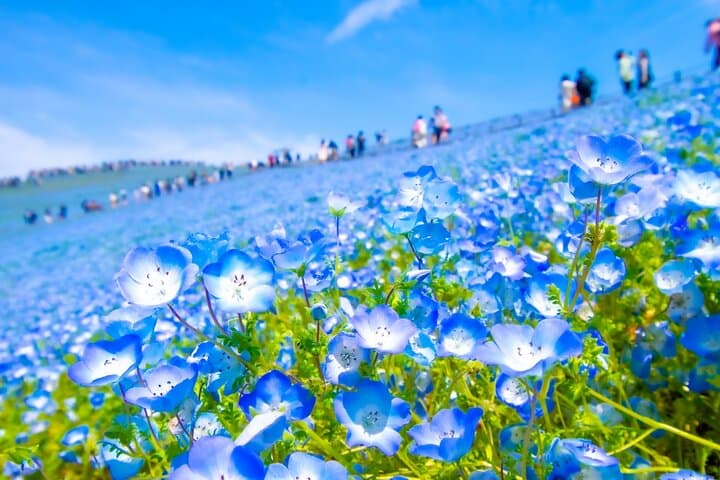
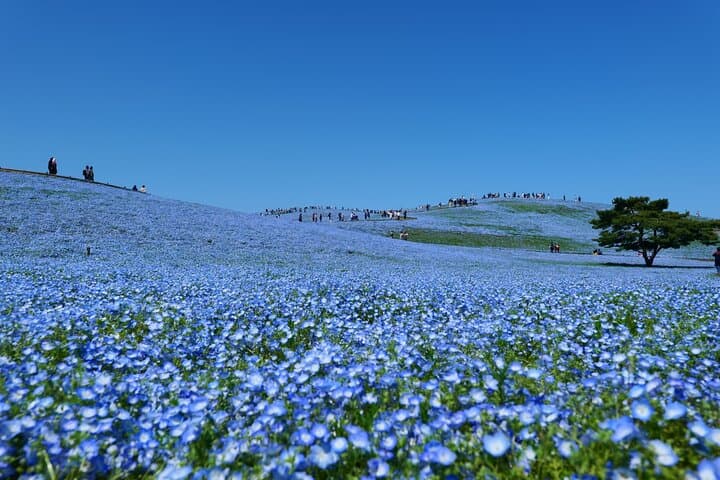
You step out of a private car and the ocean breeze meets a hillside painted blue — millions of baby blue nemophila rippling across Miharashi Hill, a color so uniform it reads like a living fabric against the Pacific.
You step out of a private car and the ocean breeze meets a hillside painted blue — millions of baby blue nemophila rippling across Miharashi Hill, a color so uniform it reads like a living fabric against the Pacific.
Hitachi Seaside Park on Ibaraki’s coast is built around seasonal displays: spring’s nemophila, autumn’s fiery kochia, and a steady rotation of tulips, roses and cosmos the rest of the year. The park opened in the late 20th century as a regional green space and now occupies reclaimed coastal terrain that drops gently toward the sea; rolling lawns and paved paths make it accessible while low dunes and wind-shaped grasses hint at the site’s maritime geology.
Local culture leans toward festival-style flower viewing—arrive when blooms peak and you’ll find families, photographers and cyclists moving at a polite, observant pace. Coffee kiosks and viewing platforms cater to quick rests; picnic lawns invite longer pauses.
Practical guide: the private car option turns a 2–3 hour rail trip into a flexible 8-hour outing—use it to arrive at sunrise for soft light and avoid midday crowds. Expect paved and compacted gravel trails with short, scenic climbs (Miharashi Hill is modest but repeated walking adds up). Wear comfortable shoes, layer against coastal wind, carry water and sunscreen, and reserve enough time for photography and a relaxed lunch. If you visit in April or October, book early: bloom windows are short and popular. Stay on paths to protect fragile plantings and follow posted rules—this is an experience of paced viewing rather than rugged hiking.